A well-designed climbing wall can greatly enhance a space for a variety of fitness, recreation, and learning activities. From climbing centres to schools and beyond, climbing walls provide opportunities for people to challenge themselves and develop skills.
A Stax Climbing wall system can be configured to suit the varying requirements of different facilities. With the right planning, materials, and design, a climbing space can be both engaging and fit for purpose.
Climbing wall installation Australia can help you plan and manage a climbing project, whether you are developing a new facility or looking to upgrade your current space.
Why Consider a Custom Climbing Wall?
Every facility has differing needs and requirements. A school may need to provide climbing challenges for entry-level climbers, whereas a commercial facility may require a range of climbing difficulties to cater for regular climbers.
A custom climbing wall can help to:
- Make the best use of indoor or outdoor space.
- Deliver a range of climbing challenges for entry-level to advanced climbers.
- Enhance a sports, recreation, or fitness activity.
- Offer a variety of climbing features and layouts.
- Provide a striking feature for gyms and activity centres.
- Be tailored to the needs of a facility and the purposes of its use.
A climbing facility with a well-planned climbing wall can provide the right features, attractive design, and appropriate risk management and safety approach for its intended use.
Rock Climbing Wall Installation for Different Facilities
Climbing walls can be tailored for different environments according to the space available, the intended users, and the particular requirements of a project.
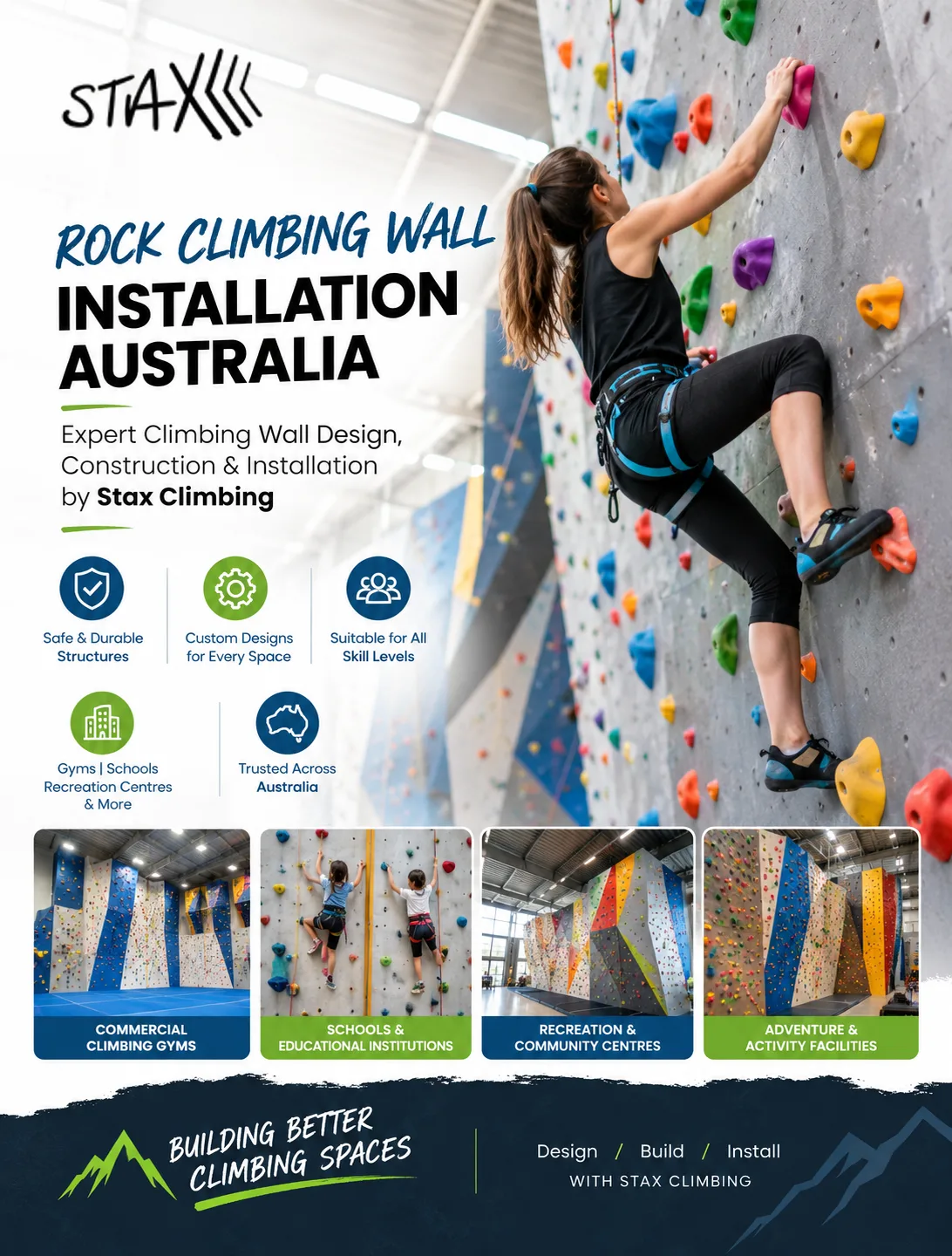
Stax Climbing can help a range of facilities explore climbing wall options and solutions, including:
1. Commercial Climbing Gyms
Rock climbing facilities require versatile wall layouts that can accommodate a variety of climbing styles and varying user interests. With the right approach, operators can create an attractive and engaging environment for entry-level and advanced climbers.
2. Schools and Educational Institutions
Climbing walls can be a great way to engage with students and offer an exciting new activity. Walls can be tailored to the ages and abilities of students and should take into account the requirements of the site and supervision arrangements.
3. Recreation and Community Centres
Community facilities can use climbing walls to provide an additional activity for members and visitors. Flexible layouts can be used to suit the requirements of a community centre, including organisational and session requirements for different groups.
4. Adventure and Activity Facilities
Adventure facilities can incorporate a climbing wall as a feature within a broader activity programme. The features and layout of a climbing wall should complement the needs of the space and the requirements for capacity, staffing, and other considerations.
Climbing Wall Installation: What Does the Process Involve?
Climbing wall installation typically involves an extensive process prior to the commencement of actual wall building works. Understanding every step helps facilities to identify and select the most appropriate options for their project. Some key considerations include:
Initial consultation: Discuss the requirements and objectives of a facility and review possible climbing options and designs
Site assessment: Evaluate the characteristics of a site in relation to the requirements of a climbing wall project
Design process: Review the requirements of a facility and develop a climbing design that complements its needs
Material choices: Consider the range of climbing wall materials that can be used for a project
Construction and installation: Ensure that project requirements and technical specifications are followed during building works
Inspections and handover: Conduct relevant inspections and handover procedures before the use of a climbing wall
The exact process will depend on the complexity of a project and the characteristics of a site.
Climbing Wall Construction: Planning for Long-Term Use
Constructing a climbing wall requires more than just creating an engaging design – the structural components and finishes must be suitable and appropriate for the intended use of a facility. Some important considerations during wall construction works include:
Structural considerations: Choose appropriate building works and technical specifications based on the requirements, capacity, and layout of a wall
Materials: Ensure that materials are appropriate to the conditions of a site (indoor or outdoor)
Angles and layout: Take into account the needs and abilities of a wall’s users
Fixing and climbing holds: Ensure that all wall fixings and climbing holds are correctly installed and maintained.
Access: Provide access for climbing route setting, inspections, and maintenance works when required
Australian standards and technical requirements: Follow the appropriate standards for building works and climbing wall installations
Thorough planning can help to avoid unnecessary complications during a construction project.
Choosing the Right Climbing Wall Design
The design of a climbing wall should be based on the intended use of a facility. Rather than basing a design on purely aesthetic considerations, it is important to identify the practical needs and requirements of a site. Some important points to consider before commencing a project include:
Space: Measure the available space for a climbing wall and consider any limitations
User considerations: Determine who will be using a climbing wall and what level of climbing experience they have
Climbing features: Consider the range of climbing challenges and features required at a facility
Layout options: Consider the use of vertical and angled features where appropriate and explore the option to reconfigure climbing holds and climbing routes
Facility maintenance: Ensure that ongoing climbing wall maintenance and inspections can occur as required
Project budget: Determine the extent of climbing design, construction, and installation works that can be accommodated within a budget
These points can help to determine a practical approach that supports the requirements of a facility without unnecessary complications.
Why Choose Stax Climbing?
Choosing a climbing wall provider is an important consideration in developing a successful facility. Project requirements can be highly variable, and effective communication and appropriate planning are required to achieve the desired outcome.
A Stax Climbing wall system can help to support facilities that want to provide engaging climbing opportunities.
When considering your project, it is important to work with a provider who can help you to understand:
- The range of design and installation options
- The requirements of site-specific wall construction
- The range of climbing wall features and requirements
- Project planning and installation considerations
- Inspection, maintenance, and inspection requirements
Discussing these points can help to identify realistic expectations and requirements for a project and support a suitable approach for a climbing facility.
Start Your Climbing Wall Project with Stax Climbing
A climbing facility project begins with an understanding of your requirements, available space, and intended users. Every aspect of a project contributes to the outcome, including your climbing wall construction works.
Whether you need a new climbing wall for a school, gym, recreation centre, or adventure facility, Stax Climbing can help you explore the options for your project, including climbing wall design and technical specifications.
Contact Stax Climbing to explore your climbing wall requirements and get started on developing your project.
Frequently Asked Questions (FAQs)
1. What is included in rock climbing wall installation?
Depending on project requirements, rock climbing wall installation may involve a range of works including site assessment, design works, structural works, building works, installation, and final inspections.
2. How long does climbing wall installation take?
The time required for climbing wall installation will depend on a range of factors including the size and complexity of a climbing wall design, the characteristics of a site, the materials used, and other considerations.
3. Where can climbing walls be installed?
Climbing walls can be installed in a range of facilities including climbing centres, schools, recreation centres, and adventure facilities, depending on a site’s characteristics and requirements.
4. What affects climbing wall construction costs?
Construction costs for climbing walls can be affected by a range of factors including the size and complexity of a climbing wall design, materials used, structural requirements, and other considerations.
5. What should I consider before installing a climbing wall in Australia?
Prior to climbing wall installation, it is important to consider factors such as structural suitability, intended use, fall protection considerations, access, Australian standards, building approvals, and inspection requirements.
6. Can a climbing wall be designed for different skill levels?
A climbing wall can be designed to accommodate a range of climbing skill levels, depending on a facility’s requirements.
7. Why is professional climbing wall installation important?
Appropriate climbing wall installation can help to ensure the structural integrity and safe use of a facility and comply with relevant project requirements.