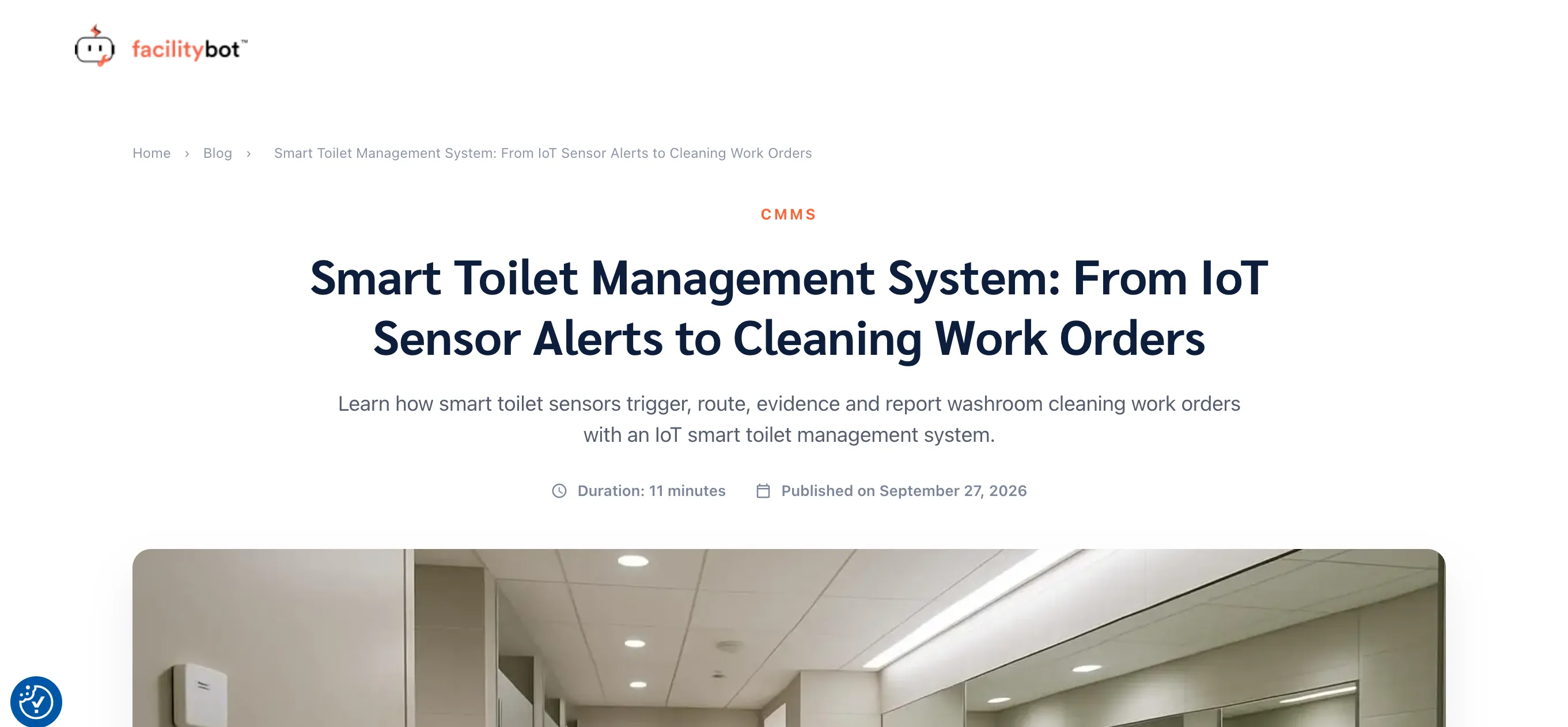
Traditional washroom maintenance relies on fixed schedules and manual checks. Cleaners sign a paper log on the back of the door every hour, whether the restroom has seen five users or fifty. This approach leads to misallocated labor, unnecessary supply waste, and inevitably, complaints when high-traffic periods overwhelm the cleaning schedule.
The solution lies in moving from reactive routines to data-driven operations. By integrating connected devices into your infrastructure, you can automate maintenance workflows from the moment an issue is detected to the moment a cleaner is dispatched.
How IoT Transforms Washroom Management
The backbone of modern restroom maintenance is the Internet of Things (IoT). Instead of guessing when a restroom needs attention, facilities teams now rely on real-time data collected by discreet sensors.
1. Smart Sensor Deployment
The transformation begins at the hardware level. Different sensors monitor specific environmental and usage factors:
- People Counters: Installed at the entrance, these track exactly how many individuals have used the facility since the last cleaning.
- Ammonia and Odor Sensors: Detect drops in air quality that indicate an immediate need for cleaning, regardless of the time of day.
- Consumable Monitors: Sensors placed inside soap dispensers, paper towel cabinets, and toilet paper rolls measure fill levels and trigger alerts before supplies run out.
- Wetness Sensors: Placed on the floor near sinks and urinals to detect leaks or spills instantly, preventing slip hazards.
2. Real-Time Data Processing
Data from these sensors is transmitted continuously to a centralized dashboard. The system analyzes the data against predefined thresholds. For instance, if a soap dispenser drops below 10% capacity, or if the foot traffic exceeds 100 people in a two-hour window, the software flags the anomaly.
3. Automated Cleaning Work Orders
This is where the physical environment meets operational efficiency. When a threshold is breached, the system bypasses manual reporting. It automatically generates a work order and routes it directly to the mobile device of the nearest available cleaning staff member. The notification details exactly what needs attention—whether it’s a specific empty paper towel dispenser or a general deep clean due to high traffic.
The Operational Benefits
Implementing a smart toilet management system delivers measurable returns across the board:
- Optimized Labor Costs: Cleaners are deployed based on actual need rather than arbitrary schedules. This eliminates unnecessary trips to unused restrooms and frees up staff for other critical facility tasks.
- Elevated User Experience: Consumables never run out, and cleanliness is consistently maintained. This drastically reduces tenant or customer complaints, protecting the building's reputation.
- Predictive Maintenance: Over time, the data collected reveals usage patterns. Facility managers can predict peak times and adjust staffing levels proactively, rather than scrambling to react to unexpected rushes.
- Sustainability: By eliminating premature refilling and optimizing cleaning routes, facilities reduce the waste of cleaning chemicals, water, and paper products.
Bridging the Gap Between Hardware and Software
Sensors are only as valuable as the software interpreting their data. To truly automate the jump from a sensor beep to a completed cleaning task, the hardware must integrate seamlessly with a robust management platform.
Choosing a comprehensive IoT facility management software ensures that your environmental sensors, inventory tracking, and workforce dispatching all live within a single, unified ecosystem.
By removing the guesswork from restroom maintenance, facilities can lower operational costs, empower their cleaning teams, and guarantee a pristine environment for every user who walks through the door