
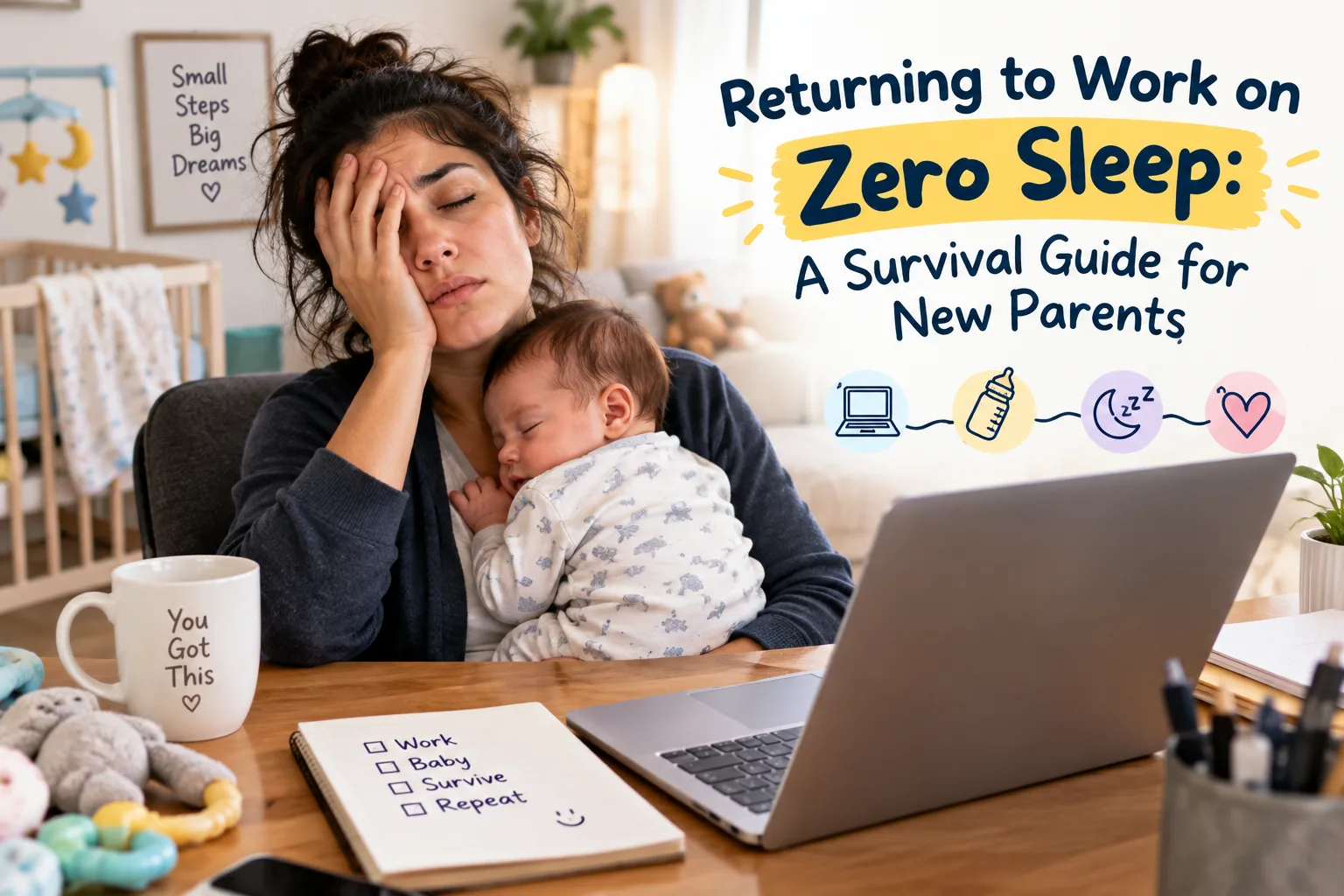
The end of maternity or paternity leave brings a tidal wave of conflicting emotions. Amidst the anxiety of leaving your baby and the logistical nightmare of childcare, there is often a much more immediate, physical dread: How am I going to function at work when I haven’t slept properly in months? For many new parents, following practical sleep advice for new parents can make this challenging transition a little more manageable.
Transitioning back to the workplace while battling sleep problems UK wide is one of the most gruelling challenges a new parent faces. You are expected to perform, concentrate, and communicate at the same level as your colleagues, all while running on a biological deficit.
It is an incredibly difficult balancing act, but it is not impossible. By understanding how sleep debt affects your brain and implementing strategic, realistic coping mechanisms, you can protect your career and your health during this demanding phase.
The Cognitive Toll of Sleep Debt at Work
To survive this period, you must understand what sleep deprivation is actually doing to your brain. When you are severely sleep-deprived, you are not just "a bit tired." Your brain is physically impaired.
Research shows that chronic sleep debt severely impacts the prefrontal cortex—the area responsible for executive function, decision-making, and emotional regulation [1]. This leads to:
- Brain Fog: Difficulty processing new information or remembering tasks you were just told.
- Slower Reaction Times: Reacting to emails, driving, or operating machinery with delayed reflexes.
- Emotional Volatility: Finding it incredibly difficult to regulate frustration; a minor critique from a manager might feel like a personal attack.
- Microsleeps: Unintentionally zoning out for a few seconds during a meeting or while staring at a screen.
Uncovering Poor Sleep Causes for Working Parents
When you add a job to the mix, the poor sleep causes for new parents multiply. It is no longer just the baby waking you up; it is the anxiety of the job.
- The "Double Shift" Anxiety: You finish a night of fragmented baby sleep, and instead of resting, your brain starts rehearsing your morning presentation or worrying about the emails piling up.
- Sunday Night Insomnia: The anticipatory anxiety of the working week ahead can trigger a surge of cortisol, making it impossible to fall asleep even if the baby is sleeping.
- Compressed Catch-Up Time: You try to cram all your baby care, household chores, and work preparation into a tiny window, leaving zero time for your own wind-down.
Spotting Insomnia Symptoms in the Workplace
It is vital to differentiate between being "woken up by a baby" and actively suffering from insomnia symptoms. If you are experiencing the following, your work stress has triggered a secondary sleep disorder:
- Inability to transition: You finally get into bed, but your mind races with workplace logistics, keeping you awake for hours.
- Early morning waking: Waking up at 4:00 AM with a knot in your stomach about work, unable to get back to sleep.
- Dread: A physical feeling of panic or nausea when thinking about going to sleep because you know you will just lie awake worrying.
How to Sleep Better: Workplace Sleep Hygiene
Standard advice doesn't work here. You need aggressive, targeted sleep hygiene designed for the working parent.
1. The "Commute Transition"
Use your journey to and from work to actively shift your brain state. If you take public transport, read a fiction book or listen to a podcast—do not check work emails. If you drive, listen to music or an audiobook. You need a hard boundary between "parent mode" and "work mode," and vice versa.
2. Strategic Caffeine Management
Do not mindlessly drink coffee all day. Map out your caffeine intake. Have your first cup after your first morning feed or when you arrive at work, but implement a strict cut-off at 1:00 PM. Relying on afternoon espresso to survive the 3:00 PM slump will directly cause the Sunday night or midnight insomnia you are trying to avoid.
3. The Power Lunch Nap
If you are working from home, use your lunch break to close your eyes for 20 minutes. Set an alarm. If you are in an office, see if you can use a quiet room or even sit in your car for 15 minutes. A short power nap has been proven to restore alertness and cognitive function without ruining your nighttime sleep drive [3].
CBT for Insomnia and Managing Performance Anxiety
When work anxiety is keeping you awake, CBT for insomnia techniques can be lifesavers, even without seeing a therapist.
The core principle here is cognitive restructuring. When you lie awake thinking, "I am going to get fired because I'm too tired to do this job," you must actively challenge that thought. Reframe it to: "I am sleep-deprived, which makes everything feel catastrophic. I have a track record of being a good employee, and this is a temporary phase."
Furthermore, keep a "worry dump" notepad by your bed. If you remember an email you forgot to send, write it down. Tell your brain, "It is safe on paper; I will deal with it at 9:00 AM." This physically removes the responsibility from your working memory, allowing your nervous system to relax.
(Internal Link Placeholder: Balancing work and a baby is incredibly taxing on your body. To understand the broader biological changes happening to your sleep architecture during this time, read our foundational guide on [Sleep Advice for New Parents].)
When to See a GP About Work-Related Exhaustion
Pushing through severe exhaustion can lead to burnout or mistakes that threaten your career. You should know when to see a GP if:
- Your sleep deprivation is causing you to make dangerous errors at work (especially if you drive, operate heavy machinery, or work in healthcare/construction).
- You are experiencing panic attacks before work or during the commute.
- Your lack of sleep is triggering severe, persistent low mood or feelings of worthlessness.
- You feel you cannot safely care for your baby in the evening due to extreme work fatigue.
A GP can provide a sick note for leave if your mental or physical health is at risk, and can refer you for talking therapies to help manage the occupational stress.
Frequently Asked Questions (FAQ)
Should I tell my boss I'm exhausted?
You don't need to share intimate details about your baby's sleep, but managing expectations is smart. A simple, "I'm still adjusting to my new routine and my energy is a bit low at the moment, but I'm prioritising X and Y tasks," helps manage their expectations without oversharing.
Is it safe to drive to work on zero sleep?
No. Driving on severe sleep deprivation is as dangerous as drink-driving. The NHS advises that if you are fighting to keep your eyes open, you must not drive. Consider public transport, carpooling with a colleague, or speaking to your employer about temporary remote work.
Will my brain ever recover from this?
Yes, absolutely. The human brain is incredibly resilient. Once your baby starts sleeping in longer stretches and your sleep debt is repaid, your cognitive function, memory, and emotional regulation will return entirely to normal. This is a temporary state, not a permanent decline.
Conclusion
Returning to work while navigating newborn sleep deprivation is an act of sheer endurance. By setting fierce boundaries between work and home, managing your caffeine strategically, and using cognitive techniques to quiet your racing mind, you can navigate this transitional period. Give yourself grace, lower your expectations of perfection for a few months, and remember that this intense exhaustion is a phase that will eventually pass.