When Sustainability Became an Urgent Imperative
In the early hours of April 22, 2026, the United Nations convened its 50th Earth Summit in New York, marking a pivotal moment for global sustainability efforts. Delegates from over 190 countries gathered not only to reaffirm commitments made in previous decades but to confront the stark reality: despite incremental progress, many planetary boundaries have been crossed, and climate targets remain elusive. This summit's opening speech starkly emphasized that "sustainability is no longer an option but a necessity for human survival," a message resonating deeply with the increasing frequency of climate-induced disasters witnessed across continents.
Recent studies by the Intergovernmental Panel on Climate Change (IPCC) reveal that global carbon emissions peaked temporarily in 2023 but have since rebounded due to accelerating industrial activity in developing economies. Meanwhile, biodiversity loss continues at an unprecedented rate, threatening ecosystems critical to food security and clean water. This backdrop underscores the urgency for a more nuanced and effective approach to sustainability—one that extends beyond mere rhetoric and superficial initiatives.
Such urgency is echoed in urban centers like São Paulo and Jakarta, where rapid urbanization clashes with fragile environments, revealing the tensions between development and conservation. It is here, amid these complex challenges, that the true meaning and practice of sustainability must be re-examined.
Tracing the Path: How Sustainability Evolved into a Global Movement
The modern sustainability movement traces its roots back to the 1972 Stockholm Conference, which first placed environmental concerns on the international stage. However, it was the 1987 Brundtland Report that popularized the term "sustainable development," defining it as development that meets present needs without compromising future generations' ability to meet theirs. This definition framed the subsequent discourse, intertwining environmental, social, and economic dimensions.
Throughout the 1990s and 2000s, sustainability gained traction through initiatives such as the Kyoto Protocol and the Millennium Development Goals. Yet, these early efforts often suffered from fragmented implementation and competing national interests. The Paris Agreement of 2015 represented a landmark, with nearly 200 nations committing to limit global warming well below 2°C above pre-industrial levels, aiming for 1.5°C where possible.
Despite these commitments, the world has struggled with enforcement and accountability. Economic growth models largely dependent on fossil fuels and resource extraction have persisted, creating systemic inertia. Moreover, social inequalities have complicated the sustainability agenda, as developing countries emphasize poverty alleviation and infrastructure development, sometimes at environmental costs.
In this context, sustainability has expanded beyond environmental conservation to include climate justice, circular economies, and corporate social responsibility, reflecting its multidimensional nature. The digital revolution, too, has transformed data collection and transparency, enabling more precise tracking of sustainability indicators but also raising concerns over electronic waste and energy consumption.
Measuring Sustainability: Data, Trends, and the State of Play in 2026
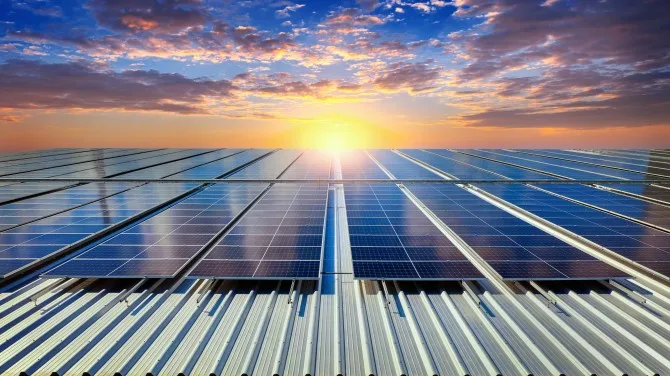
Concrete data paints a mixed picture of sustainability's progress. According to the 2026 Global Sustainability Index, renewable energy sources now account for 38% of the world's electricity generation, a significant increase from 26% in 2020. Solar and wind technologies have surged, driven by declining costs and supportive policies, with China, the United States, and the European Union leading installations.
However, the transition remains uneven. Fossil fuels still represent 45% of global energy consumption, with emerging economies relying heavily on coal and natural gas to fuel growth. This dual reality complicates global emissions trajectories.
In agriculture, sustainable practices such as regenerative farming and precision agriculture have gained footholds but cover only about 15% of total cultivated land worldwide. Deforestation rates have slowed but continue at critical levels in the Amazon and Southeast Asia, threatening carbon sinks and indigenous livelihoods.
Corporate sustainability reporting has become more standardized, with over 75% of Fortune 500 companies publishing environmental, social, and governance (ESG) disclosures. Yet, skepticism persists regarding greenwashing and inconsistent metrics.
"Sustainability cannot be measured by isolated indicators alone; it demands integrated systems thinking," observes Dr. Helena Strauss, a sustainability scientist at the University of Oxford.
Technology also plays a dual role. Artificial intelligence and satellite monitoring enhance resource management and compliance, while blockchain offers new possibilities for supply chain transparency. However, digital infrastructure's energy demands raise new sustainability questions.
- Renewable Energy Growth: 38% of global electricity generation in 2026
- Fossil Fuel Consumption: Still 45% of global energy use
- Sustainable Farming: Adopted on 15% of cultivated land
- Corporate ESG Reporting: Over 75% of Fortune 500 companies
- Deforestation: Slowed but ongoing in key tropical regions
2026 Developments: Innovation and Policy Shaping Sustainability's Trajectory
The past year has witnessed remarkable advances in sustainability, driven by innovation and policy reforms. Governments worldwide have implemented stricter carbon pricing mechanisms, with the European Union's expanded Emissions Trading Scheme now covering 65% of emissions across member states. Similarly, China introduced a national carbon border adjustment tax to discourage carbon-intensive imports.
On the innovation front, breakthroughs in green hydrogen production have made it financially viable at scale. Countries like Australia and Germany are investing heavily in this technology to decarbonize heavy industry and transportation sectors. Energy storage solutions, including next-generation solid-state batteries, have improved grid reliability, enabling higher penetration of intermittent renewables.
Urban sustainability is also evolving. Smart city initiatives incorporating IoT sensors, AI-driven traffic management, and green infrastructure have reduced emissions and enhanced quality of life in metro areas such as Singapore and Amsterdam.
Corporate commitments have shifted from pledges to actionable targets. Notably, tech giant NovaTech announced a full transition to circular supply chains by 2030, emphasizing resource reuse and waste elimination. Meanwhile, finance sectors are increasingly integrating sustainability into risk assessments, with ESG-linked bonds and sustainable investment funds reaching record volumes.
"The convergence of policy, technology, and finance in 2026 is setting the stage for a new era of sustainability," notes Javier Morales, chief strategist at GreenFuture Capital.
Nonetheless, geopolitical tensions and economic uncertainties pose challenges. Energy security concerns have complicated the pace of fossil fuel phase-outs in certain regions, highlighting the need for balanced approaches.
- Carbon Pricing Expansion: EU ETS covers 65% of emissions
- Green Hydrogen Scaling: Major investments in production and infrastructure
- Smart Cities Growth: IoT and AI reduce urban emissions
- Circular Supply Chains: Corporate commitments intensify
- Sustainable Finance: Record issuance of ESG-linked bonds
Voices from the Frontlines: Expert Insights and Industry Impacts
Leading voices in sustainability emphasize that the sector's complexity requires collaboration across disciplines and sectors. Dr. Amara Ndlovu, a climate policy expert at the University of Cape Town, highlights the importance of integrating indigenous knowledge systems into sustainability strategies, noting their proven resilience and ecological wisdom.
Industry leaders also recognize shifting consumer preferences as a powerful driver. The fashion industry, long criticized for its environmental footprint, is undergoing transformation, as detailed in TheOmniBuzz's report Why Fashion’s Future Lies Beyond Trends and Into Sustainability. Brands are investing in sustainable materials, transparency, and circular business models, responding to growing demand for ethical products.
Meanwhile, the energy sector faces a paradox. As renewable capacity grows, legacy fossil fuel companies are diversifying portfolios to include clean energy, but investment in new oil and gas projects persists in some markets. This dynamic reflects transitional complexities and the challenge of balancing economic and environmental objectives.
Financial institutions increasingly view sustainability as integral to risk management. ESG integration is now a standard practice among asset managers, influencing capital flows. However, calls for more stringent regulation and standardization of ESG metrics intensify.
"Sustainability is reshaping corporate strategy and investment paradigms, forcing fundamental shifts," says Linda Chen, ESG director at Global Asset Management Inc.
These insights highlight sustainability's far-reaching impact, encompassing social equity, economic viability, and environmental stewardship.
Looking Ahead: What to Watch in Sustainability's Next Chapter
As 2026 progresses, several trends will shape sustainability's trajectory. First, the interplay between climate adaptation and mitigation will gain prominence, as communities worldwide face unavoidable climate impacts requiring resilient infrastructure and social safety nets.
Second, the integration of digital technologies—AI, blockchain, and IoT—will deepen, offering enhanced data-driven decision-making but also demanding attention to digital sustainability to manage energy footprints.
Third, the concept of regenerative economics, which seeks to restore and enhance natural systems rather than merely sustain them, is gaining traction among policymakers and innovators.
Fourth, evolving consumer activism and stakeholder engagement will continue pressuring corporations and governments to adopt transparent, accountable practices.
Finally, international cooperation remains critical. The outcomes of the 2026 UN Biodiversity Conference and subsequent climate negotiations will test global solidarity and the capacity to implement ambitious, equitable frameworks.
For readers seeking a broader understanding, TheOmniBuzz's comprehensive coverage in Sustainability in 2026: Progress, Challenges, and Future Pathways offers valuable context on these evolving dynamics.
- Climate Adaptation Focus: Building resilience alongside emissions reduction
- Digital Sustainability: Balancing tech benefits with energy demands
- Regenerative Economics: Moving beyond sustainability to restoration
- Consumer and Stakeholder Pressure: Driving transparency and accountability
- Global Cooperation: Essential for ambitious, equitable solutions
In conclusion, sustainability in 2026 is a multifaceted journey, marked by significant achievements yet fraught with persistent challenges. It demands integrated approaches, innovative thinking, and collective action. The path forward calls for rethinking progress itself—beyond growth metrics to embrace long-term ecological and social wellbeing.
By continuously refining strategies and harnessing new technologies while centering equity and justice, humanity can steer toward a more sustainable future, ensuring that the planet remains habitable and thriving for generations to come.
This article’s detailed exploration complements ongoing discussions at TheOmniBuzz, including insights on How Green Tech Is Transforming Sustainability Beyond the Buzz, reinforcing that the sustainability movement is both a challenge and an opportunity shaping the 21st century.