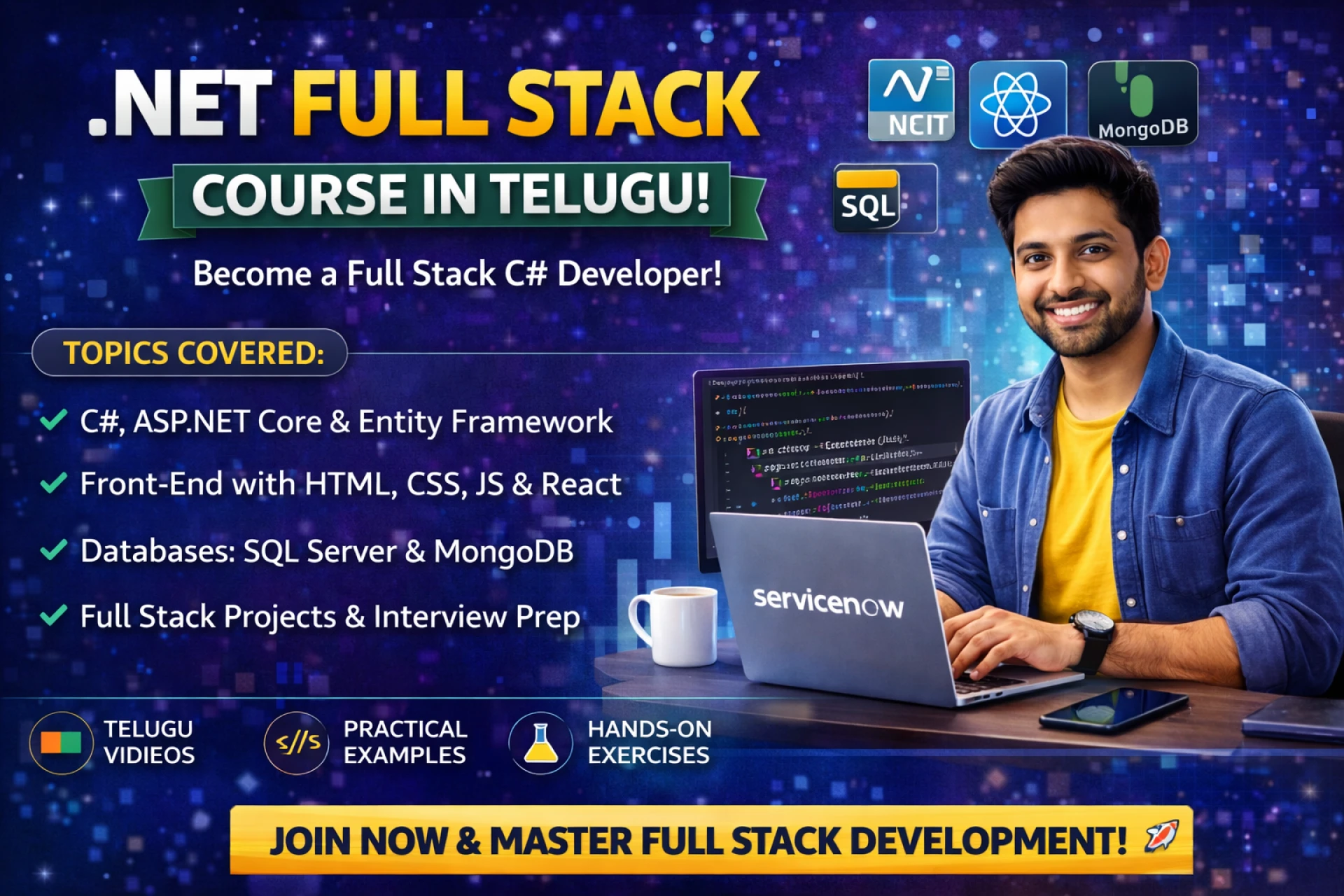
In today’s competitive job market, having technical skills alone is not enough to secure a job. Recruiters and hiring managers want to see proof of your abilities. This is where a resume-ready .NET portfolio becomes essential. A strong portfolio showcases your practical knowledge, projects, and problem-solving skills, making you stand out from other candidates.
If you are learning .NET Full Stack Course in Telugu development, building a portfolio alongside your course—especially with Telugu-friendly guidance—can significantly improve your chances of getting hired.
What is a .NET Portfolio?
A .NET portfolio is a collection of projects and applications that demonstrate your skills in:
- C# programming
- ASP.NET Core development
- SQL Server database management
- Frontend technologies like HTML, CSS, and JavaScript
It acts as a visual resume where employers can see your work instead of just reading about your skills.
Why is a Portfolio Important?
A well-built portfolio offers several advantages:
- Shows real-world experience
- Demonstrates your coding ability
- Builds credibility with recruiters
- Increases chances of interview selection
- Helps you explain your projects confidently
In many cases, a strong portfolio can compensate for lack of work experience.
Key Components of a Resume-Ready Portfolio
To create an effective portfolio, you need to include the following elements:
1. Strong Projects
Projects are the heart of your portfolio. Include 2–4 high-quality projects such as:
- Employee Management System
- E-commerce Application
- Blog Platform
- Online Booking System
Each project should clearly demonstrate your understanding of frontend, backend, and database integration.
2. Clean and Organized Code
Your code should be:
- Well-structured
- Properly formatted
- Easy to read and understand
Use meaningful variable names and follow coding best practices.
3. GitHub Repository
Upload your projects to GitHub. Make sure to:
- Add proper README files
- Explain project features
- Include setup instructions
This helps recruiters review your work easily.
4. Project Documentation
Each project should have:
- Description of the application
- Technologies used
- Features and functionality
- Screenshots or demo links
Clear documentation makes your portfolio more professional.
5. Live Demo (Optional but Recommended)
If possible, deploy your projects online using platforms like Azure or IIS. A live demo allows recruiters to interact with your application directly.
Technologies to Showcase
Your portfolio should highlight the key technologies of .NET Full Stack:
- C# for backend logic
- ASP.NET Core for APIs and web apps
- SQL Server for database operations
- Entity Framework Core for ORM
- HTML, CSS, JavaScript for frontend
Showing your ability to integrate these technologies is very important.
Steps to Build a Portfolio
Follow these steps to create a strong portfolio:
- Learn the fundamentals of .NET Full Stack
- Build small practice projects
- Move to real-world applications
- Upload projects to GitHub
- Write proper documentation
- Deploy at least one project
Consistency is key to building a professional portfolio.
Common Mistakes to Avoid
While building your portfolio, avoid these mistakes:
- Including incomplete projects
- Poor code quality
- Lack of documentation
- Copying projects without understanding
- Not using version control
Focus on quality over quantity.
Benefits of Telugu-Friendly Learning
Creating a portfolio can be challenging for beginners. Telugu-friendly courses help by:
- Explaining project concepts clearly
- Guiding step-by-step development
- Making complex topics easy to understand
- Providing real-time examples
This approach helps you build projects with confidence.
Tools You Will Use
To build and manage your portfolio, you will use:
- Visual Studio or Visual Studio Code
- SQL Server Management Studio (SSMS)
- GitHub for version control
- Postman for API testing
These tools are commonly used in the industry.
How to Present Your Portfolio in Resume
When adding your portfolio to your resume:
- Include GitHub links
- Mention key technologies used
- Highlight your role in each project
- Focus on achievements and features
Example:
“Developed a full-stack e-commerce application using ASP.NET Core and SQL Server with user authentication and payment integration.”
Career Opportunities
With a strong portfolio, you can apply for roles such as:
- .NET Developer
- Full Stack Developer
- Backend Developer
- Software Engineer
A portfolio increases your chances of getting shortlisted and hired.
Tips for Success
- Focus on real-world projects
- Keep learning and updating your portfolio
- Practice coding regularly
- Take feedback and improve
- Stay consistent and patient
Conclusion
A resume-ready .NET portfolio is your gateway to landing a job in the IT industry. It showcases your skills, projects, and practical knowledge in a way that recruiters can easily understand. By building high-quality projects and presenting them effectively, you can stand out from the competition.
With Telugu-friendly learning, even beginners can confidently build strong portfolios. Start today, create meaningful projects, and showcase your skills to the world.