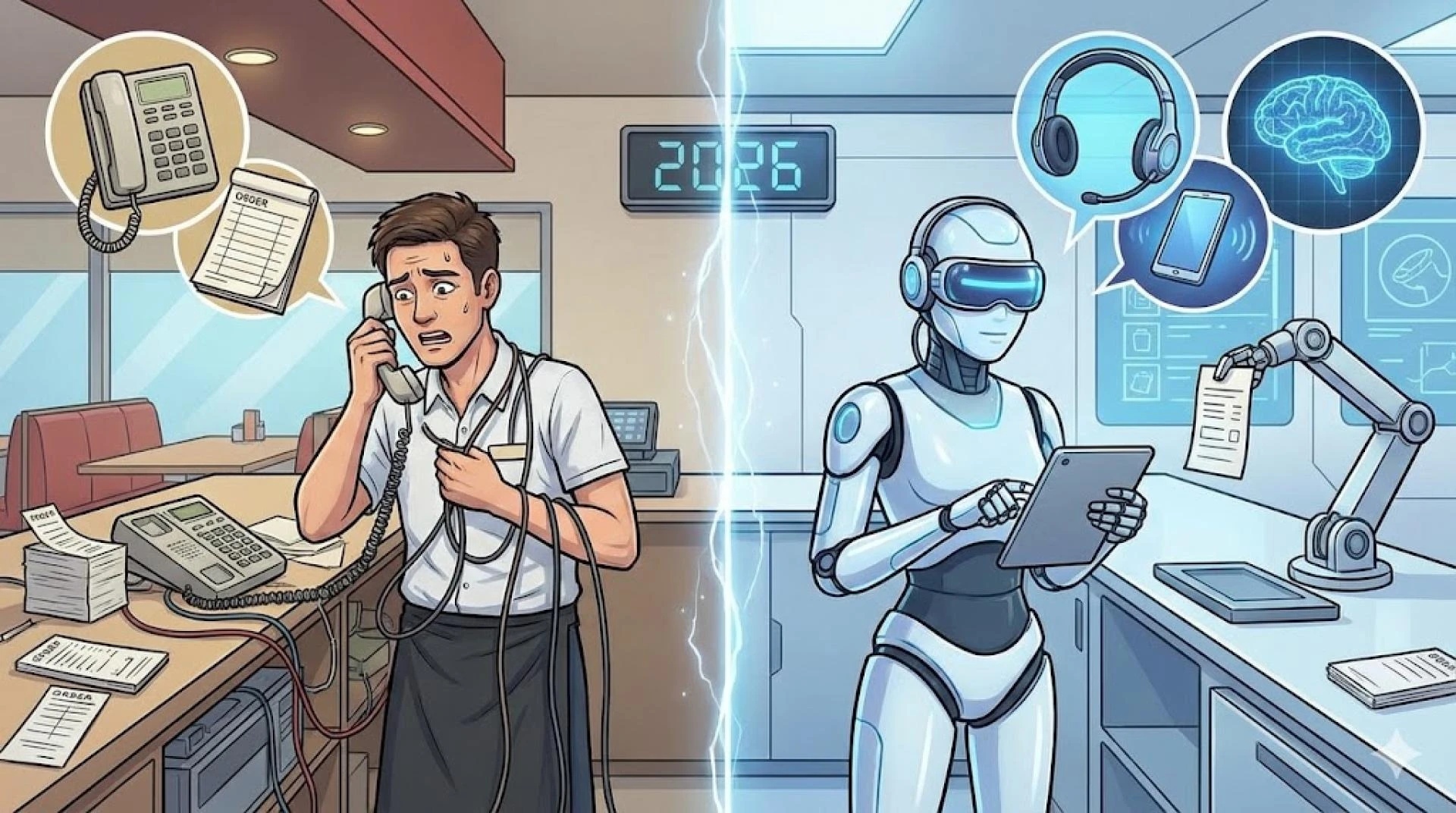
For decades the sound of a ringing phone in a restaurant was a sign of success. In 2026 that same sound often signals a bottleneck. As labor costs remain at historic highs and customer patience hits an all time low the traditional phone system is facing an existential crisis.
Many operators are asking if it is time to ditch the landline for an AI powered system. Let's look at the real world comparison between these two technologies and what it means for your bottom line.
The Reality of the Traditional System
Traditional phone systems whether legacy landlines or basic VoIP rely on a simple premise. A human must be available to pick up. In a 2026 labor market where staff turnover is common this premise is failing.
When a host is busy seating guests the phone goes to voicemail. Research shows that in 2026 nearly 83% of callers will not leave a message. They simply hang up and call the next restaurant on Google. This is the silent tax of traditional systems. You aren't just paying for the phone line. You are paying in lost orders that never make it to your kitchen.
The Rise of the AI Phone Agent
Modern systems like Certus AI have moved beyond the robotic voice menus of the past. These are agentic systems. They don't just route calls. They solve problems.
An AI Phone Agent for Restaurants can now handle unlimited simultaneous calls with 97% accuracy. They understand accents and handle mid sentence order changes and sync directly with your POS. For a busy deli or a high volume QSR the difference is massive. While a human host might forget to suggest a drink or a side during a rush the AI never misses an upsell opportunity.
Cost Benefit Analysis The Hard Numbers
When you look at the raw data for 2026 the cost gap is widening.
- Traditional Costs A typical restaurant might pay $50 to $100 for their phone service but the true cost is the labor required to answer it. If a staff member spends 2 hours a day on the phone at $18 an hour that is over $1,000 a month in hidden phone costs.
- AI Costs AI systems generally operate on a subscription model. While the upfront software cost is higher than a landline the cost per interaction is roughly 75% lower than human handled calls.
More importantly restaurants switching to AI voice agents are seeing revenue increases of 25% or more simply by capturing the calls that used to hit a busy signal during the Friday night rush.
Beyond the Numbers The Guest Experience
There is a common fear that AI feels cold. However the data in 2026 suggests the opposite.
A traditional system during a rush often results in a please hold greeting followed by minutes of background noise. An AI system answers in under two seconds. It knows the guest’s name from their past order history and can instantly answer questions about gluten free options or patio seating.
By offloading the routine calls like reservations and hours and basic takeout to the AI your staff can actually provide better hospitality to the people standing right in front of them. The AI doesn't replace the human. It protects the human from the stress of a ringing phone.
Integration The 2026 Standard
In 2026 a phone system that doesn't talk to your POS is a liability. Legacy systems require a host to listen to a call and then manually punch the order into a Square or Toast terminal. This is where errors happen.
AI systems have closed this loop. Orders flow from the caller's mouth directly to the kitchen display screen. This zero friction workflow is the standard for top performing restaurants this year. It eliminates transcription errors and ensures the kitchen gets the order the second the caller hangs up.
Which One Wins
The traditional vs AI debate is largely settled for high volume operations. If your restaurant handles more than 20 calls a day a traditional system is likely costing you money in missed opportunities and staff burnout.
Traditional systems still have a place in ultra small mom and pop shops where the volume is low enough for the owner to handle every call personally. But for anyone looking to scale or protect their margins in 2026 the AI phone system for restaurants isn't just a tech upgrade. It is an operational necessity.
Moving Forward
If you are still tethered to a legacy line the first step is an audit. Track how many calls you miss during your busiest hour this weekend. If that number is higher than zero it's time to look at an automated phone service. The technology has finally reached a point where it sounds natural and works flawlessly with your POS and pays for itself within the first month.