
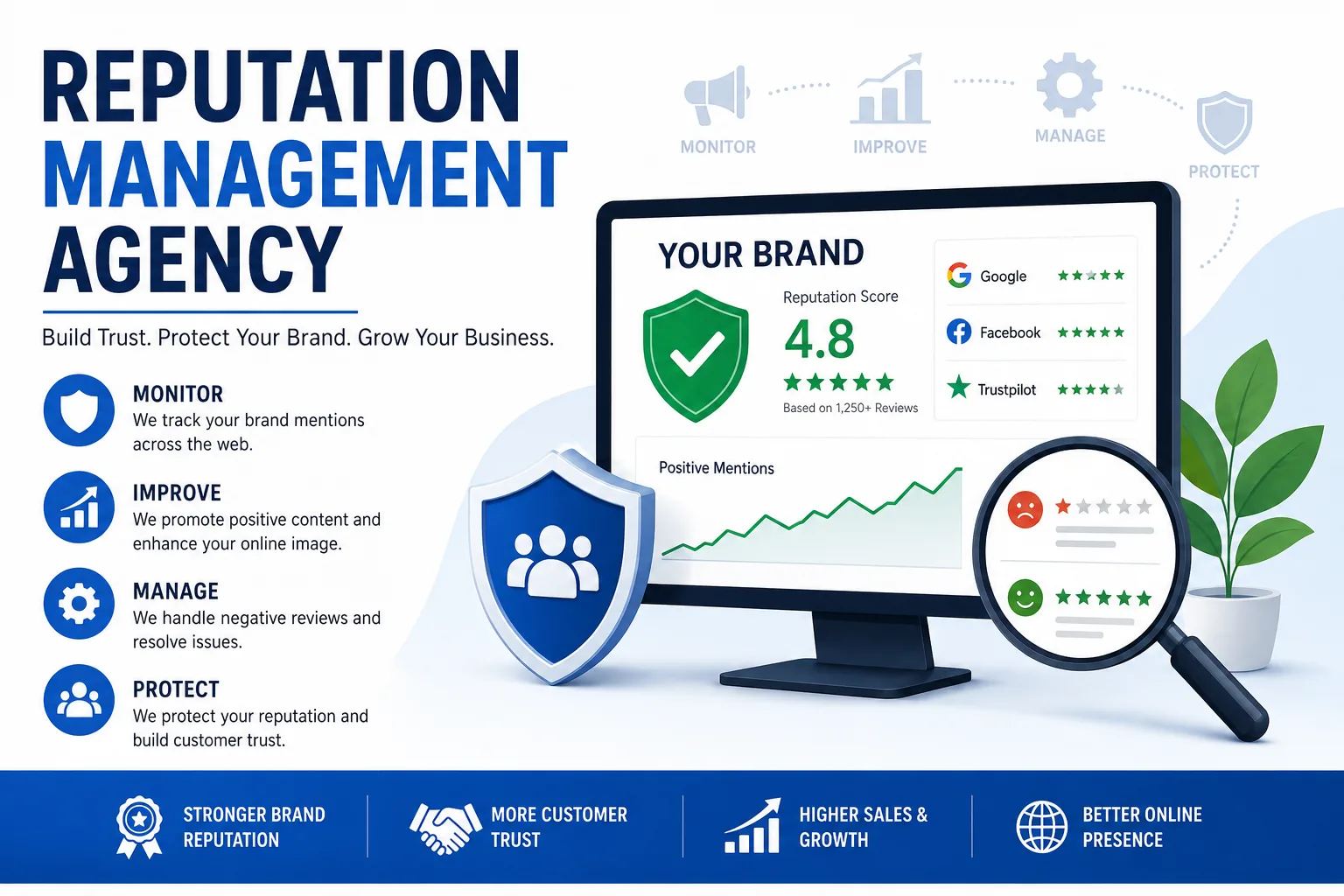
In today’s digital-first world, your online reputation can make or break your business. Customers often search reviews, ratings, and brand mentions before making any decision. This is why working with a reputation management agency has become essential for businesses of all sizes.
A strong online presence not only attracts customers but also builds trust and credibility in a competitive market. Whether you are a small business or a large enterprise, maintaining a positive digital image is critical for long-term success.
What is a Reputation Management Agency?
A reputation management agency is a specialized digital marketing service provider that helps businesses monitor, improve, and protect their online reputation. This includes handling search engine results, customer reviews, social media mentions, and online brand perception.
These agencies use strategic techniques to ensure that positive content ranks higher while minimizing the visibility of negative or misleading information.
Why Online Reputation Matters
Your online reputation directly impacts customer trust and revenue. Here’s why it is important:
1. First Impressions Matter
Most users search online before choosing a service. Negative results can lead to lost opportunities.
2. Customer Trust
Positive reviews and brand credibility increase conversion rates.
3. Business Growth
A strong reputation leads to higher leads, sales, and partnerships.
4. Competitive Advantage
Businesses with better online reviews outperform competitors easily.
Services Offered by Reputation Management Agencies
A professional agency provides a wide range of services to protect and improve your brand image:
Online Review Management
Monitoring and responding to reviews on platforms like Google, Yelp, and Facebook.
Search Engine Reputation Control
Ensuring positive content ranks higher in search results.
Content Suppression
Reducing visibility of negative or harmful content online.
Social Media Monitoring
Tracking brand mentions across social platforms.
Crisis Management
Handling sudden reputation issues or negative publicity.
Role of SEO in Reputation Management
Search Engine Optimization (SEO) plays a key role in reputation management. By creating high-quality content and optimizing branded keywords, agencies can push positive content to the top of search results.
This helps businesses control what potential customers see when they search for their brand online.
California Infotech: Trusted Reputation Experts
californiainfotech is a leading digital marketing company offering professional reputation management solutions for businesses across industries. Their services focus on building strong, positive brand visibility online through strategic campaigns and SEO-driven methods.
Their approach ensures that businesses maintain a strong digital identity and protect themselves from negative online content.
Best Reputation Management Companies and Industry Standards
When searching for the best reputation management companies, businesses should look for agencies that offer transparency, proven results, and ethical strategies. A good agency focuses on long-term brand building instead of quick fixes.
Effective reputation management requires:
- Consistent monitoring of brand mentions
- High-quality content creation
- SEO and digital PR strategies
- Review generation and management
- Legal content removal when necessary
Brand Reputation Management Explained
brand reputation management focuses on maintaining and improving how a brand is perceived by the public. It involves controlling online narratives, encouraging positive feedback, and addressing negative reviews professionally.
A strong brand reputation leads to increased customer loyalty, higher trust, and better market positioning.
How a Reputation Management Agency Works
The process typically includes:
Step 1: Reputation Audit
Analyzing current online presence and identifying issues.
Step 2: Strategy Development
Creating a customized plan to improve brand perception.
Step 3: Content Creation
Publishing positive articles, blogs, and press releases.
Step 4: SEO Optimization
Ranking positive content higher in search engines.
Step 5: Monitoring & Maintenance
Continuously tracking brand reputation changes.
Benefits of Hiring a Reputation Management Agency
Hiring professionals offers several advantages:
Improved Online Image
Your brand appears more trustworthy and reliable.
Increased Sales
Positive reviews directly influence buying decisions.
Crisis Protection
Quick response to negative situations reduces damage.
Better SEO Rankings
Positive content improves search engine visibility.
Future of Online Reputation Management
As digital platforms continue to grow, reputation management is becoming more advanced. AI-driven monitoring tools, real-time alerts, and predictive analytics are shaping the future of the industry.
Businesses that invest early in reputation management will have a significant advantage in maintaining customer trust.
Conclusion
A reputation management agency is essential for any business that wants to succeed in the digital world. From improving search results to managing reviews, these agencies help build trust and credibility.
With expert support from companies like californiainfotech, businesses can protect their brand image and achieve long-term growth in a competitive market.
FAQs
1. What does a reputation management agency do?
A reputation management agency helps businesses improve their online image by managing reviews, search results, and brand mentions.
2. Why is online reputation important?
Online reputation influences customer trust, buying decisions, and overall business credibility.
3. How long does reputation management take?
It depends on the situation, but noticeable improvements usually take a few weeks to a few months.
4. Is reputation management part of SEO?
Yes, SEO plays a major role in pushing positive content higher in search results.
5. Can negative reviews be removed?
Some negative content can be removed if it violates platform policies, while others are managed through suppression strategies.