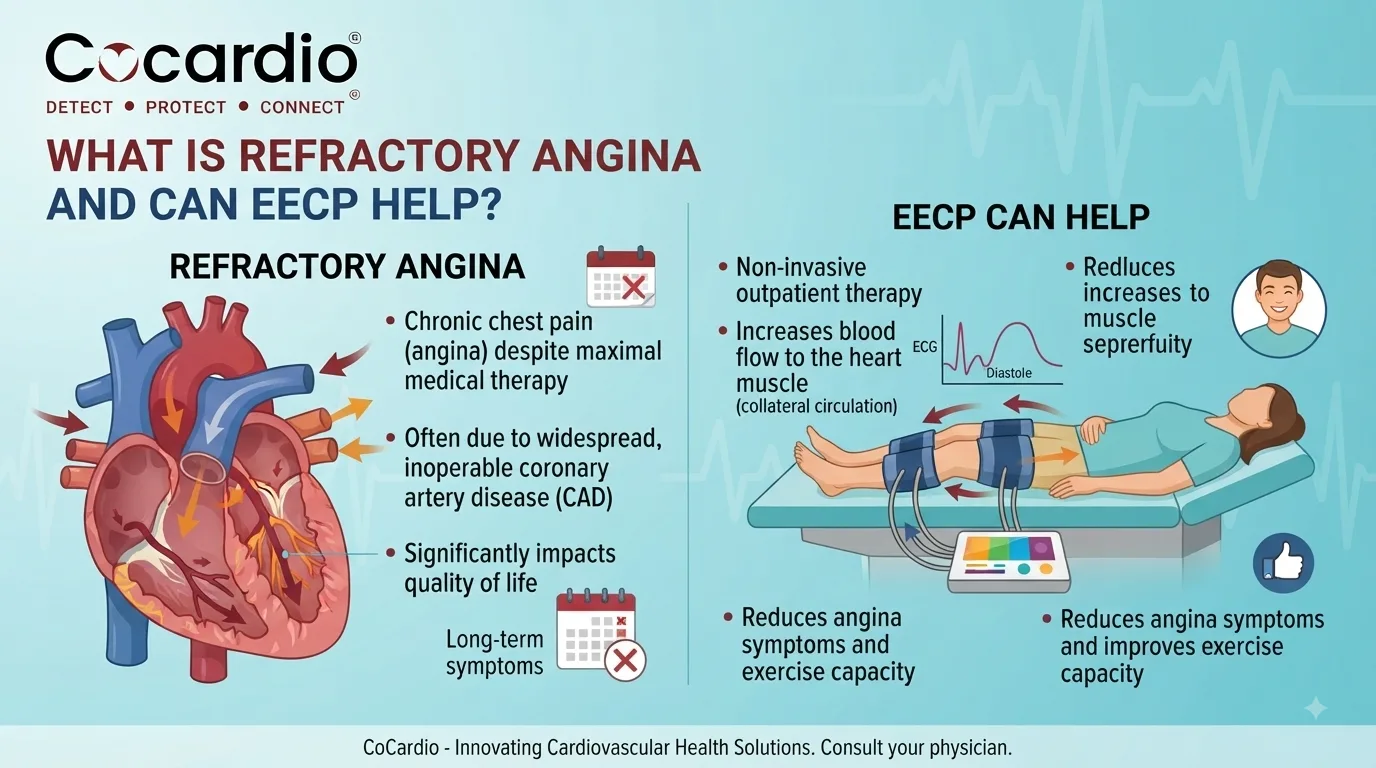
Living with recurring chest pain can be frustrating, particularly when symptoms continue despite medications or previous procedures. For some people with chronic coronary artery disease, persistent symptoms may be described as refractory angina when they continue despite appropriate medical treatment and options for restoring blood flow through conventional procedures are limited.
This can affect walking, climbing stairs, exercising, working, and other everyday activities that increase the heart's demand for oxygen. EECP therapy for angina is a noninvasive treatment option that may be considered for certain patients with chronic angina symptoms.
Rather than another catheter-based procedure or operation, EECP uses inflatable cuffs around the lower body that are synchronized with the heartbeat. Understanding where this therapy fits begins with understanding why refractory angina occurs and why some patients continue experiencing symptoms despite conventional care.
What Is Refractory Angina?
Refractory angina generally refers to chronic angina that continues despite guideline-directed medical therapy and when conventional revascularization options, such as angioplasty or coronary artery bypass grafting, are not appropriate or have been exhausted. The discomfort typically develops because the heart muscle is not receiving enough oxygen-rich blood for its needs, particularly during physical exertion or other situations that increase cardiac workload.
Symptoms may include pressure, squeezing, heaviness, or discomfort in the chest, although the way angina feels can vary considerably between individuals. Some people also experience shortness of breath, fatigue, or discomfort that spreads to the arms, shoulders, neck, jaw, or back.
Refractory angina can substantially limit physical activity and quality of life even when the underlying coronary disease is being medically managed. For this reason, treatment often focuses not only on cardiovascular risk but also on reducing symptom burden and improving functional capacity.
How Is Refractory Angina Different From Occasional Chest Pain?
Not every episode of chest discomfort is refractory angina, and chest pain should never be self-diagnosed based on symptoms alone. Refractory angina is generally associated with established chronic coronary disease and persistent symptoms despite appropriate treatment rather than a single unexplained episode of chest discomfort.
A clinician may review symptom patterns, medical history, medications, previous cardiac procedures, and diagnostic testing before determining what is causing ongoing symptoms. This distinction is important because new, severe, worsening, or unexpected chest pain can represent an urgent medical problem rather than chronic stable angina. Chest discomfort accompanied by symptoms such as significant shortness of breath, fainting, sweating, or pain that does not resolve should receive immediate medical evaluation. EECP is not an emergency treatment for a suspected heart attack or other acute cardiovascular event.
Why Can Angina Continue After Treatment?
Coronary artery disease develops when the arteries supplying the heart become narrowed or otherwise unable to deliver sufficient blood for the heart's needs. Medications can reduce symptoms and cardiovascular risk, while procedures such as angioplasty, stenting, and bypass surgery may improve blood flow in appropriately selected patients.
However, some people continue experiencing angina even after receiving these treatments, and others may have coronary anatomy or medical circumstances that make additional procedures unsuitable. In these situations, clinicians may explore other approaches for symptom management after carefully evaluating the individual patient.
The appropriate strategy depends on factors such as the severity and pattern of symptoms, previous treatments, heart function, other medical conditions, and overall cardiovascular risk. Persistent symptoms should therefore prompt clinical reassessment rather than simply assuming that nothing more can be done.
Who May Be Considered for EECP?
EECP is generally considered for selected patients with chronic stable angina whose symptoms remain limiting despite appropriate medical management. Some candidates may have previously undergone stenting or bypass surgery but continue to experience symptoms, while others may not be suitable candidates for further revascularization. Eligibility cannot be determined from symptoms alone because certain cardiovascular and other medical conditions may affect whether treatment is appropriate.
A healthcare professional should therefore review the patient's history, medications, cardiovascular status, and relevant testing before recommending treatment. EECP therapy for angina should be viewed as part of an individualized cardiovascular management plan rather than a universal alternative to established treatments. The decision to proceed should always reflect the patient's clinical circumstances and treatment goals.
How Does EECP Therapy Work?
Enhanced external counterpulsation, or EECP, is performed while the patient lies on a treatment table with pneumatic cuffs positioned around the calves, thighs, and lower body. These cuffs inflate and deflate in coordination with the cardiac cycle using information from an electrocardiogram.
During the resting phase of the heartbeat, the cuffs inflate sequentially to help move blood toward the heart, and they rapidly deflate before the next contraction. This counterpulsation is designed to augment diastolic blood flow while reducing the resistance against which the heart pumps. Unlike angioplasty or bypass surgery, the treatment does not involve inserting a catheter into a coronary artery or making a surgical incision. Patients remain awake throughout the session and can communicate with the clinical team while treatment is underway.
What Happens During a Typical Course of Treatment?
A commonly used EECP treatment course consists of approximately 35 one-hour sessions, often delivered five days per week over about seven weeks, although an individual's schedule should be determined clinically. Before treatment begins, the care team evaluates whether EECP is appropriate and explains what the patient can expect during each session. Electrodes are used to monitor the cardiac cycle so cuff inflation and deflation can be accurately timed.
Patients may feel firm pressure around their legs and lower body as the cuffs repeatedly inflate, but the procedure itself does not involve surgery or vascular access. Clinical staff monitor treatment and can make adjustments when necessary. Completing the recommended course consistently is important because EECP is delivered as a series of treatments rather than as a single session.
Can EECP Help With Refractory Angina?
Clinical studies and professional guidance have evaluated EECP primarily as a treatment for symptom relief in appropriately selected patients with chronic refractory angina. Some patients experience fewer angina episodes, improved exercise tolerance, or reduced reliance on short-acting angina medication following treatment, although individual responses vary.
The therapy should not be described as removing coronary plaque or curing coronary artery disease because that is not what the treatment does. Instead, its clinical role centers on improving symptoms and functional capacity for selected patients whose angina remains difficult to control.
This distinction matters because successful symptom management does not mean that the underlying cardiovascular disease no longer requires medical care. Medications, risk-factor management, follow-up, and other recommendations from the patient's cardiology team generally remain important.
What Does the Evidence Say?
Randomized and observational research has reported improvements in measures such as angina frequency, exercise tolerance, and quality of life in some patients treated with EECP. The MUST-EECP trial, one of the best-known randomized studies of the therapy, found improvements in exercise-induced ischemia and time to exercise-induced ST-segment depression, although not every measured outcome improved significantly. Longer-term observational registries have also reported sustained symptom improvements among many patients who initially responded to treatment.
However, EECP research includes studies of varying designs and quality, so the treatment should not be presented as producing guaranteed results. Major cardiovascular guidance has generally positioned EECP as an option that may be considered for symptom relief in selected patients with refractory angina when other treatment options are limited. This evidence supports careful patient selection and realistic expectations rather than promises that every individual will respond in the same way.
Is EECP the Same as External Counterpulsation Therapy?
The terms EECP and ECP are sometimes used when discussing counterpulsation treatment, although terminology and equipment may vary between clinical settings. External counterpulsation therapy uses externally applied pneumatic cuffs that work in synchronization with the patient's cardiac cycle. Because the therapy is noninvasive, there are no surgical incisions and no coronary catheter is required during a treatment session.
This makes the patient experience very different from angioplasty, stent placement, or bypass surgery. However, being noninvasive does not mean that the treatment is appropriate for everyone, and medical screening remains necessary. Patients should discuss the specific therapy, expected benefits, potential limitations, and their individual cardiovascular history with the treating clinician.
Does EECP Replace Angioplasty, Stents, or Bypass Surgery?
EECP should not be considered a blanket replacement for angioplasty, coronary stenting, or bypass surgery. Revascularization procedures can be important or necessary for particular coronary conditions, and treatment decisions depend on symptoms, anatomy, ischemic burden, overall health, and clinical risk. EECP is more commonly discussed when chronic angina remains troublesome despite medical therapy and further revascularization is not considered appropriate or desirable based on the patient's circumstances.
It may therefore occupy a different place in the treatment pathway from interventions designed to directly open or bypass significantly narrowed coronary arteries. A cardiovascular specialist can determine whether further diagnostic evaluation or another intervention should be considered before EECP. Patients should not discontinue prescribed medication or postpone recommended cardiac procedures in favor of EECP without discussing the decision with their medical team.
What Are the Potential Benefits of EECP for Angina?
For an appropriate candidate, the most meaningful potential benefit is a reduction in the burden that chronic angina places on everyday life. Experiencing chest discomfort during walking or routine activities can make people hesitant to remain active, which may progressively affect independence and confidence. When EECP improves symptoms, some patients may find that they can perform physical activities with less discomfort or tolerate exertion for longer. Reduced angina frequency may also mean less reliance on short-acting medication for symptom episodes in some individuals. These outcomes are not guaranteed, and the degree and duration of benefit vary from patient to patient. Setting realistic goals before beginning therapy helps keep the focus on meaningful improvements in symptoms and daily function.
How Long Can the Benefits Last?
The duration of improvement following EECP varies, and it is not possible to predict precisely how long an individual patient's response will last. Registry studies have reported that some people maintain improvements in angina symptoms and quality of life for months or years after completing treatment.
Other patients may experience a smaller response or may notice symptoms returning over time as their cardiovascular condition changes. Continuing prescribed medication, managing cardiovascular risk factors, staying appropriately active, and attending follow-up appointments remain important after completing the treatment course.
If symptoms change or become more severe, they should be medically reassessed rather than automatically attributed to the same chronic angina pattern. Long-term cardiovascular management remains necessary regardless of how well a patient initially responds to EECP.
Is EECP Safe for Everyone?
EECP is noninvasive, but that does not mean every patient with chest pain is an appropriate candidate. Certain conditions involving heart rhythm, blood pressure, circulation, heart valves, blood clots, or other medical issues may require additional assessment or may make treatment unsuitable. Patients can also experience treatment-related effects such as leg discomfort, skin irritation, bruising, or fatigue from repeated cuff inflation.
A thorough clinical evaluation helps identify relevant risks and determine whether the potential benefits justify proceeding. Patients should provide an accurate medical history and medication list and discuss any recent changes in symptoms before treatment begins. Appropriate screening is an essential part of responsible EECP care.
What Should You Ask Before Starting EECP?
Patients considering EECP should first ask why the treatment is being recommended and what outcome the clinician expects based on their individual condition. It is also useful to discuss previous cardiac testing, whether other treatment options remain available, and how improvement will be measured during or after therapy.
Practical considerations matter because the standard treatment course involves multiple visits over several weeks. Patients may also want to ask about insurance coverage, scheduling, potential side effects, and the overall EECP therapy cost before beginning treatment. Understanding these details in advance can make it easier to determine whether completing the full course is realistic. A reputable provider should be prepared to explain both the potential benefits and the limitations of treatment.
Finding EECP Care for Persistent Angina
If angina continues despite treatment, the next step should be a proper cardiovascular evaluation rather than simply increasing or changing treatment independently. Patients searching online for ECP therapy near me should look beyond proximity and consider whether the provider performs appropriate medical screening and ongoing clinical monitoring.
Experience with chronic angina and cardiovascular disease is particularly relevant because EECP should be integrated with the patient's broader heart-care plan. Patients should also understand what type of follow-up is provided and how the clinic communicates with other members of their healthcare team when necessary.
The goal is to determine whether EECP is medically appropriate rather than assuming that every person experiencing chest discomfort will benefit. Careful evaluation is especially important when symptoms have recently changed in frequency, severity, or character.
Taking the Next Step With Refractory Angina
Refractory angina can significantly affect everyday life, but persistent symptoms do not necessarily mean that every treatment option has been exhausted. EECP provides a noninvasive approach that may reduce angina symptoms and improve functional capacity for appropriately selected patients whose symptoms continue despite conventional management.
The treatment does not remove coronary blockages, replace emergency cardiac care, or cure coronary artery disease, so realistic expectations are essential. For eligible patients, EECP therapy for angina can form one part of a broader plan that also includes medications, cardiovascular risk management, appropriate physical activity, and continued medical follow-up. CoCardio in Encinitas evaluates patients to determine whether EECP may be suitable based on their symptoms, cardiovascular history, and treatment needs. If chronic angina continues to restrict your daily activities, discussing your symptoms and available options with a qualified cardiovascular healthcare professional is an appropriate next step.
Medical Disclaimer
This article is provided for general educational and informational purposes only and is not intended to provide medical advice, diagnosis, or treatment. EECP therapy may not be appropriate for every patient, and individual results can vary based on medical history, cardiovascular health, and other factors. Always consult a qualified physician or cardiovascular healthcare professional before starting EECP, changing medications, or making decisions about your treatment plan. Do not stop or modify prescribed medications or delay a recommended cardiac procedure without guidance from your healthcare provider. New, severe, worsening, or persistent chest pain may require urgent medical evaluation and should not be self-diagnosed as chronic or refractory angina. If you believe you may be experiencing a heart attack or another medical emergency, call 911 or seek emergency medical care immediately.