In today’s competitive business environment, organizations must hire the right talent quickly and efficiently. However, managing recruitment internally can be time-consuming, expensive, and challenging, especially when companies experience rapid growth or need specialized skills. This is where Recruitment Process Outsourcing (RPO) becomes an effective solution.
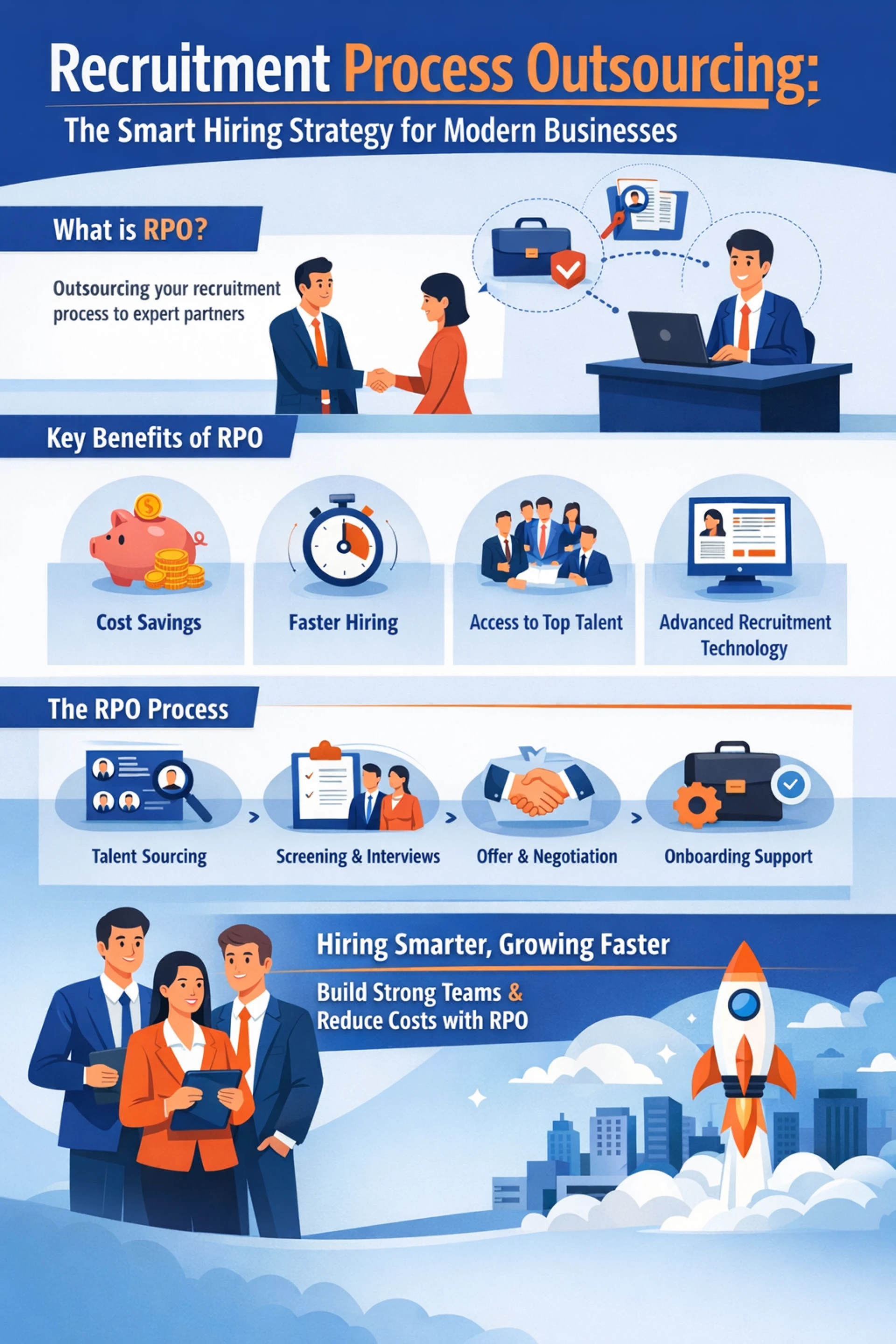
Recruitment Process Outsourcing is a strategic hiring model where a company transfers all or part of its recruitment activities to an external service provider. The RPO partner acts as an extension of the company’s HR team, handling tasks such as sourcing, screening, interviewing, and onboarding candidates.
Businesses across industries are adopting RPO services because they improve recruitment efficiency, reduce hiring costs, and provide access to larger talent pools. This article explores the concept of Recruitment Process Outsourcing, its benefits, process, and why it has become essential for modern workforce management.
What is Recruitment Process Outsourcing (RPO)?
Recruitment Process Outsourcing refers to a business strategy in which organizations outsource their recruitment processes to a specialized provider. Instead of handling hiring internally, companies rely on RPO partners who manage recruitment functions such as talent sourcing, candidate screening, interview coordination, and onboarding.
Unlike traditional recruitment agencies that focus on filling individual roles, RPO providers manage the entire recruitment lifecycle and integrate closely with the company’s HR department.
RPO providers typically handle:
- Workforce planning
- Job posting and marketing
- Candidate sourcing
- Resume screening
- Interview coordination
- Candidate assessment
- Offer management
- Onboarding support
By managing these processes efficiently, RPO providers help organizations build a scalable and effective recruitment strategy.
Why Businesses Choose Recruitment Process Outsourcing
Companies face multiple hiring challenges today, including talent shortages, increased competition for skilled professionals, and pressure to reduce hiring costs.
Recruitment Process Outsourcing helps organizations overcome these challenges by providing a structured recruitment framework that ensures faster and better hiring outcomes.
1. Cost Reduction
One of the most significant advantages of RPO is cost savings. Traditional recruitment often involves advertising costs, agency fees, and administrative expenses.
RPO providers streamline recruitment processes and use economies of scale to reduce hiring costs significantly. In many cases, organizations can lower their cost-per-hire by 30–50%.
2. Faster Hiring Process
Speed is crucial in recruitment because top candidates often receive multiple job offers.
RPO providers use advanced sourcing techniques, recruitment technology, and established candidate networks to reduce time-to-hire and fill positions faster.
3. Access to a Larger Talent Pool
RPO providers maintain extensive databases of qualified candidates and professional networks across industries. This allows organizations to access a wider range of talent, including passive candidates who are not actively searching for jobs.
4. Advanced Recruitment Technology
Many RPO providers offer advanced recruitment technologies such as:
- Applicant Tracking Systems (ATS)
- AI-powered candidate screening
- Recruitment analytics
- Automated communication tools
These technologies improve recruitment efficiency and enhance the candidate experience.
5. Scalability and Flexibility
Hiring needs can change quickly depending on business growth or seasonal demand.
RPO services allow companies to scale recruitment efforts up or down without increasing internal HR staff. This flexibility makes RPO ideal for companies experiencing rapid expansion.
The Recruitment Process Outsourcing Workflow
A typical RPO recruitment process follows several stages.
1. Workforce Planning
The RPO provider works closely with the company to understand hiring goals, workforce requirements, and business objectives.
2. Job Analysis and Role Definition
Detailed job descriptions and candidate profiles are created to ensure that the recruitment process targets the right candidates.
3. Candidate Sourcing
The RPO team uses multiple channels to source candidates, including:
- Job portals
- Social media platforms
- Professional networks
- Talent databases
- Employee referrals
4. Candidate Screening
Candidates are screened based on qualifications, experience, and skills. Initial interviews and assessments are conducted to shortlist the most suitable applicants.
5. Interview Coordination
The RPO team schedules interviews between candidates and hiring managers while ensuring a smooth recruitment experience.
6. Offer Management
Once the right candidate is selected, the RPO provider assists with salary negotiations, offer letters, and documentation.
7. Onboarding Support
RPO services may also include onboarding assistance to ensure a seamless transition for the new employee.
Types of Recruitment Process Outsourcing
Different RPO models exist depending on the hiring needs of organizations.
1. Enterprise RPO
This model involves outsourcing the entire recruitment process to an external provider.
2. Project RPO
Project-based RPO is used when companies need to hire a large number of employees for a specific project or expansion.
3. On-Demand RPO
This flexible model provides recruitment support during periods of high hiring demand.
Industries That Benefit from RPO
Many industries rely on Recruitment Process Outsourcing to meet their workforce needs.
Examples include:
- Information Technology
- Manufacturing
- Healthcare
- Banking and Finance
- Retail
- Telecommunications
Organizations in these industries often require specialized talent and high-volume hiring, making RPO an ideal solution.
The Future of Recruitment Process Outsourcing
The global recruitment industry is rapidly evolving due to technological advancements and changing workforce expectations.
Future trends in RPO include:
- AI-driven recruitment automation
- Data-driven hiring strategies
- Global talent sourcing
- Remote workforce hiring
- Enhanced candidate experience platforms
Companies that adopt these technologies through RPO providers will gain a competitive advantage in attracting top talent.