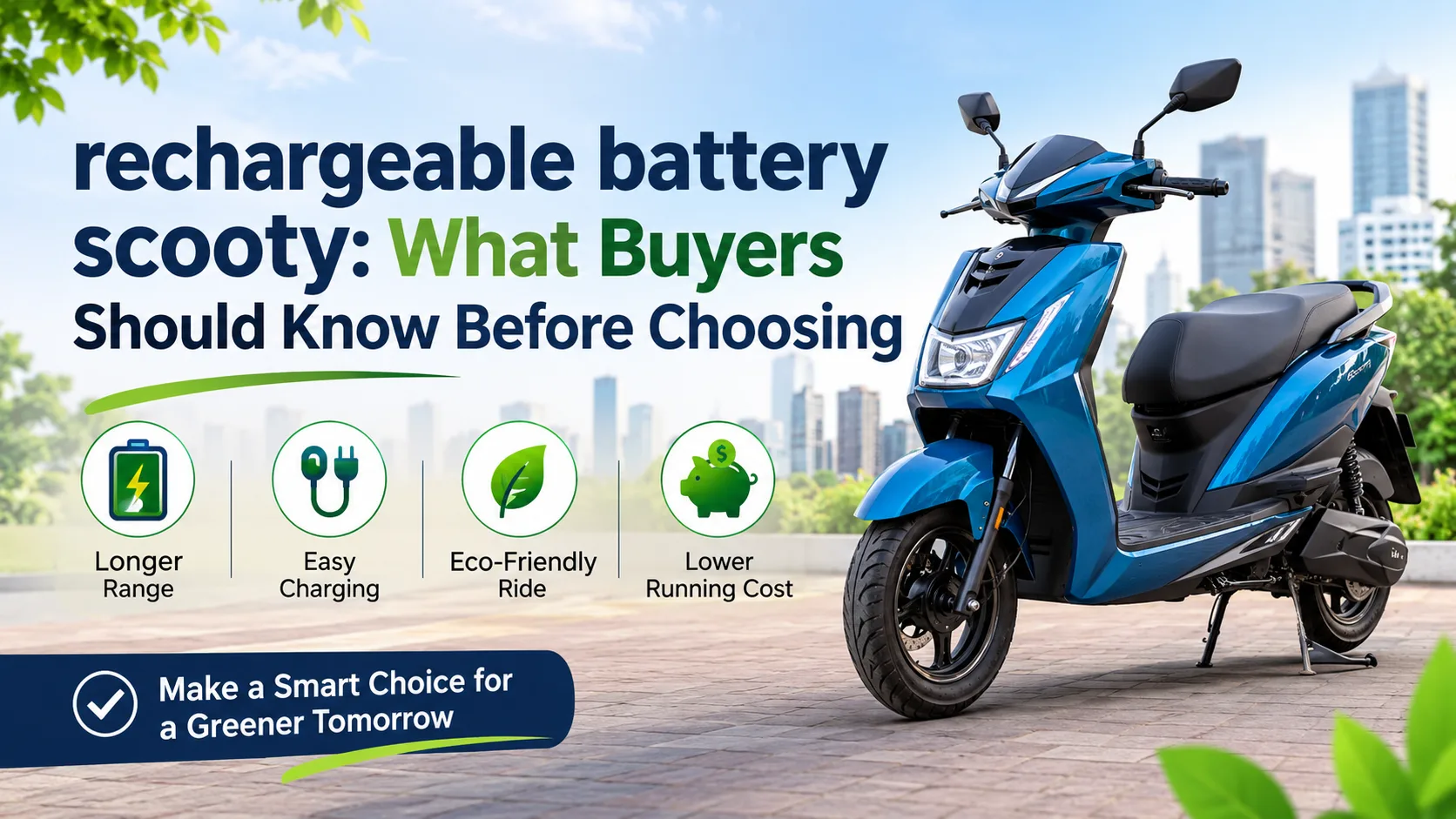
Electric scooters are becoming a practical choice for people who want convenient transportation for everyday journeys. From travelling to work and visiting nearby markets to managing regular household errands, an electric two-wheeler can make short-distance commuting easier. However, the experience of owning one depends on more than its appearance, speed, or purchase price. The battery, in particular, deserves careful attention because it influences performance, charging habits, and long-term ownership costs.
Choosing the right scooter requires understanding how its battery works, what affects its range, and how it should be maintained. Buyers who consider these factors before making a purchase are more likely to find a vehicle that suits their routine instead of relying on attractive specifications alone.
Before the First Ride: Understand the Battery Technology
The battery is the energy storage system that powers an electric scooter. It supplies electricity to the motor and other electrical components, allowing the vehicle to operate without conventional petrol.
A rechargeable battery scooty should be evaluated through its battery capacity, chemistry, warranty, charging time, and compatibility with the vehicle. These details help buyers understand what they are actually purchasing.
Lithium-ion technology is widely used in modern electric vehicles because of its favourable energy-to-weight characteristics. A Li-ion battery scooty can offer a practical combination of energy storage and vehicle weight, but battery performance depends on the quality of the complete battery pack rather than chemistry alone.
When comparing models, ask the seller about:
- Battery capacity, generally measured in kilowatt-hours (kWh).
- Manufacturer-specified charging time.
- Expected riding range under stated test conditions.
- Battery warranty and its exclusions.
- Battery management and protection features.
- Availability of replacement batteries and authorised service.
The Bureau of Indian Standards has published performance-testing standards for lithium-ion traction battery packs and systems used in electric road vehicles. These standards highlight why battery reliability and testing should be part of the buying decision, not an afterthought.
During Daily Use: Understand What Affects Riding Range
One of the most common questions among electric scooter buyers concerns the distance a vehicle can travel on a full charge. Advertised range figures can be useful for comparison, but actual performance varies according to riding conditions.
For example, frequent acceleration, higher speeds, heavy loads, steep roads, and low tyre pressure can influence energy consumption. Traffic conditions and riding habits may also affect the distance covered.
Consider a commuter who travels to work every weekday. If the daily journey is relatively short, a scooter with a moderate range may be sufficient. Someone travelling longer distances or making several stops throughout the day may need additional battery capacity.
Instead of selecting a model solely because it advertises an impressive range, calculate your regular travel distance and leave a reasonable charging margin. This makes daily planning more convenient and reduces the chances of running low on battery during an unexpected journey.
It is also helpful to understand whether the manufacturer provides a tested range or an estimated figure. Ask about the conditions under which the stated range was measured before comparing different models.
At Charging Time: Build a Convenient Routine
Charging should fit naturally into your daily schedule. For many users, home charging is convenient because the scooter can be connected when it is not being used.
Before purchasing, check the charger specifications, recommended electrical connection, and approximate charging duration. Also confirm whether the charger is supplied with the scooter and whether any specific installation requirements apply.
A few practical habits can make charging easier:
- Use the charger recommended by the manufacturer.
- Follow the charging instructions provided in the owner's manual.
- Keep the charging area dry, clean, and properly ventilated as instructed.
- Avoid using damaged cables or connectors.
- Do not ignore unusual heating, smells, or visible battery damage.
- Arrange professional inspection if the charging system behaves unexpectedly.
A battery management system (BMS) is another important feature to understand. It monitors battery operating conditions and supports protective functions. Indian electric vehicle safety requirements include protections relating to overcharging, over-discharging, overcurrent, short circuits, and temperature.
However, a BMS does not eliminate the need for correct charging practices or regular attention to the vehicle's condition.
When Comparing Models: Look Beyond the Purchase Price
Battery specifications can help explain performance, but buyers should also consider the overall cost of ownership. A scooter with a lower initial price may not necessarily offer the best value if it has limited warranty coverage, inconvenient charging arrangements, or poor service support.
A Low cost electric scooty should be assessed according to what it offers over its expected period of use. Consider the purchase price alongside electricity expenses, regular servicing, tyre replacement, brake maintenance, and possible battery-related costs.
People exploring an electric scooty under 50000 should pay particular attention to the specifications included at that price. Check whether the quoted amount covers the battery, charger, warranty, and other necessary components.
It is equally important to compare similar models rather than making decisions based on price alone. A slightly more expensive option may offer better comfort, useful safety equipment, or stronger after-sales support.
The objective is to identify a scooter that fits your budget while meeting your actual commuting requirements.
Choosing Features That Make Everyday Travel Easier
Battery performance is important, but the overall riding experience depends on several other components. A Smart Electric Scooter may include features such as a digital display, multiple riding modes, keyless operation, anti-theft functions, or connected technology.
These features can improve convenience, but their usefulness depends on your preferences and daily routine.
For example, a clear digital display can help you monitor battery status and speed. Riding modes may allow you to adjust acceleration according to road conditions. Good lighting, effective brakes, comfortable seating, and stable handling are equally important.
When comparing scooters, check whether the features are genuinely useful and easy to operate. Do not allow advanced technology to distract you from essential aspects such as braking performance, tyre quality, suspension, and riding comfort.
A well-designed vehicle should balance technology with practical usability.
Over the Long Term: Protect Battery Performance
Battery care does not end after the first few months of ownership. Like other vehicle components, batteries require appropriate handling and maintenance.
Follow the manufacturer's recommendations for charging, storage, inspection, and servicing. Avoid exposing the battery to conditions outside its specified operating limits. If the vehicle will remain unused for an extended period, consult the owner's manual for the recommended storage charge level and inspection routine.
Pay attention to changes in charging behaviour or riding range. A gradual change may occur with battery ageing, but sudden or unusual performance changes should be checked by an authorised technician.
Never attempt to open or repair a high-voltage battery pack without appropriate training and equipment. Battery-related problems should be handled by qualified professionals.
Also review the warranty conditions carefully. Understand which battery issues are covered, what usage conditions apply, and how a claim can be raised.
Making the Purchase: Choose the Seller Carefully
Once you have understood your battery requirements, the next step is to compare available scooters and sellers. If you are researching an Electric Scooter Online Store in Noida, review product information carefully before deciding which model to purchase.
A dependable buying experience should include transparent specifications, clear pricing, warranty details, delivery information, and accessible customer support.
Before you buy electric scooty, ask questions about the battery manufacturer, charging equipment, service availability, and replacement procedures. If a product listing does not explain an important specification, request clarification rather than making assumptions.
A demonstration or test ride can also help you evaluate seating comfort, acceleration, braking, and handling. Customer reviews may provide additional information, particularly when they discuss long-term usage and after-sales service rather than only the delivery experience.
It is also worth checking the vehicle's legal classification and applicable registration requirements. Do not assume that every electric scooter is exempt from registration. Verify the specific model's documentation and applicable rules before completing the purchase.
A Smarter Choice Starts With Battery Awareness
An electric scooter can become a useful part of everyday transportation when its specifications match the owner's needs. Understanding battery capacity, charging routines, riding range, safety features, and warranty coverage makes it easier to evaluate different options with confidence.
Rather than focusing on a single specification or the lowest available price, consider the complete ownership experience. A suitable scooter should be comfortable to ride, practical to charge, supported by reliable service, and appropriate for your regular travel distance.
A little research before purchasing can prevent confusion later. By understanding how the battery works and what it requires throughout its life, buyers can make a more informed decision and enjoy the convenience of electric mobility with greater confidence.