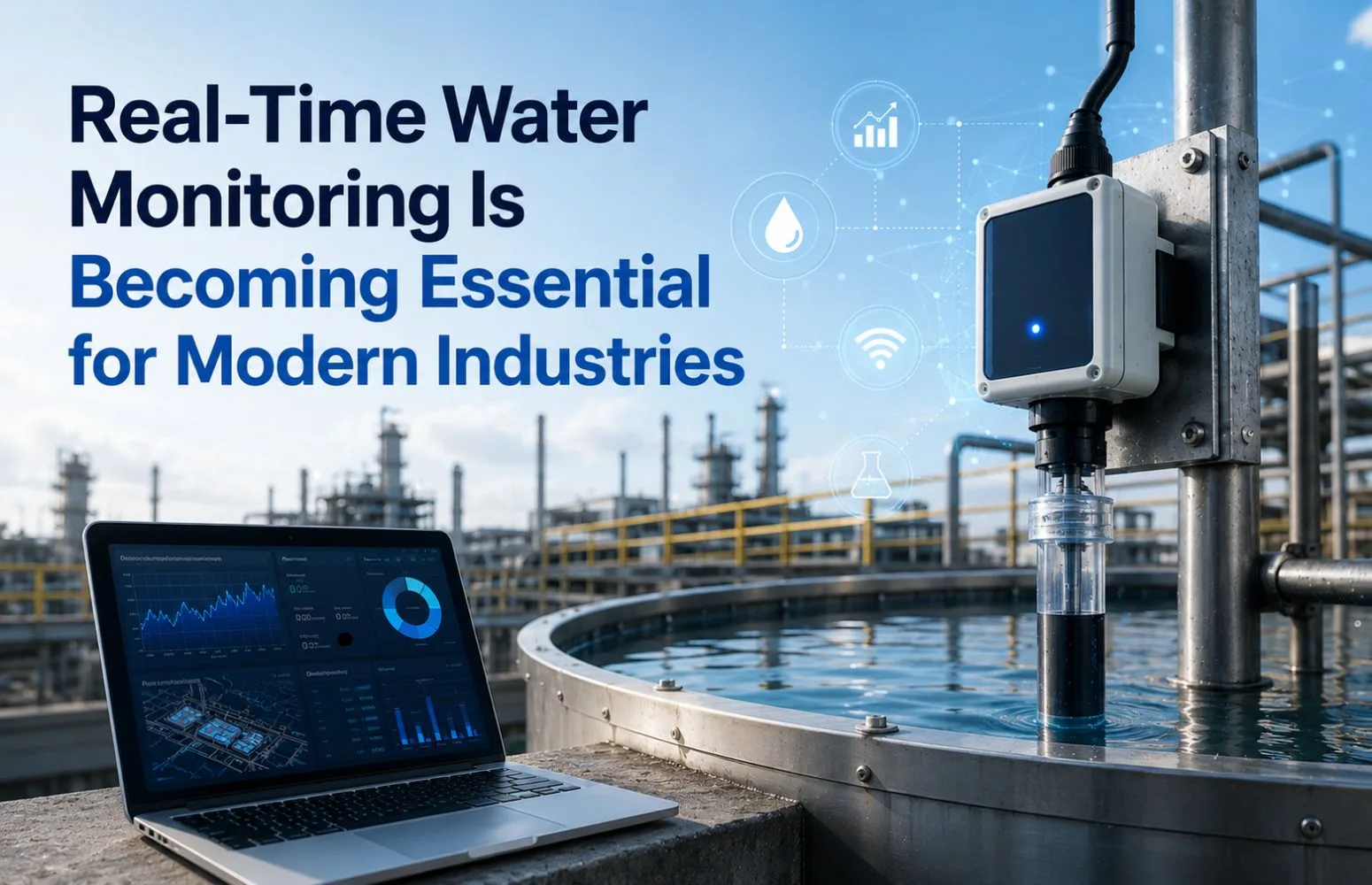
Water is the most important resource for every industry. But, the way by which businesses are managing it is changing rapidly. Today, most of the industries are expected to operate more efficiently, reduce waste. Due to this, various industries are now turning towards a smarter water management system for improving their regular operations.
Also, the biggest changes in recent years is the increasing use of water level sensors for business. These systems are helping the industries to avoid water related issues. It also helps to make a better decision and improve efficiency based on real-time data.
Why is a real-time water monitoring system important?
In various industries, water plays a very critical part of day-to-day operations. Most of the manufacturing plants use it for cooling their systems and production. Agriculture businesses are also dependent on it for irrigation. Commercial buildings require it for smooth facility management.
Traditionally, most of the organizations used to monitor the water levels manually. Employees have to inspect the storage system and tanks physically, which resulted in inaccurate readings and delays. But now in the fast-moving industrial environments, this approach can delay the daily operation.
A real-time water monitoring system can resolve this issue by providing continuous visibility into water systems. Businesses can regularly track the water levels, usage patterns, and the performance of the system without waiting for any manual updates. This will not only save time but will also help the companies to respond quickly before any small issue becomes a major one.
The shift towards smart industrial systems
Industries across the world are becoming more technology-driven. Smart infrastructure, automation, and connected systems are now a part of everyday business operations. Water management is now naturally becoming a part of this transformation.
A modern Water Level Sensor for Business environment can help companies to monitor tanks, pipelines, storage systems, and underground reservoirs around the clock. These sensors can continuously collect the information and can send alerts whenever they detect unusual conditions.
As an example, if the water tank is close to overflowing or if the water level drops suddenly below safety limits, then the system can immediately notify the operator. It will allow the businesses to take action quickly instead of discovering the issues after the damage has already occurred. For the industries that depend heavily on an uninterrupted water supply, this kind of monitoring can make a major difference in operational efficiency.
How is IoT changing water management?
The rise of IoT water technology has completely transformed the way industries use to manage their resources. IoT allows physical devices to connect and communicate via digital networks.
In the water management systems, IoT-enabled sensors can gather a real time data and then send it directly to mobile apps, cloud platforms, and the monitoring dashboards. It means that the facility manager can easily access live information virtually from anywhere without the need to inspect the system manually.
One of the biggest advantages of the IoT water technology is its ability to automate the monitoring process. Business aslo no longer have to rely completely on human observations. Instead, they can get instant updates, detailed reports, and automated alerts whenever any unusually activity is detected.
These systems also make it easier to manage various locations at the same time. Companies that are operating across various sites can monitor all their water systems from a single platform.
Industries that benefit from the real-time water monitoring
Real-time water monitoring is useful across a wide range of industries because each sector depends on efficient resource management in a very different way.
1. Manufacturing and industrial facilities
Manufacturing units generally need a regular and stable water supply for machinery, cooling systems, and production lines. Any kind of interruptions can slowly down the operations or increase the maintenance costs. With a smart monitoring system, the business can benefit by maintaining proper water levels and avoiding any unexpected downtime.
2. Irrigation and the agriculture industry
Management of water is very important in the field of agriculture. Agricultural businesses and farmers use water monitoring systems to improve efficiency in irrigation and to reduce any unnecessary water usage. Real-time data can also help to ensure that the crops receive the right amount of water without any wastage.
3. Infrastructure and commercial buildings
Shopping malls, large office complexes, housing societies, and smart city projects are also adopting the automated water monitoring systems. These technologies can help to detect leakage early, prevent overflow, and improve overall water distribution management.
Why smart water monitoring matters?
Real-time water monitoring is rapidly becoming an essential part of the modern industrial operation. Businesses are now moving away from the traditional manual methods and adopting the smarter system, which provides instant visibility and better control over the water resources.
Technologies like water level sensors for business applications and the IoT Water Technology are helping the industries to improve their efficiency, reduce waste, and respond faster to potential issues.