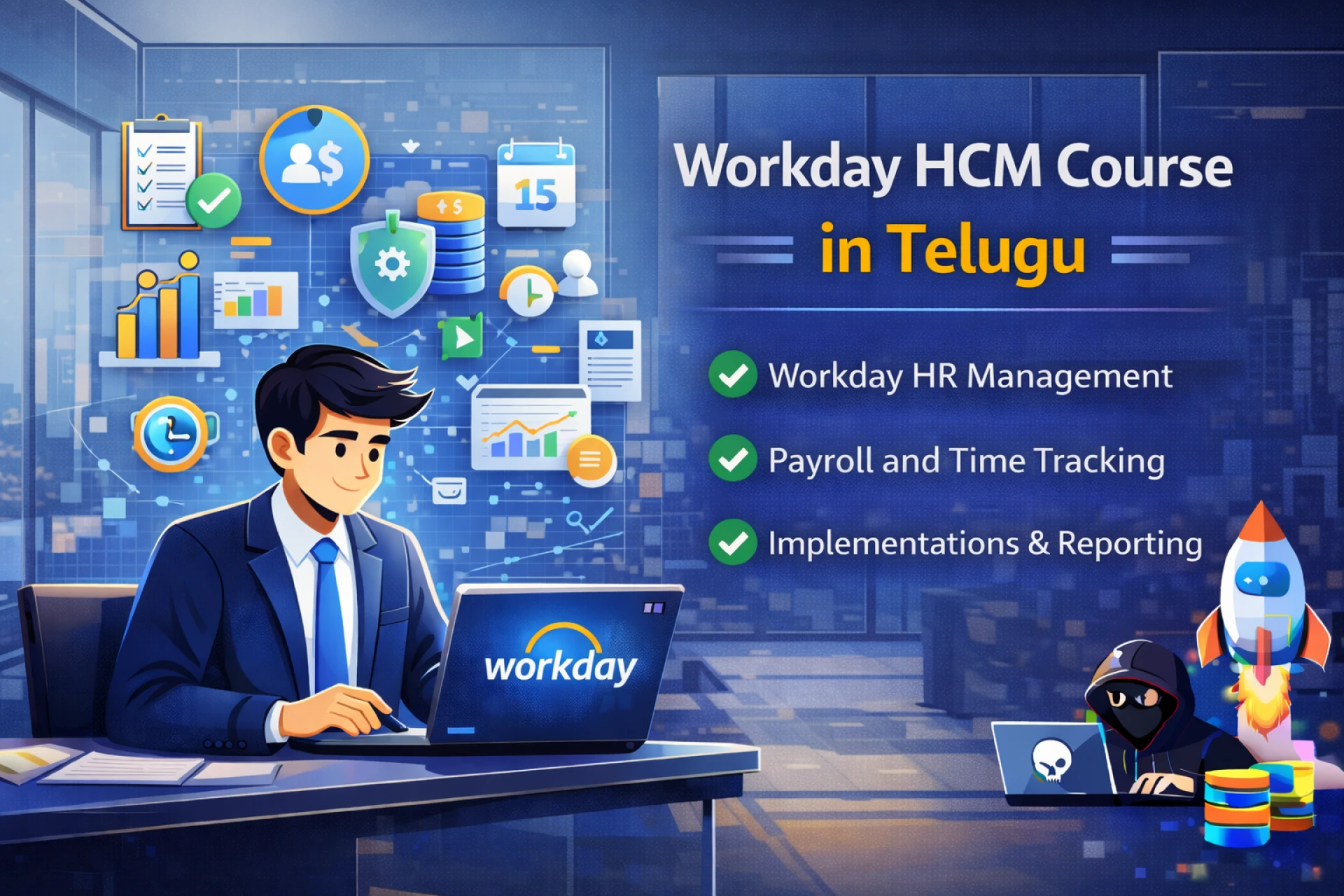
In today’s data-driven HR landscape, organizations rely heavily on real-time insights to make faster and smarter decisions. The Real-Time Reporting Analytics Engine in Workday HCM empowers HR professionals, managers, and executives with instant access to workforce data. Mastering this engine is a key milestone for anyone pursuing a Workday HCM Course in Telugu and aiming to become a certified Workday consultant.
This blog explores how Workday’s reporting and analytics capabilities transform raw HR data into actionable intelligence.
What is the Real-Time Reporting Analytics Engine?
Workday’s Real-Time Reporting Analytics Engine is built on a unified data model. Unlike traditional HR systems that rely on data warehouses and overnight batch processing, Workday stores all HR, payroll, talent, and compensation data in a single system. This means reports are generated instantly without data replication.
Real-time reporting allows organizations to:
- Track headcount instantly
- Analyze attrition trends
- Monitor compensation budgets
- Evaluate performance outcomes
- Review diversity and inclusion metrics
Because reports pull directly from live data, decision-makers always work with the most accurate information.
Core Components of Workday Reporting
Workday reporting is built around several key components:
1. Standard Delivered Reports
Workday provides hundreds of pre-built reports covering workforce planning, payroll, talent management, recruiting, and benefits. These reports can be customized based on organizational needs.
2. Custom Reports
HR administrators can create custom reports using Workday’s intuitive drag-and-drop interface. Users select business objects, fields, filters, and prompts to design reports tailored to specific requirements.
3. Calculated Fields
Calculated fields allow advanced logic within reports. For example:
- Tenure calculation based on hire date
- Age calculation from date of birth
- Custom performance score averages
This feature enhances flexibility and analytical depth.
4. Dashboards and Worklets
Workday dashboards display key metrics visually using charts, tables, and KPIs. Executives can monitor real-time workforce indicators through personalized dashboards.
Business Objects and Data Sources
Understanding business objects is crucial for reporting mastery. A business object represents a data entity within Workday, such as:
- Worker
- Position
- Job Profile
- Organization
- Compensation
Reports are built using these objects as data sources. Knowing relationships between objects helps in building accurate and comprehensive reports.
For example, if you need a report showing employee salary by department, you must connect Worker data with Organization and Compensation objects.
Real-Time Analytics for Strategic Decisions
Workday’s analytics engine supports strategic HR decisions by offering insights such as:
- Turnover trends by location
- Diversity ratios by leadership level
- Compensation distribution across job grades
- Recruiting pipeline performance
- Performance rating trends
Because updates occur instantly when changes are made in the system, leaders can react quickly to workforce challenges.
For instance, if attrition increases in a specific department, HR can immediately analyze underlying factors such as compensation gaps or performance ratings.
Advanced Reporting Features
Workday includes advanced reporting capabilities such as:
Matrix Reports
Display grouped data in a grid format, such as headcount by department and location.
Trending Reports
Track changes over time to analyze workforce growth or decline.
Composite Reports
Combine multiple data sets into a single report for comprehensive analysis.
Discovery Boards
Interactive visual dashboards that allow users to drill down into data dynamically.
These features enhance reporting flexibility and provide deeper analytical insights.
Security in Reporting
Since HR data is sensitive, Workday uses role-based security. Users can only access data relevant to their role. For example:
- Managers view their team’s data
- HR partners access broader workforce reports
- Executives see aggregated company-wide metrics
Security policies ensure confidentiality while enabling informed decision-making.
Integration with Other Workday Modules
The reporting engine integrates seamlessly with other modules within Workday HCM, including:
- Recruiting
- Talent Management
- Compensation
- Payroll
- Time Tracking
This integration ensures that reports reflect a holistic view of the workforce rather than isolated data segments.
For example, performance data automatically connects with compensation reports, enabling pay-for-performance analysis.
Benefits of Real-Time Reporting
Organizations gain multiple advantages from mastering Workday reporting:
- Faster decision-making
- Improved workforce planning
- Enhanced transparency
- Better compliance reporting
- Increased operational efficiency
Instead of waiting for monthly or quarterly HR summaries, leaders can make daily data-driven decisions.
Best Practices for Reporting Mastery
To truly master Workday’s Real-Time Reporting Analytics Engine, learners should:
- Understand business object relationships thoroughly
- Practice building custom and advanced reports
- Learn calculated field logic
- Explore dashboards and discovery boards
- Follow security best practices
- Validate reports for accuracy
Hands-on practice during a Workday HCM Course in Telugu is essential for gaining confidence in report configuration.
Career Opportunities in Workday Reporting
Professionals skilled in Workday reporting are highly valued in the job market. Common roles include:
- Workday HCM Functional Consultant
- Workday Reporting Analyst
- HR Data Analyst
- HRIS Specialist
Reporting expertise often differentiates candidates because organizations rely heavily on analytics for workforce strategy.
Conclusion
Real-Time Reporting Analytics Engine Mastery is one of the most powerful skills within Workday HCM. By leveraging live data, configurable reports, advanced analytics tools, and interactive dashboards, organizations can transform HR operations into a strategic function.
For learners enrolled in a Workday HCM Course in Telugu, understanding reporting architecture, calculated fields, dashboards, and security frameworks is crucial. Mastering these capabilities not only enhances career prospects but also enables professionals to deliver measurable value to organizations.