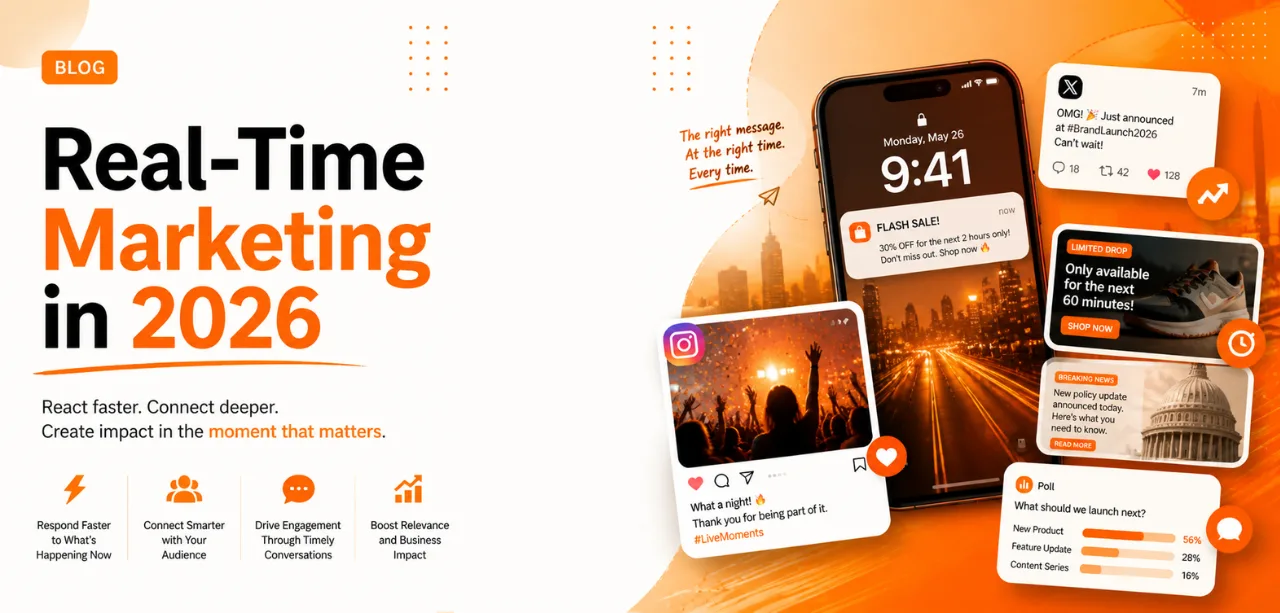
In 2026, marketing isn’t about who shouts the loudest—it’s about who shows up at the right time. Real-time marketing has become a core strategy for brands that want to stay visible, relevant, and competitive.
If you’re still relying only on pre-planned campaigns, you’re already behind. The brands winning today are the ones reacting instantly to trends, conversations, and customer behavior.
That said, speed without direction is useless. Real-time marketing works only when it’s thoughtful, aligned with your brand, and executed with purpose.
Let’s break it down in a way that actually helps you use it—and rank on Google.
What Is Real-Time Marketing?
Real-time marketing (RTM) is the practice of creating and publishing content immediately in response to current events, online trends, or user actions.
This can include:
- Posting content based on viral topics
- Engaging during live events
- Delivering personalized messages instantly
- Triggering campaigns based on user behavior
In 2026, this process is powered by AI and automation, making it faster and more efficient than ever.
Why Real-Time Marketing Matters More Than Ever
People Decide in Seconds
Attention spans are shrinking. If your content isn’t relevant right now, users scroll past it without a second thought.
Platforms Prefer Fresh Content
Search engines and social media platforms push recent and engaging content to the top. Real-time marketing helps you stay visible.
Instant Interaction Is Expected
Customers expect brands to respond quickly. Whether it’s a comment or a trend, delays can make your brand look outdated.
Key Real-Time Marketing Trends in 2026
Faster Content with AI
AI tools now generate text, visuals, and ads in seconds. This removes production delays and allows immediate action.
Predicting Trends Before They Peak
Data-driven tools help brands identify upcoming trends early, so they can act before the market gets crowded.
Real-Time Personalization
Content is customized instantly based on:
- User preferences
- Location
- Browsing activity
Search Evolution
Voice and visual search are now part of real-time strategies, helping users discover content faster.
Types of Real-Time Marketing That Work
Trend-Based Content
Using trending formats or viral ideas to create relevant content.
Be careful: If it doesn’t match your brand, skip it.
Event-Driven Campaigns
Creating content around live events like:
- Sports matches
- Award shows
- Major announcements
These moments already have audience attention, making them ideal opportunities.
Cultural Reactions
Responding to memes, internet culture, or breaking news in a timely and relevant way.
Behavior-Based Automation
Automated responses triggered by user actions, such as:
- Cart reminder emails
- Personalized offers
- Instant notifications
How to Build a Real-Time Marketing Strategy
Start with a Clear Goal
Decide what you want to achieve:
- More awareness
- Better engagement
- Higher conversions
Without a goal, your efforts will feel scattered.
Use the Right Tools
Real-time marketing depends on efficiency. Use:
- AI content generators
- Trend tracking platforms
- Automation tools
Create Decision Guidelines
To act quickly, your team needs clarity:
- Does this fit our brand voice?
- Is it appropriate?
- Are we adding value?
Speed Up Execution
Reduce approval delays. Give your team the freedom to act fast within defined boundaries.
Measure and Improve
Track performance metrics like:
- Engagement
- Click-through rates
- Conversions
Then refine your approach based on what works.
SEO Benefits of Real-Time Marketing
Fresh Content Gets Priority
Search engines often rank updated and timely content higher.
More Clicks
Relevant and timely headlines attract attention and increase traffic.
Natural Backlinks
Trending content is more likely to be shared, improving your site’s authority.
Mistakes to Avoid
Jumping on Every Trend
Not all trends are worth it. Irrelevant content weakens your brand.
Losing Your Identity
Trying too hard to fit in can make your brand feel inconsistent.
Slow Execution
Timing is everything. Being late means missing the opportunity.
Overusing Automation
AI helps with speed, but relying on it too much can make content feel generic.
Practical Examples
Fast Social Media Engagement
Quick replies and relevant posts build stronger audience relationships.
Adaptive Advertising
Ads that adjust based on user behavior perform better.
Timely Posting
Publishing content at peak moments increases reach and impact.
The Role of AI in 2026
AI is a major driver of real-time marketing. It helps with:
- Instant content creation
- Trend identification
- Audience targeting
- Performance forecasting
But don’t depend on it blindly. Strategy still requires human thinking.
How Smaller Brands Can Win
You don’t need a big team or budget.
Focus on:
- Specific niches
- Local trends
- Genuine engagement
Smaller brands often move faster, which is a huge advantage.
What the Future Looks Like
Real-time marketing will continue to evolve with:
- Greater automation
- Smarter predictions
- Deeper personalization
We’ll likely see:
- AI-generated video content in real time
- Instant influencer collaborations
- Seamless publishing across platforms
Final Thoughts
Real-time marketing in 2026 is about precision and timing—not just speed.
If you react without thinking, you’ll get ignored. But if you combine relevance, clarity, and quick execution, you can stand out in a crowded space.
Start simple. Stay consistent. Focus on what actually connects with your audience.
Because today, the brands that win aren’t just fast—they’re strategically fast.