
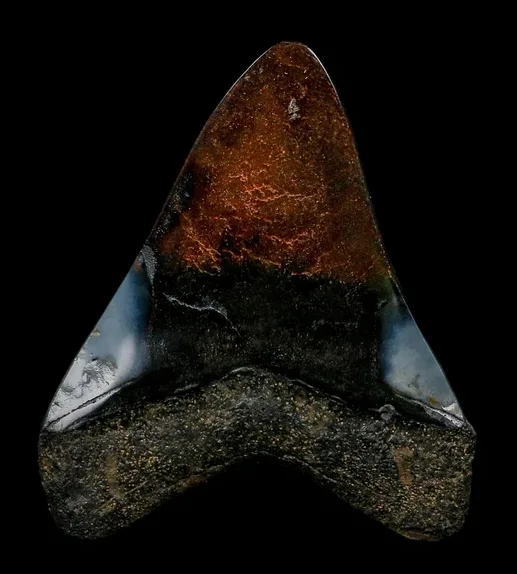
Megalodon teeth are among the most recognizable marine fossils, largely because of their impressive size, broad triangular shape, and serrated edges. For collectors searching for real megalodon teeth for sale, knowing how to distinguish an authentic fossil from a replica is an important first step. Genuine teeth formed millions of years ago and can show natural variations in color, texture, mineralization, and preservation that manufactured copies may not reproduce convincingly.
What Does a Real Tooth Look Like?
Megalodon, scientifically known as Otodus megalodon, was an extinct giant shark that lived roughly 23 to 3.6 million years ago. Its teeth are commonly found because sharks continuously replaced their teeth throughout life, leaving many teeth behind to become fossilized in marine sediments.
A genuine fossil tooth generally has several recognizable characteristics. The crown is broad and triangular, while the cutting edges have fine serrations. The enamel may remain relatively smooth and glossy, but the overall tooth can show changes caused by fossilization and the minerals present in the surrounding sediment.
Natural specimens can vary considerably. One tooth may be dark gray or brown, while another may display tan, black, reddish, or other mineral-related colors. Small chips, surface wear, variation in texture, and minor irregularities can also occur naturally.
These differences are important because genuine fossils are not manufactured to look identical. Natural variation is expected.
How Do Replicas Differ?
Replicas are manufactured copies made to resemble authentic fossils. They can be produced from materials such as resin, plaster, ceramic, or other compounds. A well-made replica may look convincing from a distance, but closer inspection can reveal differences.
When comparing megalodon teeth for sale, collectors can consider several features:
- Material: A replica may feel noticeably different from a mineralized fossil.
- Surface texture: Manufactured surfaces can appear unusually uniform.
- Serrations: Artificially reproduced serrations may look too regular or lack natural variation.
- Color: Painted or artificially aged replicas may have an overly consistent appearance.
- Weight: The weight should make sense for the tooth's size and material.
Wear: Natural fossils can show irregular erosion and preservation patterns.
None of these characteristics should be treated as absolute proof on its own. Fossils can be professionally restored, stabilized, or prepared, and replicas can be made with considerable skill. Proper documentation and reliable sourcing therefore remain important.
What Should Buyers Check?
Before purchasing a megalodon tooth for sale, collectors should take a few minutes to examine the available information carefully. A clear description and good photographs can help establish what type of specimen is being offered and what condition it is in.
A simple checklist can include:
- Check the tooth's stated geological age and locality.
- Examine photographs for natural surface variation.
- Look closely at the serrations and enamel.
- Check whether restoration or repair is disclosed.
- Review the specimen's measurements and weight when available.
- Look for authenticity documentation.
- Purchase from a seller that provides clear specimen information.
Price can also provide context, but it should not be used as proof of authenticity. Genuine Megalodon teeth vary widely in size, condition, color, locality, and preservation, so two authentic specimens can have very different prices. Fossil Age Minerals' current listings, for example, include specimens ranging from smaller teeth to larger examples with stated Miocene-to-Pliocene ages and Certificates of Authenticity.
The safest approach is to consider several characteristics together instead of deciding whether a specimen is real based on one visual feature.
Conclusion
Learning to recognize the differences between authentic fossils and replicas can make fossil collecting more informed and enjoyable. Genuine Megalodon teeth preserve evidence of an extinct marine predator and can display natural features created through fossilization, mineralization, erosion, and geological history.
For collectors interested in authentic prehistoric specimens, Fossil Age Minerals offers fossil teeth and other natural-history specimens with detailed product information and authenticity documentation on many listings.
A careful buyer does not need to be a professional paleontologist to begin collecting responsibly. Taking time to examine the specimen, understand its documentation, and learn about its geological history can help turn an impressive-looking tooth into a meaningful piece of natural history.