

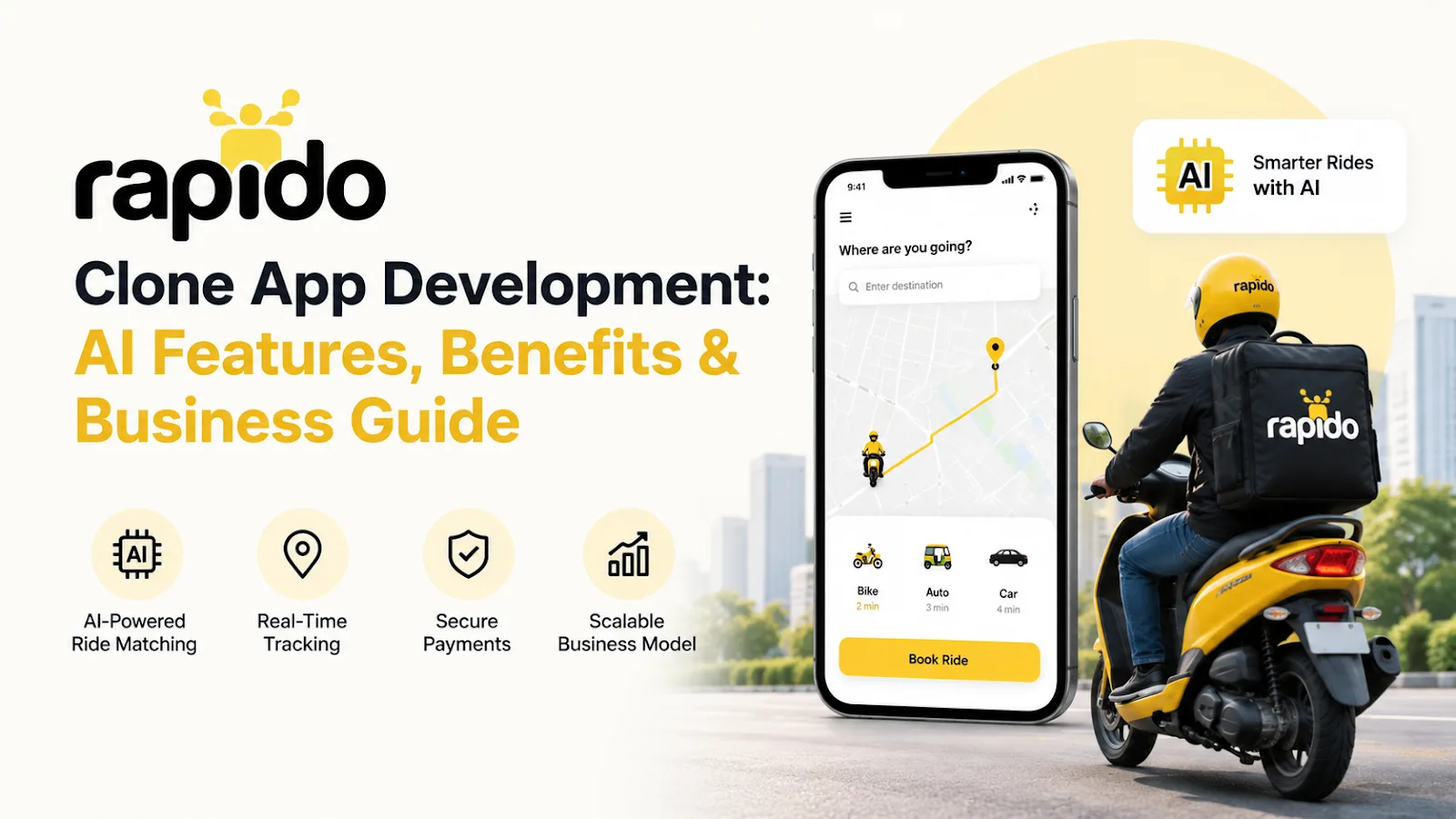
The rise of bike taxi and on-demand mobility services has created new opportunities for entrepreneurs looking to enter the digital transportation market. Customers increasingly want affordable, convenient, and fast ways to travel through busy cities. A Rapido Clone App provides a ready foundation for building a bike taxi and ride-booking platform that connects passengers with nearby riders through a mobile application.
A Rapido-style platform can simplify the complete ride-booking process, from finding a nearby rider and estimating fares to booking trips, making digital payments, tracking rides, and submitting ratings. For business owners, the model can be customized with different vehicle categories, pricing strategies, service areas, payment methods, and revenue models.
Modern mobility platforms can also use AI-powered features to improve rider matching, route planning, fare optimization, fraud detection, customer support, and demand forecasting. This makes AI an important consideration for entrepreneurs planning to build a scalable ride-booking marketplace.
This guide explains what a Rapido clone app is, how it works, its essential features, AI capabilities, business benefits, monetization strategies, development process, cost factors, and how businesses can launch their own on-demand bike taxi platform.
What Is a Rapido Clone App?
A Rapido Clone App is a customizable bike taxi and ride-booking application inspired by the core functionality of modern on-demand mobility platforms. It allows customers to book rides with nearby riders while enabling drivers to accept trips, navigate to pickup locations, complete rides, and manage their earnings.
A typical platform consists of three primary components:
- Passenger app
- Driver app
- Admin panel
The passenger application allows users to register, select pickup and destination locations, view estimated fares, request rides, track drivers, make payments, and rate their experience.
The driver application enables riders to create profiles, manage availability, receive ride requests, navigate to customers, complete trips, and monitor earnings.
The admin panel provides centralized control over users, drivers, rides, payments, commissions, service areas, promotions, and analytics.
Because the application can be customized, businesses can adapt the model to their local market instead of simply duplicating another platform.
How Does a Rapido Clone App Work?
A bike taxi application follows a straightforward booking workflow designed to connect passengers and drivers quickly.
1. Passenger Registration
Users create an account using their phone number, email address, or supported authentication method.
2. Enter Pickup and Destination
The passenger enters their pickup location and destination using an integrated map.
3. Fare Estimation
The application calculates an estimated fare based on factors such as distance, ride type, pricing rules, and applicable fees.
4. Nearby Driver Matching
The platform identifies available drivers near the passenger's pickup location.
5. Ride Request
The passenger confirms the booking and sends a ride request to an eligible driver.
6. Driver Acceptance
A nearby driver receives the request and can accept the ride.
7. Real-Time Tracking
The passenger can track the driver's location and estimated arrival time.
8. Ride Completion
The driver navigates to the destination and completes the trip.
9. Payment
The passenger pays through an available payment method, such as digital payment, wallet, or cash where supported.
10. Rating and Review
After the ride, passengers can rate the driver and provide feedback.
This workflow creates a convenient digital experience while giving the business real-time visibility into marketplace activity.
Why Build a Rapido Clone App?
The growing demand for affordable and convenient urban transportation makes bike taxi platforms an attractive business model in markets where such services are legally permitted.
Affordable Urban Mobility
Bike taxis can provide an efficient transportation option for short-distance travel and congested urban areas.
Faster City Travel
Two-wheelers can often navigate crowded roads more easily than larger vehicles, making them useful for short urban trips.
On-Demand Booking
Passengers can request rides through a mobile application instead of searching for transportation manually.
Location-Based Matching
GPS technology allows platforms to connect passengers with nearby available drivers.
Scalable Marketplace
Entrepreneurs can launch in one city or service area and expand into additional locations as demand grows.
Multiple Revenue Opportunities
A mobility platform can generate revenue through commissions, booking fees, subscriptions, promotions, and other marketplace models.
Growing Role of AI
AI can help optimize matching, pricing, support, demand forecasting, fraud detection, and operational decision-making.
For businesses entering the mobility market, a customizable clone solution can provide a structured starting point for developing and launching an on-demand transportation platform.
Key Features of a Rapido Clone App
A successful bike taxi platform requires features for passengers, drivers, and administrators.
Passenger App Features
Easy Registration and LoginUsers should be able to register quickly using phone verification, email, or other supported authentication methods.
Pickup and Destination SelectionPassengers can select their current location and destination through maps and location services.
Fare EstimationBefore confirming a ride, passengers can view an estimated fare based on the platform's pricing rules.
Multiple Ride OptionsDepending on the business model, the application can support different vehicle categories and ride options.
Driver ProfilePassengers can view relevant driver information after a booking is accepted.
Real-Time Ride TrackingGPS tracking allows passengers to monitor the driver's location and estimated arrival time.
Ride SchedulingBusinesses can optionally provide scheduled ride functionality for customers who want to book transportation in advance.
Digital PaymentsPayment integration allows customers to pay through supported digital methods.
Ride HistoryUsers can view previous rides, payment details, and booking information.
Ratings and ReviewsPassengers can rate drivers after completing rides, helping maintain service quality.
Push NotificationsNotifications can inform users about booking confirmation, driver acceptance, arrival, ride completion, payment, and promotional offers.
Customer SupportIn-app support can help passengers resolve booking, payment, cancellation, or account-related questions.
Driver App Features
The driver application is responsible for managing the supply side of the transportation marketplace.
Driver RegistrationDrivers can submit their personal and vehicle information during onboarding.
Profile ManagementDrivers can update their profile and relevant vehicle information.
Online and Offline ModeDrivers can control their availability and decide when they want to receive ride requests.
Ride Request ManagementDrivers can receive nearby ride requests and accept or reject them according to platform rules.
NavigationMap and navigation functionality helps drivers reach passenger pickup and destination locations.
Earnings DashboardDrivers can view completed rides, earnings, commissions, bonuses, and other financial information.
Ride HistoryDrivers can review previous trips and associated details.
Incentives and BonusesThe platform can provide performance-based incentives or promotional bonuses according to the business strategy.
RatingsDrivers can monitor customer ratings and feedback.
NotificationsDrivers receive updates about new requests, ride changes, promotions, and account activity.
Admin Panel Features
The admin panel gives business owners centralized control over the entire platform.
User ManagementAdministrators can manage passenger accounts, activity, and account status.
Driver ManagementThe admin can manage driver registrations, profiles, documents, vehicle information, and availability.
Ride ManagementAdministrators can monitor active, completed, cancelled, and pending rides.
Pricing ManagementThe platform can configure base fares, distance-based charges, service fees, commissions, and other pricing rules.
Payment ManagementAdministrators can monitor transactions, refunds, commissions, and driver payouts.
Service Area ManagementBusinesses can define operating zones and expand service availability as the platform grows.
Promotion ManagementAdmin users can create discount codes, promotional campaigns, referral programs, and incentives.
Analytics and ReportsBusiness owners can monitor bookings, revenue, driver activity, customer activity, popular routes, cancellations, and other marketplace metrics.
AI Features for a Rapido Clone App
AI can transform a basic ride-booking application into a more intelligent mobility platform.
AI-Based Driver-Passenger Matching
AI can analyze factors such as driver location, availability, destination, historical patterns, and estimated arrival time to improve matching efficiency.
Intelligent Route Optimization
AI-powered route analysis can help identify efficient routes based on available traffic and location data.
Demand Prediction
Machine learning models can analyze historical ride data to predict demand by location and time.
For example, the platform may identify areas where ride requests are likely to increase during particular periods and help businesses optimize driver availability.
Dynamic Pricing Support
AI can assist businesses in analyzing demand and supply patterns when determining pricing strategies. Any pricing system should remain transparent to customers and comply with applicable regulations.
AI Customer Support
AI-powered conversational support can answer common questions about bookings, payments, cancellations, account issues, and ride status.
Fraud Detection
AI can identify unusual activity and potentially suspicious transaction or booking patterns, helping businesses improve marketplace security.
Personalized Recommendations
The platform can use customer activity to provide relevant suggestions, promotions, or frequently used destinations.
Predictive Driver Demand
AI analytics can help drivers and operators understand where demand may be higher, potentially improving marketplace availability.
AI features should be implemented according to the platform's actual data, business requirements, privacy obligations, and local regulations.
Benefits of a Rapido Clone App
A customizable bike taxi application can provide advantages to different participants in the marketplace.
Benefits for Passengers
- Convenient ride booking
- Faster access to nearby transportation
- Digital payment options
- Real-time driver tracking
- Transparent ride information
- Ride history
- Ratings and reviews
Benefits for Drivers
- Access to customer ride requests
- Flexible availability
- Digital earnings tracking
- Navigation support
- Performance insights
- Incentive opportunities
Benefits for Business Owners
- Scalable marketplace model
- Multiple revenue opportunities
- Centralized management
- Data-driven business insights
- Location-based expansion
- Custom branding and features
Rapido Clone App Business Model
Selecting a suitable monetization strategy is essential for creating a sustainable transportation marketplace.
Commission Per Ride
The platform can retain a percentage of the fare from each completed ride.
Booking or Convenience Fee
A platform can charge an additional fee per booking where permitted and clearly disclosed.
Driver Subscription
Businesses can offer subscription plans that provide drivers with access to specific platform benefits.
Advertising
Relevant businesses can promote their services through advertisements or sponsored placements.
Premium Services
The platform can introduce premium ride categories, priority services, or other specialized offerings depending on market demand and applicable regulations.
Referral Programs
Referral incentives can help attract new passengers and drivers while encouraging existing users to introduce others to the platform.
The best revenue model depends on local market conditions, regulations, customer expectations, operating costs, and the platform's overall strategy.
How to Build a Rapido Clone App
Building a successful ride-booking platform requires more than copying the visible features of an existing application. The product should be designed around the business's target market and operating model.
Step 1: Define the Business Model
Identify the target market, service area, vehicle categories, customer segment, driver model, pricing structure, and revenue strategy.
Step 2: Plan the Core Features
Create a feature list for passengers, drivers, and administrators. Prioritize essential booking and payment functionality before advanced features.
Step 3: Design UI/UX
Create intuitive interfaces that make booking, navigation, communication, and ride management easy to understand.
Step 4: Develop the Passenger App
Build functionality for registration, location selection, ride booking, tracking, payments, history, notifications, and reviews.
Step 5: Develop the Driver App
Create driver onboarding, availability, ride requests, navigation, earnings, ride history, and communication functionality.
Step 6: Develop the Admin Panel
Build centralized tools for managing users, drivers, rides, pricing, payments, promotions, and analytics.
Step 7: Integrate Required Technologies
A ride-booking platform may require:
- GPS and maps
- Payment gateways
- Push notifications
- Authentication
- Cloud infrastructure
- Real-time location tracking
- Communication services
- Analytics
- AI and machine learning services
Step 8: Test the Platform
Test all major workflows, including registration, location detection, driver matching, ride requests, cancellation, tracking, payment, notifications, and reviews.
Step 9: Launch and Improve
After launch, monitor customer and driver feedback, analyze marketplace data, fix issues, and introduce improvements based on real user behavior.
How Much Does It Cost to Build a Rapido Clone App?
The cost of developing a Rapido clone app depends on the application's scope and customization level.
Major cost factors include:
- Android and iOS development
- UI/UX design
- Passenger application
- Driver application
- Admin dashboard
- GPS and map integration
- Real-time tracking
- Payment gateway integration
- AI features
- Third-party APIs
- Backend infrastructure
- Security
- Testing
- Maintenance and updates
A basic bike taxi application with essential booking features will generally require a different budget from a highly customized platform with advanced AI, analytics, multiple vehicle categories, automated support, and complex integrations.
Businesses should therefore evaluate the complete development scope rather than relying on a single fixed development price.
Why Choose a Ready-Made Rapido Clone Solution?
A ready-made clone solution can help entrepreneurs reduce the time required to start an on-demand transportation business.
Instead of developing every component from the beginning, businesses can start with an existing application structure and customize it according to their requirements.
A customizable solution can include:
- Passenger app
- Driver app
- Admin panel
- Ride booking
- GPS integration
- Real-time tracking
- Payment integration
- Ratings and reviews
- Notifications
- Revenue management
- Custom branding
The platform can then be modified according to the business's target market, operating region, service categories, pricing model, and growth strategy.
This approach can be particularly useful for startups and businesses that want to validate their mobility marketplace idea and move toward launch without building every basic component from scratch.
Conclusion
A Rapido Clone App provides entrepreneurs with a flexible foundation for launching an on-demand bike taxi and ride-booking marketplace. The model connects passengers with nearby drivers while simplifying booking, tracking, payments, communication, and ride management.
The addition of AI features can make the platform more intelligent by supporting driver-passenger matching, demand forecasting, route optimization, customer support, fraud detection, and business analytics.
However, a successful mobility application should not focus only on copying another platform. Businesses should customize the application around their target market, local transportation requirements, customer expectations, driver needs, pricing strategy, and long-term growth plans.
With the right combination of passenger features, driver tools, admin controls, AI capabilities, monetization strategies, and marketplace operations, a Rapido-style platform can become a scalable digital transportation business.
Frequently Asked Questions (FAQs)
1. What Is a Rapido Clone App?
A Rapido clone app is a customizable bike taxi and ride-booking platform that connects passengers with nearby drivers. It can include passenger and driver apps, an admin panel, GPS tracking, ride booking, digital payments, notifications, ratings, and other mobility features.
2. What AI Features Can Be Added to a Rapido Clone App?
AI features can include intelligent driver-passenger matching, demand forecasting, route optimization, customer support automation, fraud detection, personalized recommendations, and analytics. The exact features should depend on the platform's data, business requirements, and applicable regulations.
3. How Does a Rapido Clone App Make Money?
A ride-booking platform can generate revenue through commissions on completed rides, booking or service fees, driver subscriptions, premium services, advertising, and referral or promotional programs, depending on the market and applicable regulations.
4. How Much Does It Cost to Develop a Rapido Clone App?
The development cost depends on factors such as the number of applications, platform selection, UI/UX customization, GPS integration, real-time tracking, payment gateways, AI functionality, backend infrastructure, third-party integrations, and overall project scope.
5. How Can I Start a Rapido-Like Bike Taxi Business?
Start by researching your target market and applicable transportation regulations, defining the business model, selecting core features, developing passenger and driver applications, creating an admin panel, integrating maps and payments, onboarding drivers, testing the platform, and launching in a focused service area before scaling.


