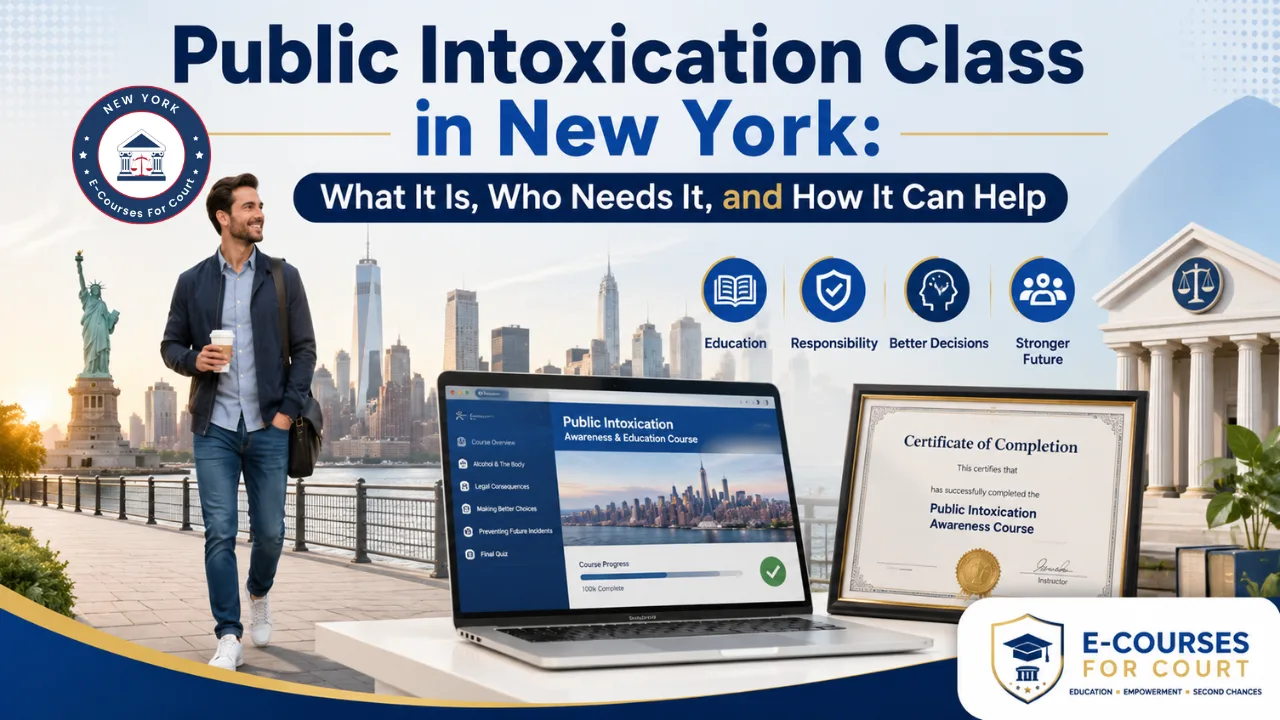
A Public Intoxication Class in New York is an educational program designed to help individuals understand the risks, legal consequences, and personal impact of alcohol-related incidents in public places. Whether you're required to complete a course by a court, attorney, probation officer, employer, or you're enrolling voluntarily, these classes provide practical knowledge that can help you make safer decisions and reduce the chances of future offenses.
Many people mistakenly believe that a public intoxication-related incident is a minor issue. However, alcohol-related offenses can affect employment opportunities, legal records, and personal relationships. Completing an approved educational course demonstrates a willingness to take responsibility and learn healthier decision-making skills.
Understanding Public Intoxication in New York
Unlike some states, New York does not have a standalone criminal offense called "public intoxication." However, individuals who are intoxicated in public may still face charges related to disorderly conduct, public disturbance, or other alcohol-related offenses if their behavior threatens public safety or disrupts others.
Courts may recommend or require educational programs when alcohol use contributes to an incident. In many situations, completing a Public Intoxication Class in New York can support court requirements, diversion programs, or probation conditions.
The primary goal of these classes is education—not punishment. Participants gain a better understanding of alcohol's effects on judgment, decision-making, and community safety.
Why Courts Recommend Public Intoxication Classes
Alcohol-related incidents often involve more than simply drinking. Poor judgment, impaired decision-making, and risky behavior frequently play significant roles. Educational programs focus on preventing repeat incidents by helping participants recognize these patterns.
A court, attorney, or probation officer may recommend a class to help participants:
- Understand how alcohol affects the brain and body.
- Learn the legal consequences of alcohol-related offenses.
- Develop healthier coping strategies.
- Improve personal responsibility.
- Reduce the likelihood of future violations.
Many diversion and rehabilitation programs emphasize education because long-term behavioral change is often more effective than punishment alone.
What You Learn in a Public Intoxication Class
A quality Public Intoxication Class in New York covers much more than basic alcohol education. The curriculum is designed to provide practical knowledge that participants can apply in everyday life.
Topics commonly include:
Alcohol and the Human Body
Participants learn how alcohol affects coordination, reaction time, judgment, memory, and overall physical health. Understanding these effects helps individuals recognize when drinking may become dangerous.
Legal Consequences
The course explains how alcohol-related incidents can lead to criminal charges, fines, probation, community service, or other legal consequences. It also discusses how future offenses may carry more severe penalties.
Decision-Making Skills
One of the most valuable parts of the program focuses on making responsible choices before situations become risky. Participants learn techniques for evaluating consequences and avoiding high-risk behaviors.
Recognizing Risk Factors
The class encourages participants to identify situations that increase the likelihood of alcohol-related problems, including peer pressure, emotional stress, and social environments.
Building Healthier Habits
Participants explore strategies for managing stress, improving communication, and making healthier lifestyle decisions without relying on alcohol.
Who May Need a Public Intoxication Class?
Enrollment requirements vary depending on individual circumstances. A Public Intoxication Class in New York may be appropriate for:
- Individuals ordered by a court.
- Participants in diversion programs.
- Individuals on probation.
- People referred by attorneys.
- College students completing disciplinary requirements.
- Employees referred through workplace programs.
- Anyone seeking alcohol education voluntarily.
Even if a course is not legally required, many people choose to complete one to better understand responsible alcohol use and demonstrate personal accountability.
Benefits of Taking an Online Public Intoxication Class
Online education has made completing court-related requirements significantly more convenient. Many participants appreciate the flexibility of learning from home without disrupting work, school, or family responsibilities.
Benefits often include:
- Self-paced learning.
- 24/7 online access.
- Immediate enrollment.
- Progress saved automatically.
- Accessible from computers, tablets, and smartphones.
- Instant certificate availability after successful completion (where applicable).
These features allow participants to complete coursework according to their own schedules while still meeting deadlines.
Choosing the Right Public Intoxication Class in New York
Not every educational program meets the same standards. Before enrolling, verify that the course satisfies your specific requirements.
Consider the following:
- Is the course accepted for your court, attorney, or probation requirement?
- Does it provide a completion certificate?
- Is customer support available?
- Is the curriculum educational and comprehensive?
- Can you complete the course entirely online?
If your requirement comes from a court or probation office, it's always wise to confirm acceptance before beginning the class.
How Long Does the Course Take?
Course lengths vary depending on the organization requiring completion.
Common options include:
- 4-hour classes
- 8-hour classes
- 12-hour classes
- 16-hour classes
Some courts specify the required number of instructional hours, while others simply require completion of an alcohol education program.
Can Completing the Course Help Your Situation?
While completing a Public Intoxication Class in New York does not automatically dismiss legal charges, it can demonstrate responsibility and a willingness to address the underlying issues that contributed to an incident.
Depending on the circumstances, educational programs may:
- Support diversion program participation.
- Satisfy probation requirements.
- Help fulfill court recommendations.
- Demonstrate personal accountability.
- Reduce the likelihood of future alcohol-related incidents.
Always follow the specific instructions provided by your court or supervising authority.
Tips for Avoiding Future Alcohol-Related Incidents
Education works best when paired with practical lifestyle changes. After completing the course, participants are encouraged to apply what they've learned in everyday situations.
Helpful strategies include planning transportation before drinking, recognizing personal limits, avoiding high-risk environments, surrounding yourself with supportive friends, and developing healthy stress-management techniques.
Small behavioral changes can significantly reduce the likelihood of future alcohol-related problems.
Why Education Matters More Than Ever
Alcohol-related offenses often affect far more than a single evening. They can influence employment opportunities, driving privileges, educational goals, financial stability, and personal relationships.
A Public Intoxication Class in New York helps participants understand these broader consequences while building practical skills for making safer decisions in the future. Rather than focusing solely on punishment, these programs encourage long-term personal growth and responsible behavior.
For many individuals, completing an educational course becomes the first step toward making healthier choices and avoiding repeat incidents.
Enroll in a Public Intoxication Class in New York
If you need to complete a Public Intoxication Class in New York, choosing a reliable online course can make the process simple and convenient. Many programs are available 100% online, allowing you to study at your own pace from anywhere. Courses typically start at $25, are offered in English and Spanish, and provide a certificate of completion upon successfully meeting the course requirements.
Selecting a high-quality educational program can help you satisfy legal or personal requirements while gaining valuable knowledge that supports safer, more responsible decision-making.
Frequently Asked Questions
Is public intoxication illegal in New York?
New York does not have a standalone public intoxication law, but alcohol-related behavior may result in charges such as disorderly conduct or other public safety offenses depending on the circumstances.
Who can require a Public Intoxication Class in New York?
A court, probation officer, attorney, employer, college, or diversion program may recommend or require the course.
Can I complete the class online?
Yes. Many providers offer fully online, self-paced courses that can be completed from home.
Will I receive a certificate after finishing the course?
Most online programs issue a certificate of completion once all course requirements have been successfully met.
How much does a Public Intoxication Class in New York cost?
Pricing varies by provider, but many online educational programs start at $25.