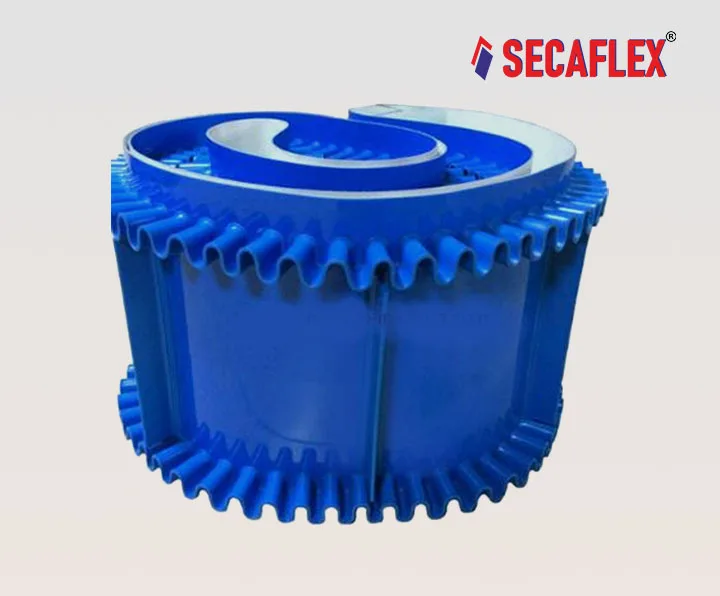
Overview - Rubber cracks under repeated flexing, PVC wears down faster under abrasive contact, and neither handles food-grade hygiene requirements particularly well. This is exactly the gap a PU conveyor belt fills: built from polyurethane instead of these more traditional materials, giving manufacturing, packaging, and food processing lines a belt that holds up to heat, chemicals, and constant wear far better than the alternatives. This blog goes through what actually makes polyurethane belts different, their real advantages, and where they get used across different industries.
This blog covers:
- Introduction
- What Makes Polyurethane Different from Rubber or PVC
- Key Advantages of a PU Conveyor Belt
- Applications Across Industries
- Hygiene and Food-Grade Considerations
- Maintenance and Working Life
- Frequently Asked Questions
Introduction
Every conveying operation eventually runs into the same question, which belt material actually holds up to the specific job at hand. A PU conveyor belt answers this question for a particular set of demanding conditions, abrasive material, food-grade hygiene needs, or exposure to oils and chemicals, where a standard rubber or PVC belt would wear out or degrade far sooner. Understanding what polyurethane actually brings to the table helps explain why it has become the default choice across so many manufacturing and packaging lines and why a line manager comparing belt materials on paper often ends up choosing PU once the actual working conditions of their process are factored in.
What Makes Polyurethane Different from Rubber or PVC
Polyurethane is a plastic material, and the specific properties of this plastic are what set a PU conveyor belt apart from belts made using rubber or PVC compounds.
Polyurethane is more flexible than traditional plastic while also holding up better to heat and abrasive contact than standard rubber. This combination matters because a belt material that is flexible enough to run smoothly around rollers but tough enough to resist wear from constant contact with the product being conveyed is genuinely difficult to achieve with a single material. Rubber belts tend to degrade faster when exposed to oils, fuels, or ozone over time, while PU resists this kind of chemical exposure considerably better, which is a large part of why it gets chosen for demanding industrial environments rather than lighter, less exposed applications. PVC, the other common alternative, tends to stiffen up in colder conditions and does not hold its flexibility across as wide a temperature range as polyurethane does, which becomes a real practical concern in facilities where ambient temperature varies through the year or between different sections of the same plant.
Key Advantages of a PU Conveyor Belt
A PU conveyor belt brings together several practical advantages that matter differently depending on the specific line it is used on.
- Heat and cut resistance – holds up to warmer processing environments and sharp or abrasive product contact better than standard rubber
- Wide operating temperature range – performs reliably across both hotter and cooler working conditions without losing flexibility
- Excellent chemical resistance – resists oils, fuels, and ozone exposure, which matters in manufacturing environments where these are unavoidable
- Higher belt linear speed – supports faster line speeds without excessive wear, useful for higher-throughput operations
- Low noise operation – runs with less vibration and noise than some alternative belt materials, improving the working environment on the floor
- Anti-static properties – reduces static buildup, which matters in industries where static discharge could affect the product or the process
- Easy to splice and install – simplifies both initial setup and ongoing maintenance when a belt section needs repair or replacement
Applications Across Industries
Because of this combination of flexibility, durability, and hygiene properties, a PU conveyor belt shows up across a genuinely wide spread of industries.
Food processing is one of the most common applications, given the belt's smooth surface and food-grade, non-toxic properties. Light to medium-weight products conveying across general manufacturing lines rely on PU belts for their balance of flexibility and durability. The printing industry uses these belts where precise, consistent movement matters for print alignment, since even a small amount of slip or stretch in the belt can throw off registration on a high-speed press. Textile and paper industries, the automotive manufacturing sector, packaging lines, and pharmaceutical and cosmetic manufacturing all use PU belts as well, generally where hygiene, chemical resistance, or consistent performance under repeated use matters more than the lowest possible material cost. Across most of these settings, the deciding factor usually comes down to whether the process involves any combination of heat, chemical exposure, or strict hygiene standards, conditions where a standard rubber or PVC belt would need replacing far sooner than a properly specified PU belt.
Hygiene and Food-Grade Considerations
For food processing specifically, a PU conveyor belt offers a set of properties that are genuinely difficult to match with other common belt materials.
The smooth surface resists the buildup of residue that a more textured belt material would trap, which matters directly for cleaning and general food safety. Non-toxic, food-grade construction means the belt itself does not introduce contamination risk when it comes into direct contact with food products during processing. Being easy to clean also reduces the time and effort needed to maintain proper hygiene standards between production runs, which matters in facilities running multiple product types through the same line and needing to avoid cross-contamination between batches. This becomes especially relevant during a shift changeover or a product switch, where the time spent cleaning the belt directly eats into available production time, so a belt that cleans quickly and thoroughly has a real, measurable impact on how much a facility can actually produce in a given day.
Maintenance and Working Life
A PU conveyor belt generally needs less maintenance over its working life than some alternative materials, but a few habits still help extend that life further.
Regular visual inspection for surface wear, particularly at points where the belt contacts rollers or guides repeatedly, catches developing problems before they cause a full belt failure. Keeping the belt free of built-up debris, especially in food processing applications, protects both hygiene standards and the belt surface itself from abrasive buildup.
Proper tensioning matters too; a belt running too loose or too tight wears unevenly and puts unnecessary strain on the drive system, while correctly maintained tension keeps wear distributed evenly across the belt's working life. It also helps to check splice joints periodically, since this is usually the first point on a belt to show stress, and catching a weakening splice early is far less disruptive than dealing with a belt failure mid-shift.
Conclusion
A PU conveyor belt earns its place wherever heat, chemicals, or strict hygiene standards would wear out rubber or PVC far sooner, and its flexibility across a wide temperature range keeps it performing even as conditions shift through the day. For food processing, the smooth, food-grade surface alone justifies the choice, cutting cleaning time and contamination risk.
Add in lower maintenance, easy splicing, and a longer working life, and the total cost of running a PU belt often works out lower than a cheaper alternative needing replacement twice as often. Matching the material to actual working conditions protects both product and profit.
Frequently Asked Questions
Is a PU conveyor belt better than a rubber conveyor belt for every application?
Not necessarily for every application, but PU generally outperforms rubber in heat resistance, abrasion resistance, and chemical exposure, which is why it is commonly chosen for demanding industrial and food-grade uses rather than lighter, general-purpose conveying.
Why is a PU conveyor belt preferred in food processing specifically?
Its smooth surface, non-toxic food-grade construction, and ease of cleaning make it well suited to hygiene requirements in food processing, reducing the risk of residue buildup or contamination compared to some alternative belt materials.
How long does a PU conveyor belt typically last?
This depends heavily on the application, load, and maintenance practices, but PU belts are generally known for good wear resistance and a longer working life than standard rubber belts under similar operating conditions.
Can a PU conveyor belt handle exposure to oils and chemicals?
Yes, this is one of its notable advantages: PU offers excellent resistance to oils, fuels, and ozone exposure, making it suitable for manufacturing environments where a rubber belt would degrade considerably faster under the same conditions.
Manufacturers like DKT Engineering Enterprises, based in Navi Mumbai and building conveyor belt solutions since 2010, supply these belts across food-grade and industrial-grade configurations, matched to the specific hygiene, chemical exposure, and load requirements of the application rather than offering a single generic belt for every use case.