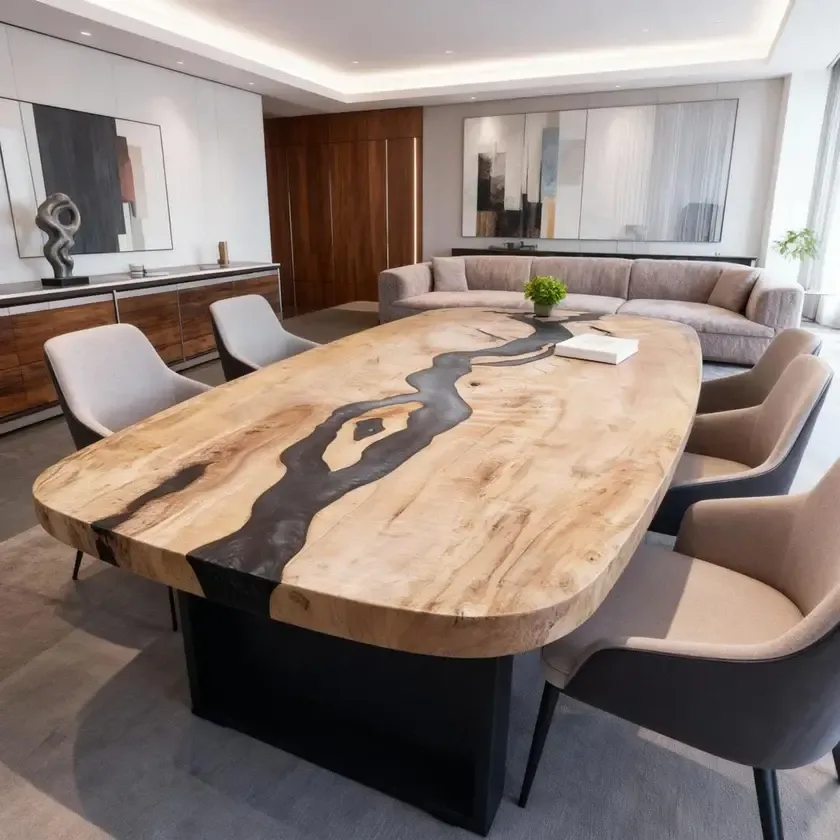
For interior designers and architects, furniture is rarely just furniture. It is a way to carry a concept through a space, give a client something memorable and solve real problems of scale, budget and durability. A custom wood and resin piece can do all of that, but only if it is specified clearly and built by a maker who understands the brief.
This guide is written for design professionals. It covers when to specify solid wood and epoxy resin furniture, how to brief a workshop, what to put in the specification, and how to avoid the mistakes that cause delays and disputes.
When Wood and Resin Is the Right Call
Not every project needs a resin table, and part of good design is knowing when it fits. These pieces tend to work well when:
- The space needs a focal point. A single table with real presence can anchor a dining room, lobby or meeting space.
- The client values individuality. Each slab and pour is unique, which suits clients who do not want catalogue furniture.
- The palette is restrained. A neutral scheme lets a resin colour or grain pattern stand out.
- Durability matters. Solid timber can be refinished, which suits busy homes and commercial interiors.
- The brand needs a story. Cafés, boutique hotels and showrooms often benefit from a handcrafted signature piece.
They are less suitable where the budget is very tight, where the schedule cannot accommodate made-to-order production, or where heavy heat exposure is unavoidable on the surface.
Building a Clear Brief
A good brief saves weeks. Before you approach a workshop, gather:
- Drawings or dimensions. Overall size, height, clearances and any built-in constraints.
- Use case. Dining, meetings, display, reception or work, and the expected daily load.
- Mood board. Wood tones, resin colours, edge profiles and leg styles you have in mind.
- Site details. Sunlight exposure, flooring, access routes, lifts and doorways.
- Budget range. Sharing this early lets the maker propose realistic options.
- Schedule. Handover date, installation window and any dependencies on other trades.
The more precise the brief, the fewer revisions you will need.
Choosing a Maker
The right partner matters more than any single design decision. A specialist epoxy furniture manufacturer can guide material choices, flag structural concerns early and give realistic lead times. When vetting a maker, look for:
- A relevant portfolio, ideally including projects similar in scale to yours.
- Openness about process, including wood seasoning, resin curing and finishing.
- Willingness to prototype or sample.
- Clear communication and documentation.
- After-sales support for any adjustments or repairs.
A capable epoxy resin furniture manufacturer should welcome detailed questions. Hesitation on basic technical points is a warning sign.
For projects in the capital region, an epoxy furniture manufacturer in Delhi allows site visits, slab selection with the client, sample approvals and coordinated delivery with the fit-out team. Projects elsewhere can still be managed remotely through video calls, photo updates and written sign-offs, and many workshops deliver nationwide.
Writing the Specification
A vague specification invites disagreement. Include:
- Dimensions and tolerances. State overall size, thickness and height, and agree an acceptable tolerance.
- Wood. Species, grade and whether the piece is solid timber throughout.
- Seasoning. Confirm moisture control before production.
- Resin. Colour, pattern, finish (gloss, satin or matte) and UV protection.
- Finish on timber. Type of oil, lacquer or other coating.
- Legs and hardware. Material, profile and load capacity.
- Edge details. Profile and radius.
- Natural variation clause. Acknowledge that grain, knots and resin flow will vary within an agreed range.
- Care instructions. Request a written care sheet for the client.
- Warranty. Confirm scope and duration.
- Delivery and installation. Who unloads, positions and inspects the piece.
Attaching reference photos to the specification helps set expectations on colour and pattern.
Managing Client Expectations
Handcrafted pieces are not factory replicas. Prepare clients for these realities:
- Natural variation. Two slabs are never identical, and resin flow is partly organic.
- Screen versus reality. Colours look different on a monitor, in showroom lighting and in the client's home.
- Heat and care. Every resin surface has limits, and the client should know them before handover.
- Lead time. Made-to-order work takes weeks, so build it into the programme.
Sharing samples, videos and photographs of similar finished pieces helps clients feel confident and reduces surprises at delivery.
Sourcing Efficiently
Designers increasingly begin sourcing with online furniture shopping, comparing makers, finishes and portfolios before shortlisting. It is efficient, but for custom pieces the process still needs structure. If a client asks you to buy furniture online for a project, protect both sides by:
- Requesting an itemised written quotation.
- Confirming specifications and sign-off stages in writing.
- Agreeing payment milestones tied to progress.
- Documenting delivery conditions and inspection procedure.
Timber Considerations
When reviewing solid wood furniture online for a project, ask the maker:
- Which species suit the intended environment and load.
- How slabs are selected and matched.
- What slab thickness is recommended for the span and use.
- Whether book-matching or slab pairing is possible for larger tables.
- How the finish will hold up to the expected wear.
Denser species suit high-traffic commercial spaces, while lighter or more decorative timbers can suit residential accent pieces.
Resin Considerations
For epoxy furniture online, quality varies, so verify the essentials:
- UV stabilisation for sunlit rooms.
- Surface hardness for daily use.
- Bonding quality between resin and timber.
- Clarity and consistency of the pour.
- Repair and polishing options for later maintenance.
Ask to see a sample or a short video in natural light, especially when the client has a specific colour in mind.
Coordinating on Site
Good specification does not end at the workshop door. Plan the site side too:
- Confirm access routes, lift sizes and doorway clearances.
- Coordinate delivery with flooring and finishing trades so the piece is not exposed to dust or damage.
- Protect the surface after installation until handover.
- Inspect the piece against the specification with the maker or a representative.
- Photograph the completed installation for the project file and the maker's records.
Handover and Aftercare
A strong handover reflects well on the designer. Provide the client with:
- The maker's written care sheet.
- Contact details for after-sales support.
- A note on heat, light and cleaning limits.
- Warranty information.
- A recommended schedule for re-oiling or polishing wooden parts.
Common Pitfalls to Avoid
- Specifying without a sample on colour-critical work.
- Underestimating lead times and squeezing the programme.
- Overlooking weight when planning delivery and floor loading.
- Ignoring sunlight exposure when placing resin surfaces.
- Choosing on price alone, which can trade away slab thickness, resin quality or joinery.
- Leaving care instructions to chance, which puts the finish at risk soon after handover.
Final Thoughts
For designers, solid wood and epoxy resin furniture offers something increasingly hard to find: pieces with genuine character, built to last and tailored to the project. The results depend on clear briefs, precise specifications and a maker who communicates well. Get those right, and a single table can become the part of the project clients remember longest.
To discuss custom designs, sizes and project requirements, visit Carom Studios.