When driving a precision-engineered European vehicle through Western Australia, routine maintenance is more than a recommended routine—it is a critical investment. Volkswagen vehicles are designed to offer a balance of performance, safety, and fuel efficiency. However, Perth’s unique environmental conditions, including intense summer heat, dusty roads, and heavy suburban stop-and-start traffic, present specific challenges that demand regular, targeted vehicle care.
Whether you navigate daily commutes across the Swan River or embark on weekend road trips down the coastline, staying proactive with your car care guarantees long-term reliability and high resale value.
Why European Engineering Demands Dedicated Care
Volkswagen engines, direct-shift gearboxes (DSG), and electrical architecture differ significantly from standard Japanese or American automotive designs. European mechanics build these vehicles to strict tolerances, requiring exact fluid specifications, tailored diagnostics, and specific service schedules.
Key Components That Require Attention:
- Direct-Shift Gearbox (DSG) Transmissions: Dual-clutch gearboxes offer rapid gear shifting and optimal fuel economy. However, fluid degradation over time can lead to rough shifting or mechatronic wear. A transmission fluid and filter change is crucial—typically recommended every 60,000 km.
- Direct-Injection & Carbon Build-Up: Modern TSI and TDI engines use direct fuel injection to maximize power and efficiency. Because fuel no longer washes over the intake valves, carbon deposits can gradually accumulate over time, leading to power loss, rough idling, or reduced engine responsiveness.
- Cooling Systems Under WA Heat: Perth’s summer ambient temperatures routinely top 35°C. Heat accelerates coolant degradation and stress on hoses, radiator seals, and water pumps. Using factory-approved G12/G13/G12 evo coolant mixtures prevents internal corrosion and overheating.
Essential Service Intervals for Perth Drivers
To keep your vehicle running smoothly, service schedules should follow both distance and time intervals:
Service TypeRecommended FrequencyKey Focus AreasMinor / Minor Interim ServiceEvery 10,000–15,000 km or 12 monthsEngine oil replacement, oil filter, multi-point safety check, diagnostic fault scanMajor Comprehensive ServiceEvery 30,000–40,000 km or 2 yearsAir filter, cabin pollen filter, spark plugs (petrol), brake fluid flush, fuel filter (diesel)DSG / Transmission ServiceEvery 60,000 kmGearbox fluid drain and refill, dual-clutch transmission filter replacementTiming Belt & Water PumpEvery 7 year mark or 105,000–120,000 kmReplacement of timing belt, tensioner pulleys, and integrated coolant pumpChoosing Between Dealer and Independent Specialist Service
Vehicle owners in Australia often wonder whether servicing outside a main dealership voids their factory warranty. Under Australian Consumer Law (ACL), consumers have the right to choose an independent workshop, provided that:
- The workshop uses genuine or original equipment manufacturer (OEM) quality parts.
- The service strictly adheres to the vehicle manufacturer’s published logbook requirements.
- Qualified, certified technicians execute the work.
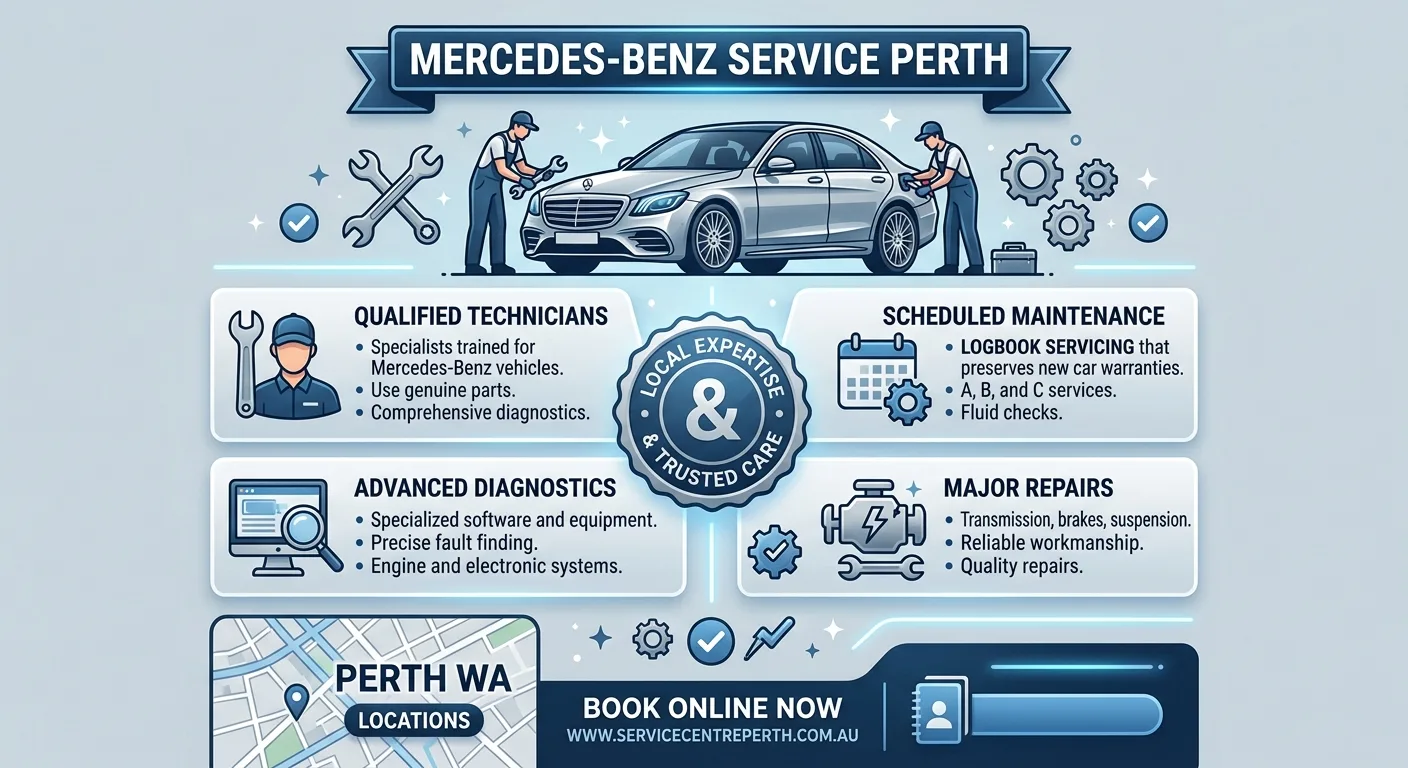
Independent European specialists often offer direct access to experienced technicians, transparent communication, and tailored diagnostic workflows—giving local owners flexibility while preserving statutory warranties. To explore professional, brand-tailored car maintenance options in Western Australia, visit Service Centre Perth for expert European vehicle care and full logbook support.
Proactive Maintenance Checklist for Drivers
Aside from scheduled garage visits, there are simple steps drivers can take to ensure their vehicle remains in optimal condition:
- Check Tyre Pressure & Tread: Perth's road surface temperatures in summer increase tire wear. Maintain correct PSI levels (found on the driver’s door pillar card) to prevent uneven tread wear.
- Monitor Engine Oil Level: High-performance turbocharged engines consume minor amounts of oil between services. Check the dipstick once a month when the vehicle is parked on level ground.
- Listen to Brake Wear Signals: Modern Volkswagens use electronic brake wear sensors. If you hear squeal or feel a pulsation through the pedal, have the pads and rotors inspected promptly.