The hair loss market runs on hope, and most of what it sells does not deserve it. Shampoos, supplements, laser combs, and gadgets all promise to bring your hair back, and most deliver very little. PRP hair restoration is one of the few approaches with real biological logic behind it, but it comes with an honest catch worth stating up front: it works by waking up struggling follicles, not by raising dead ones. Timing and realistic expectations decide whether it is worth your money.
Here is what the treatment is, how it works, and who tends to benefit.
What PRP Hair Restoration Is
PRP stands for platelet-rich plasma. It is made from a small sample of your own blood, which is spun in a centrifuge to separate and concentrate the platelets. Platelets are best known for clotting, but they are also packed with growth factors, the signaling proteins your body uses to trigger repair and regeneration. Concentrated and injected into the scalp, that plasma delivers a dose of those growth factors directly to the hair follicles.
Because the material comes from your own body, nothing foreign is introduced, which is a large part of the treatment’s appeal.
How It Works
Hair thinning, in the most common pattern of loss, happens as follicles gradually shrink. They do not die all at once. They miniaturize, producing finer, weaker hairs over successive cycles until they eventually stop. PRP targets that decline.
The growth factors in platelet-rich plasma are thought to stimulate activity in the follicle, improve the blood supply feeding it, and help extend the active growth phase of the hair cycle. In practical terms, the goal is to strengthen weakening follicles, encourage thicker hair from follicles still producing fine strands, and slow the overall pace of thinning. This is why the treatment works best before too much ground has been lost.
What a Session Looks Like
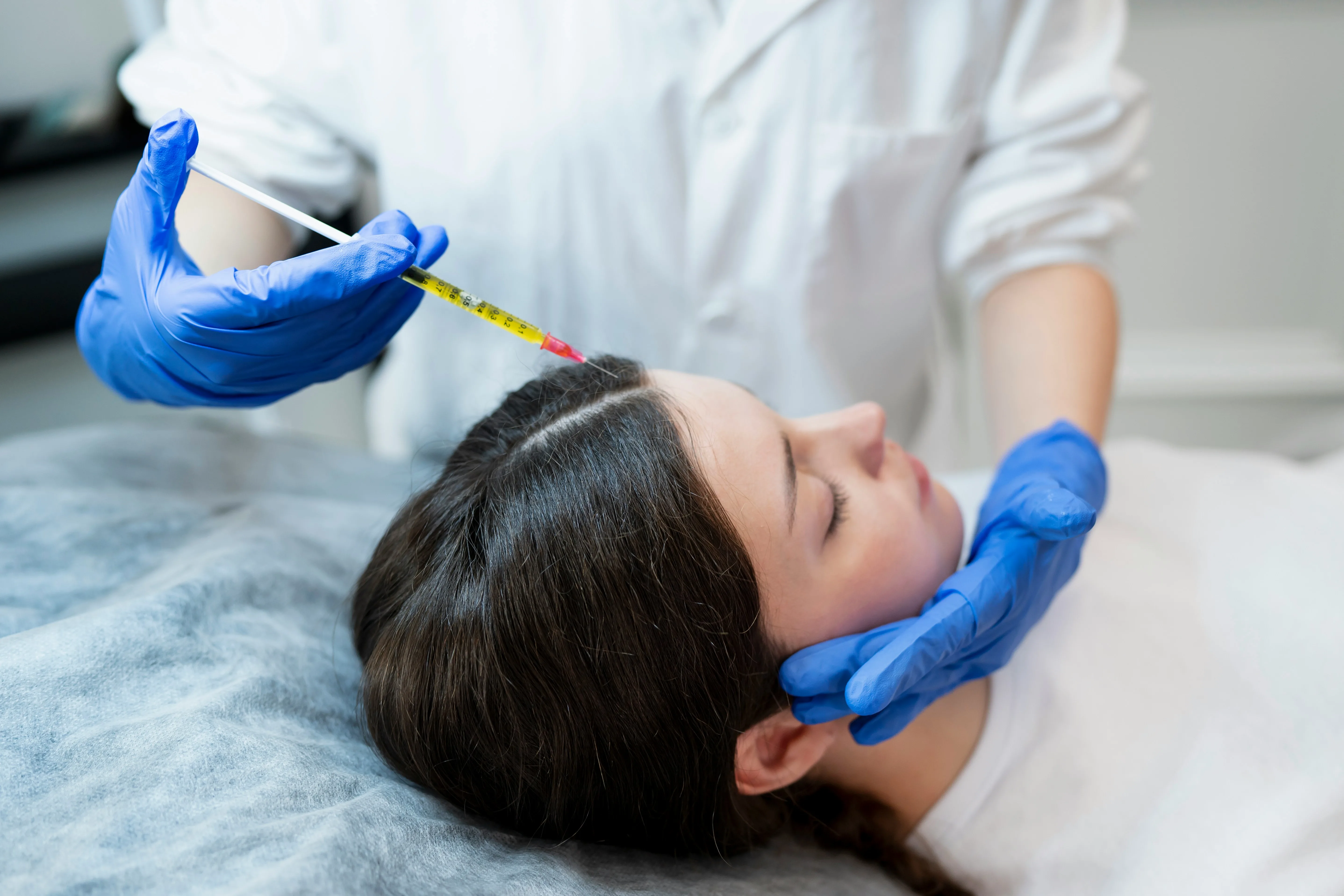
The process is straightforward and done in the office. A provider draws a small amount of your blood, much like a routine blood test, then places it in a centrifuge to separate the plasma. The concentrated plasma is then injected into the areas of the scalp where thinning is a concern. A numbing step keeps the injections comfortable.
The whole appointment typically takes under an hour. Downtime is minimal, and most people return to normal activities the same day, aside from some temporary tenderness or mild swelling at the scalp.
Who Sees the Best Results
PRP is not right for every type of hair loss, and being honest about that matters more than making a sale. It tends to help most in cases of early to moderate thinning, where follicles are shrinking but still alive and producing hair. Both men and women with pattern thinning fall into this group.
PRP does far less in areas that have been completely bald for a long time, or where scarring has replaced the follicles. If the follicle is gone, there is nothing left for the growth factors to revive. A proper assessment of your scalp and your pattern of loss is the only way to know where you fall, which is why this treatment should always begin with a professional evaluation rather than an assumption.
What Results Look Like, and When
This is where expectations need managing. PRP is gradual. It does not produce overnight change, and it does not work like flipping a switch. A growing body of research suggests many patients see improvements in hair density and thickness over a course of treatment. Still, results vary from person to person and are not guaranteed.
Most protocols involve an initial series of sessions spaced several weeks apart, followed by periodic maintenance treatments to hold the gains. Visible change typically builds over the first several months rather than appearing right away.
Why “Natural” Is More Than a Buzzword
The autologous nature of PRP, meaning that it uses your own blood, is a genuine practical advantage rather than just marketing language. Because you are not receiving a foreign drug or a synthetic filler, the risk of allergic reaction is very low. For people who are wary of medications or implants, that matters.
It is also why PRP is often used alongside other hair loss treatments rather than as a rival to them. Providers frequently combine it with other therapies for a more complete approach.
PRP Is a Program, Not a One-Off
The single biggest reason people are disappointed by PRP is treating it as a one-time fix. Hair loss is an ongoing process driven by genetics and hormones, and no single treatment stops that permanently. PRP manages and slows it, which means maintenance is part of the deal. Going in understanding that, rather than expecting one session to solve everything, is the difference between satisfaction and frustration.
Choosing Where to Have It Done
Because PRP involves drawing blood, preparing it correctly, and injecting the scalp with knowledge of the underlying anatomy, it belongs in a medical setting with a qualified provider. The quality of the preparation and the injector's skill both affect the outcome. If you are exploring the treatment, starting with a consultation at the team at Soothe Medical Aesthetics in Augusta, Maine gives you an honest read on whether your pattern of hair loss is likely to respond.
The Honest Bottom Line
PRP hair restoration is not a miracle, and anyone who sells it as one is not being straight with you. It's a legitimate, low-risk option that can meaningfully help the right kind of hair loss when started early and maintained over time. The people who benefit most are the ones who go in with clear eyes: acting while their follicles are still fighting, and understanding that keeping their hair is a process, not a purchase.