Hair loss affects millions of people every year, and for many, it goes far deeper than just aesthetics. It touches confidence, identity, and how people feel walking into a room. While there are countless products promising overnight results, most fall short. That is why a growing number of people are now turning to evidence-based clinical treatments that work with the body's own biology rather than against it.
One such treatment gaining significant attention is prp hair restoration. It has moved from specialist clinics into mainstream awareness, and for good reason. The science behind it is solid, the results are measurable, and the procedure itself is far less invasive than most people expect. This guide breaks down everything you need to know, from how it works to what kind of results are realistic.
What Is PRP and How Does It Relate to Hair Loss?
PRP stands for Platelet-Rich Plasma. It is derived from your own blood and contains a concentrated mix of growth factors and proteins that play a key role in cellular repair and tissue regeneration. When applied to areas of thinning or weakened hair follicles, these growth factors stimulate dormant follicles, improve blood circulation to the scalp, and encourage the natural hair growth cycle to restart.
Hair follicles do not simply disappear overnight. In most cases, they become miniaturised over time due to hormonal changes, genetics, stress, or nutritional deficiencies. This process, known as androgenetic alopecia or pattern hair loss, gradually weakens the follicle until it can no longer produce a healthy hair shaft. PRP targets this process directly by delivering concentrated healing signals precisely where they are needed.
The Treatment Process: What Actually Happens
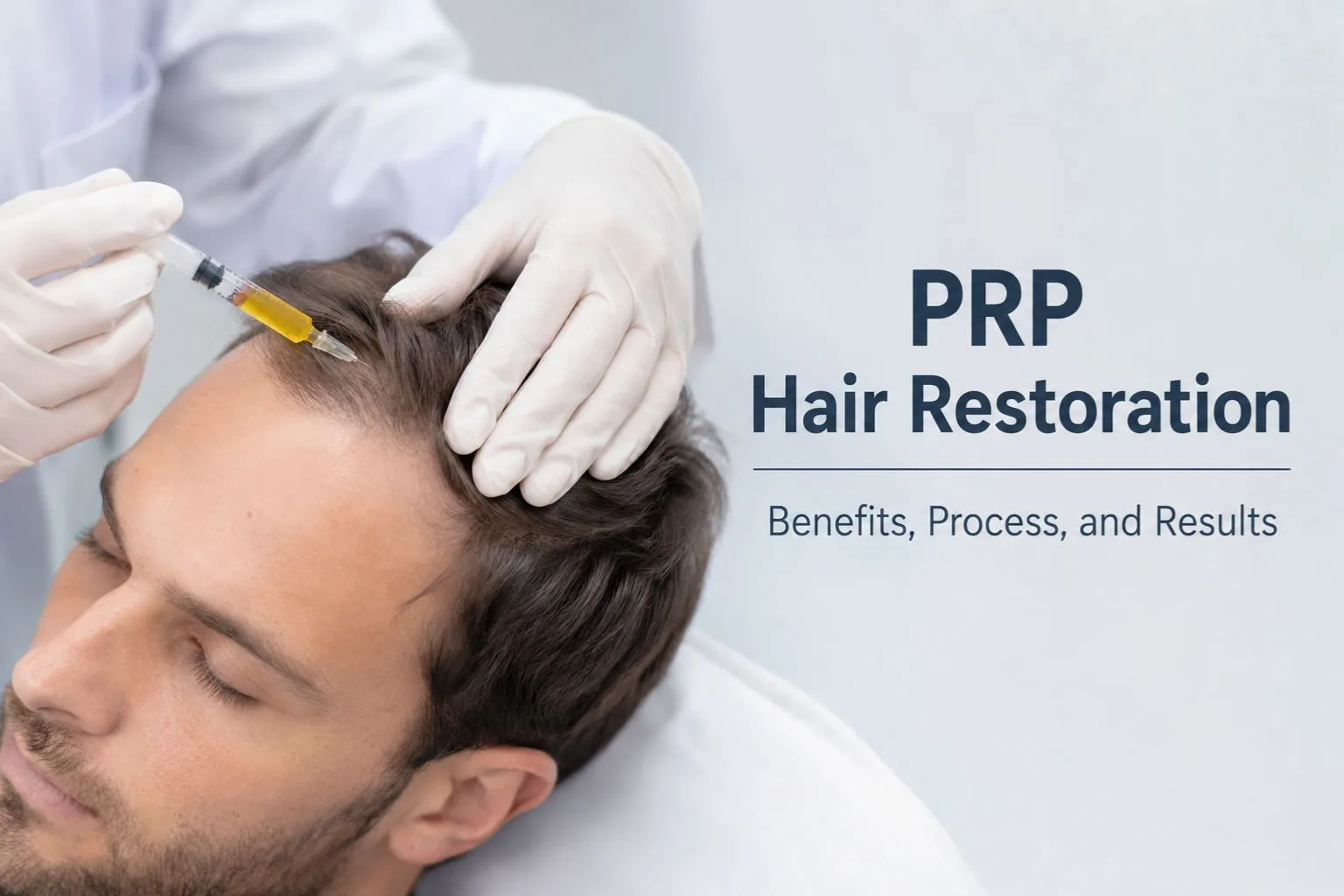
The procedure begins with a simple blood draw, usually from the arm, in the same way as a routine blood test. The sample is then placed in a centrifuge, a machine that spins the blood at high speed to separate its components. This isolates the platelet-rich plasma from the red blood cells, creating a concentrated serum loaded with growth factors including PDGF, VEGF, and TGF-beta.
Once prepared, the PRP is carefully injected into targeted areas of the scalp using fine needles. The process is relatively quick, typically taking between 60 and 90 minutes from start to finish. Most clinics apply a topical numbing cream beforehand to keep the patient comfortable throughout.
Patients can usually return to their normal daily routine the same day. There may be some mild scalp tenderness or slight redness for a day or two, but there is no significant downtime associated with the treatment.
How Many Sessions Are Needed?
This is one of the most common questions asked before starting treatment. A typical initial course involves three to four sessions spaced four to six weeks apart. After completing the initial course, maintenance sessions every three to six months are often recommended to sustain and build on the results.
Hair growth is a slow biological process. Most patients begin to notice reduced shedding within the first few weeks, with visible improvements in thickness and density becoming more apparent from the third or fourth month onward. Full results are usually assessed at the six-month mark.
It is important to approach the treatment with realistic expectations. PRP works best for individuals in the earlier stages of hair loss, where follicles are still present but weakened, rather than areas where hair loss has been complete for many years.
Who Is a Good Candidate?
PRP hair treatment is suitable for both men and women experiencing thinning hair, early to moderate pattern hair loss, postpartum hair shedding, or alopecia areata in some cases. A thorough consultation with a qualified practitioner is essential before beginning any treatment plan.
The ideal candidate is someone who has noticed gradual thinning over time but still has active follicles in the affected areas. Blood disorders, active scalp infections, certain medications such as blood thinners, and some autoimmune conditions may affect candidacy. A comprehensive medical assessment will confirm whether PRP is the right approach for your specific situation.
Why Clinic Choice Matters
The effectiveness of any injectable treatment depends heavily on the skill of the practitioner and the standards of the clinic performing it. The preparation technique, the concentration of platelets achieved, the depth and distribution of injections, and the quality of post-treatment care all influence outcomes.
The Skin and Hair Clinic is one example of a specialist practice that takes a considered, evidence-led approach to hair restoration. Rather than offering a one-size-fits-all solution, clinics like this assess each patient individually and build a treatment plan based on the degree of hair loss, scalp condition, and personal health history. This kind of thorough assessment is what separates genuine clinical results from generic treatments.
When researching options, look for clinics staffed by medically trained professionals, transparent about their protocols, and willing to show you real patient results. Credentials, clinical experience, and aftercare support should all be part of your decision-making process.
The Benefits Worth Knowing
The appeal of this treatment extends beyond its clinical effectiveness. Because PRP is derived from the patient's own blood, the risk of allergic reaction or rejection is extremely low. There are no synthetic chemicals or foreign substances involved, which makes it a well-tolerated option for most people.
It also does not require surgery. For many patients who are not ready for or interested in a hair transplant, platelet-rich plasma therapy offers a meaningful middle ground. It can be used as a standalone treatment or combined with other approaches such as low-level laser therapy or topical treatments to enhance overall results.
Improved scalp health, increased hair thickness, reduced shedding, and a boost in overall follicle density are the most commonly reported outcomes. Many patients also find that ongoing maintenance sessions help slow the natural progression of hair thinning over time.
Expert Insight
A common observation among hair restoration specialists is that patients who commit to the full initial course and follow through with maintenance tend to see significantly better long-term results than those who complete only one or two sessions. Consistency matters more than intensity when it comes to follicle stimulation. Starting treatment earlier in the hair loss process also tends to produce more dramatic and lasting improvements.
Ready to Take the Next Step?
If you have been noticing more hair in the shower, a wider parting, or a gradual reduction in overall volume, the time to act is sooner rather than later. prp hair restoration works most effectively when follicles are still active, which means early intervention gives you the best possible foundation for results.
Booking a consultation is the most important first step. During that appointment, a qualified specialist will assess your scalp, review your medical history, and recommend a treatment plan tailored to your specific needs. You will leave with a clear picture of what to expect, a realistic timeline, and the confidence that comes from making an informed decision.
Do not wait until the problem becomes more difficult to address. Take that first step today and speak with a specialist who understands both the science and the personal side of hair loss.
Frequently Asked Questions
Is PRP hair restoration painful?
Most patients describe the treatment as mildly uncomfortable rather than painful. A topical numbing cream is applied to the scalp before the injections, which significantly reduces any discomfort. Some people report minor tenderness in the treated area for a day or two afterward, but this usually resolves quickly on its own.
How long does it take to see results from PRP treatment?
Hair growth is a gradual process. Most patients notice a reduction in shedding within the first few weeks. Visible improvements in thickness and density typically become apparent from the third or fourth month onward. A full assessment of results is usually carried out at the six-month mark following the initial course of treatment.
How many PRP sessions will I need?
The standard initial course consists of three to four sessions, each spaced four to six weeks apart. After completing the initial course, maintenance sessions every three to six months are recommended to sustain results. Your practitioner will advise you on the best schedule based on your individual response to treatment.
Can PRP treatment be combined with other hair loss treatments?
Yes. PRP is often used alongside other approaches such as low-level laser therapy, nutritional supplementation, or medically prescribed topical treatments. Combining therapies can enhance overall outcomes, and your specialist will advise on what combination is most appropriate for your situation.
Is PRP suitable for both men and women?
Absolutely. PRP hair treatment is effective for both men and women experiencing a range of hair loss conditions, including androgenetic alopecia, postpartum hair shedding, and stress-related thinning. The treatment protocol may differ slightly based on the pattern and cause of hair loss, which is why an individual consultation is always the recommended starting point.
Are the results from PRP treatment permanent?
PRP does not permanently stop the underlying causes of hair loss such as genetics or hormonal changes, but it can significantly slow progression and improve follicle health over time. Ongoing maintenance sessions help preserve the results achieved during the initial course. Many patients find that with consistent treatment, they maintain notably better hair density and thickness than they would have without intervention.