Hair thinning and hair loss can affect both appearance and confidence. Platelet-Rich Plasma (PRP) therapy has become a popular non-surgical option for people looking to improve hair density and slow hair loss. However, many people wonder whether PRP provides permanent results or requires ongoing treatment.
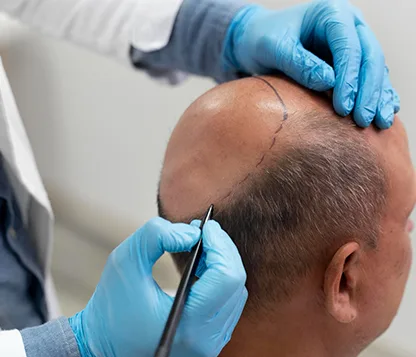
While PRP can be useful for early-stage hair loss, hair transplantation may offer a more lasting solution for people with advanced hair loss. Understanding the differences can help you choose the right approach.
What Is PRP Therapy for Hair Loss?
PRP therapy uses growth factors from your own blood to stimulate existing hair follicles.
The procedure generally involves:
- Drawing a small amount of blood
- Separating and concentrating the platelets using a centrifuge
- Injecting the prepared PRP into areas of the scalp with thinning hair
PRP is minimally invasive and typically involves little downtime. A treatment plan may involve multiple sessions followed by maintenance treatments, depending on individual response.
PRP vs. Hair Transplantation
The main difference is how each treatment works.
PRP: Stimulates existing, weakened hair follicles and is generally more suitable for early or moderate hair thinning.
Hair Transplant: Moves healthy hair follicles from donor areas to areas with significant hair loss and can provide long-lasting growth once the transplanted follicles establish themselves.
PRP may also be used alongside hair transplantation as part of a broader hair restoration plan.
How Long Do PRP Results Last?
PRP results vary from person to person. Some patients may notice reduced hair fall within the first few months, followed by gradual improvements in hair thickness and density.
However, PRP is generally not considered a permanent, one-time solution. Maintenance treatments may be required to sustain the benefits.
Factors that can influence results include:
- Age
- Genetics
- Stage and cause of hair loss
- Overall health
- Lifestyle
- Response to treatment
Is Hair Transplantation a Permanent Solution?
For suitable candidates, hair transplantation can provide long-lasting, natural-looking results. Unlike PRP, which stimulates existing follicles, transplantation moves healthy follicles into areas affected by hair loss.
Two commonly used techniques are:
- FUT (Follicular Unit Transplantation): A strip containing healthy follicles is removed and transplanted.
- FUE (Follicular Unit Extraction): Individual follicles are extracted and transplanted into thinning areas.
Once transplanted hair has grown successfully, it generally does not require special maintenance beyond regular hair care.
PRP vs. Hair Transplant: Cost and Treatment Approach
PRP usually involves multiple sessions, making the overall cost dependent on the number of treatments and maintenance required.
A hair transplant generally has a higher initial cost but is usually performed as a surgical procedure intended to provide more permanent coverage. The right choice depends on the extent of hair loss, treatment goals, budget, and expected outcome.
A specialist can help determine which option is more appropriate after assessing your hair and scalp.
When Should You See a Hair Specialist?
Consider consulting a hair specialist doctor in Bangalore if you notice:
- Excessive or persistent hair fall
- Progressive hair thinning
- Receding hairline
- Visible thinning patches
- Hair loss that does not improve with basic care
Early evaluation can help identify possible causes, including nutritional, hormonal, genetic, or other factors, and guide appropriate treatment.
PRP and Hair Transplant Can Sometimes Work Together
PRP and hair transplantation are not necessarily competing treatments. In suitable cases, they may be incorporated into the same hair restoration plan.
PRP can help support existing hair, while transplantation can provide coverage in areas where significant hair loss has occurred. The appropriate combination depends on individual needs and medical assessment.
About Dr. Ashok B.C.
Dr. Ashok B.C. is a plastic, reconstructive, and aesthetic surgeon with experience in hair restoration procedures, including hair transplantation and PRP therapy. His approach focuses on individualized treatment planning, realistic expectations, and patient safety.
Frequently Asked Questions
Is PRP better than a hair transplant?
It depends on the stage and cause of hair loss. PRP may be suitable for early or moderate thinning, while transplantation may be considered when significant areas have lost functioning follicles.
Are PRP results permanent?
PRP results are generally not permanent and may require maintenance treatments to preserve the benefits.
How soon do PRP results appear?
Results develop gradually. Noticeable improvement may take several months, depending on the individual's response.
Is there downtime after PRP?
PRP generally involves minimal downtime, although individual recovery can vary.
Can PRP be combined with a hair transplant?
Yes, PRP may be incorporated into a hair restoration plan alongside transplantation when considered appropriate by the treating specialist.
Conclusion
PRP can be a useful non-surgical option for stimulating existing hair follicles and managing early-stage hair thinning, but it should not be viewed as a permanent solution for everyone. For individuals with advanced hair loss, hair transplantation may provide more lasting coverage.
If you're unsure whether PRP or a hair transplant is right for you, consulting a qualified hair specialist doctor in Bangalore can help identify the cause and stage of hair loss and determine a suitable treatment approach.