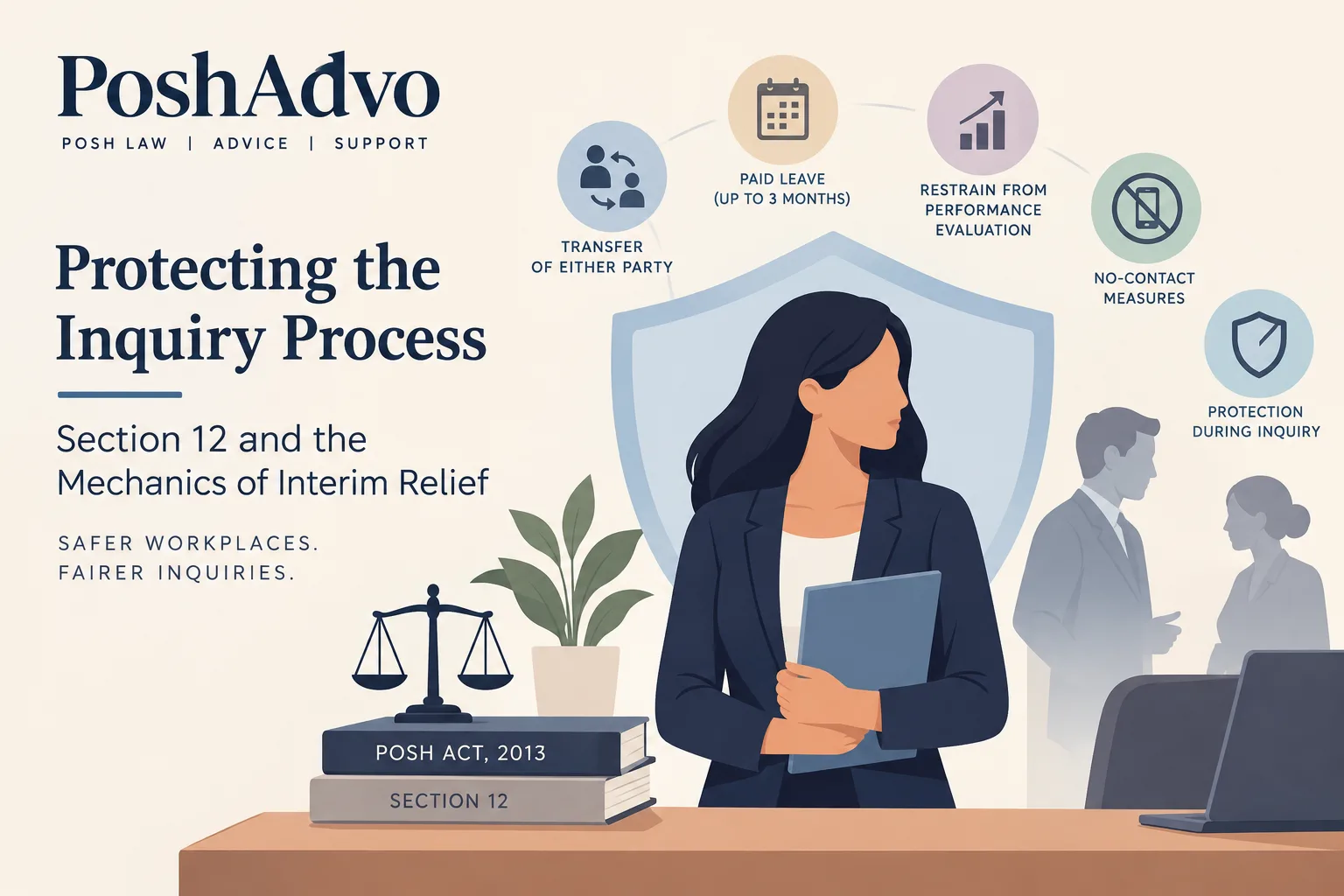
The period between the filing of a complaint under the Prevention of Sexual Harassment of Women at Workplace Act, 2013 (POSH Act) and the completion of the inquiry can be particularly sensitive for everyone involved. During this period, the Internal Committee (IC) must ensure that the inquiry proceeds without interference, retaliation, intimidation, or unnecessary workplace disruption. Section 12 of the POSH Act provides a mechanism for recommending interim measures to protect the interests of the aggrieved woman while the inquiry is pending.
Interim relief is fundamentally preventive rather than punitive. Its purpose is not to establish that the allegations are true or to impose a penalty on the respondent before the inquiry is completed. Instead, appropriate interim measures can help preserve the fairness and integrity of the inquiry and enable the parties to continue functioning in a workplace where unnecessary contact or potential conflict can be minimized.
What Does Section 12 Provide?
Under Section 12, during the pendency of an inquiry, the Internal Committee may recommend certain interim measures on a written request from the aggrieved woman. These measures can include recommending the transfer of the aggrieved woman or the respondent to another workplace, granting the aggrieved woman leave for a period of up to three months, or restraining the respondent from reporting on the work performance of the aggrieved woman or from writing her confidential report.
The statutory framework therefore gives the IC a mechanism to address immediate workplace concerns without prematurely deciding the merits of the complaint.
Choosing the Appropriate Interim Measure
One of the important considerations for an IC is determining which interim measure is proportionate and appropriate to the circumstances of the case. Although Section 12 permits the transfer of either party, the practical impact of such a recommendation should be carefully considered.
For example, transferring the complainant may affect her work location, professional responsibilities, team relationships, or career progression. Where appropriate and consistent with the complainant's wishes, the organization may instead consider measures involving the respondent's reporting structure, work allocation, seating arrangement, or project responsibilities.
The objective should be to reduce unnecessary interaction and potential interference while avoiding any measure that could appear retaliatory or prejudicial.
Interim Protection and Workplace Communication
In modern workplaces, interaction is not limited to physical office spaces. Employees may communicate through email, messaging platforms, video-conferencing systems, project-management software, and other professional channels.
Accordingly, organizations may need to consider practical administrative arrangements that reduce unnecessary direct interaction between the parties during the inquiry. Depending on the circumstances, communication may be routed through designated managers or other appropriate workplace channels.
Any such arrangement should be carefully documented and implemented in a manner that protects confidentiality and does not interfere with the IC's independent inquiry.
Protecting the Integrity of Performance Evaluation
Performance reviews can become particularly sensitive when the respondent has managerial or supervisory authority over the complainant. Section 12 specifically allows the IC to recommend restraining the respondent from reporting on the work performance of the aggrieved woman or writing her confidential report.
Where such a recommendation is made, the organization can designate an alternative reporting manager or establish another neutral mechanism for reviewing work performance during the inquiry. This helps separate ordinary employment decisions from the allegations being examined by the IC.
Similarly, organizations should take care that legitimate performance management is not used as a means of retaliation or, conversely, that ordinary performance issues are not automatically treated as retaliation merely because a POSH complaint is pending.
Interim Relief Is Not a Finding of Guilt
A crucial principle for Internal Committees is that an interim recommendation should not be treated as a finding against the respondent. The inquiry must continue independently, and the allegations must ultimately be assessed on the evidence and applicable legal standards.
The purpose of interim relief is to maintain a workable and secure environment while the inquiry is underway. It should therefore be proportionate to the circumstances and periodically assessed where necessary.
Employer's Role in Implementing Recommendations
Once an interim recommendation is made by the IC under the applicable provisions, the employer plays an important role in implementing the measure and maintaining appropriate records. The organization should ensure that operational arrangements do not compromise the confidentiality of the complaint or create unnecessary workplace stigma.
The implementation of interim measures should also be communicated only to those individuals who need the information for legitimate workplace purposes. Confidentiality is particularly important in POSH proceedings because unnecessary disclosure can affect both the complainant and the respondent.
Conclusion
Interim relief under Section 12 of the POSH Act functions as a protective mechanism during the pendency of a workplace sexual harassment inquiry. Its purpose is to preserve the integrity of the proceedings, reduce potential interference, and protect the complainant from avoidable workplace difficulties while the IC examines the complaint.
For Internal Committees, the key is to distinguish protection from punishment. A carefully considered interim measure should address the immediate workplace concern without prejudging the allegations. By adopting proportionate, documented, and legally grounded measures, organizations can support a fair inquiry while maintaining workplace continuity and confidentiality.
PoshAdvo assists organizations and stakeholders in navigating POSH law, Internal Committee proceedings, workplace sexual harassment complaints, and related legal processes with a focus on structured and legally informed practice.