Private Label Sportswear: A Complete Guide for New Fitness & Apparel Brands
Starting a fitness or apparel brand is exciting, but turning an idea into a real product requires more than creating a logo and opening an online store. One of the biggest decisions is choosing how your products will be manufactured.
Private-label sportswear is a popular option for entrepreneurs who want to build their own brand without operating a factory. Instead of selling generic products under another company's name, a brand can work with a manufacturer to create garments with its own branding, specifications, labels, and packaging.
For new businesses, private-label manufacturing can provide more control over the customer experience while allowing the brand to focus on marketing, sales, and growth.
This guide explains how private-label sportswear works and what new fitness and apparel brands should consider before placing their first order.
What Is Private-Label Sportswear?
Private-label sportswear refers to clothing manufactured by one company and sold by another company under its own brand name.
For example, a fitness business may want to launch its own collection of leggings, sports bras, hoodies, rash guards, T-shirts, or training apparel. Instead of manufacturing these products itself, the business works with a manufacturer that produces the garments according to the brand's requirements.
The finished products can include the brand's:
- Logo
- Labels
- Colors
- Product designs
- Sizes
- Packaging
- Hang tags
- Other branding elements
The manufacturer handles the production while the brand focuses on building its identity and selling the products.
A good private label sportswear manufacturer can help brands move from product concepts to finished garments through sampling, customization, production, and quality control.
Private Label vs. Ready-Made Sportswear
Before choosing a manufacturing model, it helps to understand the difference between private-label and ready-made products.
Ready-Made Sportswear
Ready-made products are already manufactured and available for purchase. A retailer can buy these products and resell them, sometimes with limited branding options.
The main advantages are:
- Faster availability
- Less product development
- Lower complexity
- Easier ordering
However, the products may look similar to what other retailers are selling.
Private-Label Sportswear
Private-label products are manufactured for a specific brand and can be customized according to its requirements.
Benefits can include:
- Unique branding
- Custom labels
- Custom colors
- Product specifications
- Custom packaging
- Greater control over product presentation
The trade-off is that private-label production usually requires more planning, communication, sampling, and production time.
For a business that wants to build a recognizable brand rather than simply resell clothing, private labeling can be a more suitable long-term approach.
Choosing the Right Fabric
Fabric selection can have a major impact on how customers experience sportswear.
A product may look attractive in photographs, but customers will notice the fabric quality when they wear it, wash it, and use it during exercise.
Common materials used in sportswear include:
- Polyester
- Nylon
- Spandex or elastane
- Cotton
- Cotton-polyester blends
- Performance fabrics
The right fabric depends on the type of product.
For example, leggings may require a fabric with good stretch and recovery, while a training T-shirt may need lightweight and breathable material.
When evaluating fabric, consider:
Stretch and Recovery
Stretch fabrics should return to their original shape after movement. This is particularly important for leggings, compression garments, and fitted sportswear.
Breathability
Athletes and fitness customers can generate significant heat during exercise. Breathable materials can make garments more comfortable during training.
Durability
Sportswear is often washed frequently. Fabric should be able to withstand repeated use and washing without quickly losing its shape or appearance.
Color Fastness
Colors should remain reasonably consistent after washing and regular use.
The best approach is to request physical fabric and garment samples before approving bulk production.
Custom Logos and Branding
Branding is one of the main reasons businesses choose private-label manufacturing.
A simple logo can turn a generic-looking garment into a product that belongs to your brand. However, branding should be planned carefully.
Depending on the garment and manufacturer, options may include:
- Screen printing
- Embroidery
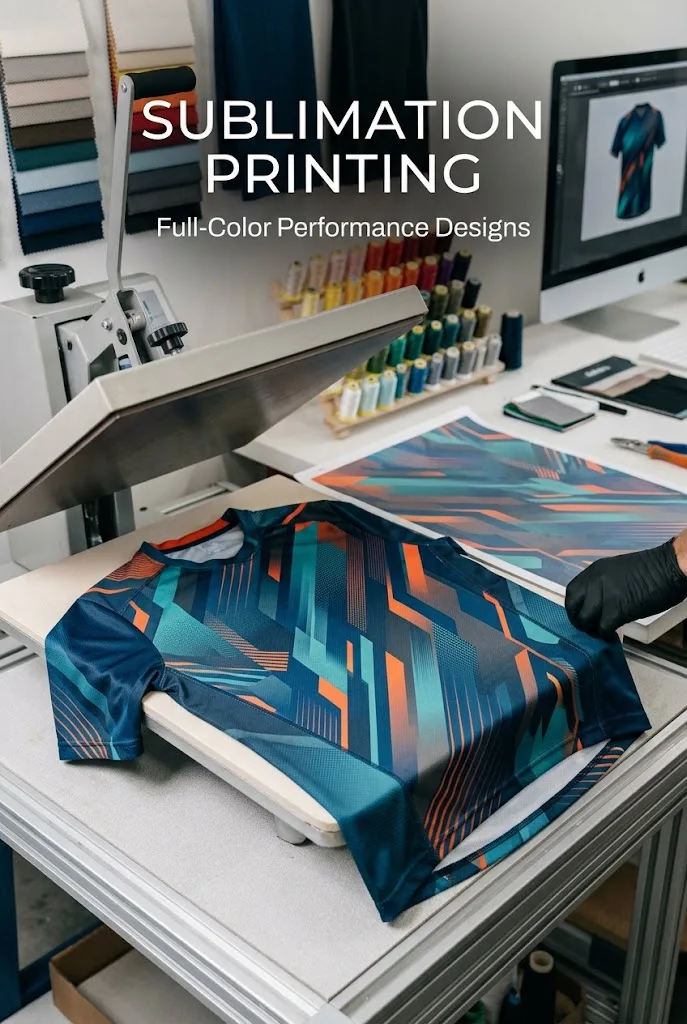
- Sublimation
- DTF printing
- Woven labels
- Printed neck labels
- Rubber or silicone patches
- Hang tags
- Custom packaging
The best method depends on the fabric, design, garment type, and desired appearance.
For example, embroidery can work well for structured products such as jackets and polos, while sublimation is commonly suitable for certain performance garments and all-over designs.
Do not choose a branding method simply because it is inexpensive. Consider how it will look and perform after repeated use and washing.
MOQ Considerations for New Brands
MOQ means Minimum Order Quantity. It is the minimum number of products a manufacturer requires a customer to order.
MOQ can become an important issue for new brands because startups may not know exactly how many products they can sell.
For example, imagine a new fitness brand wants to test a new leggings design. Ordering 1,000 pieces immediately could create a significant inventory risk if demand is lower than expected.
A manufacturer offering a smaller MOQ may allow the brand to test the product with a more manageable initial order.
However, always clarify exactly how MOQ is calculated.
Ask whether the minimum applies to:
- Each design
- Each color
- Each size
- Each product
- Each fabric
- The complete order
Also ask whether MOQ changes for customized products.
A lower MOQ is useful, but it should not come at the expense of product quality or reliable manufacturing.
Product Development and Sampling
Product development is where an idea becomes a physical garment.
A typical private-label process can involve:
- Sharing the product concept
- Providing artwork or a tech pack
- Selecting fabric
- Confirming measurements
- Choosing colors
- Adding branding
- Creating a sample
- Reviewing the sample
- Making adjustments
- Approving the final version
- Starting bulk production
Sampling is one of the most important steps.
Do not approve a large production order based only on digital mockups or photographs.
A physical sample allows you to check:
- Fit
- Measurements
- Fabric
- Stitching
- Logo placement
- Colors
- Finishing
- Comfort
- Overall appearance
If something is wrong, it is much easier and cheaper to correct it during the sample stage than after thousands of garments have been produced.
Packaging and Labels
Private-label branding does not have to stop at the garment itself.
Packaging can help create a consistent customer experience.
Depending on the product and budget, brands may use:
- Custom poly bags
- Branded boxes
- Hang tags
- Woven labels
- Printed labels
- Thank-you cards
- Branded stickers
- Custom shipping packaging
Labels should also contain accurate product information where required, such as size, material composition, and care instructions.
The exact labeling requirements can vary depending on the country where the products will be sold, so brands should check the rules applicable to their target market.
Good packaging does not necessarily need to be expensive. Even simple, consistent branding can make a product feel more professional.
Quality Control
Quality control is essential for any private-label brand.
Your customers will associate the quality of the garment with your brand name, not with the factory that produced it.
A manufacturer should have a process for checking products before shipment.
Quality checks can include:
- Fabric inspection
- Measurements
- Stitching
- Seams
- Color consistency
- Printing
- Embroidery
- Zippers and accessories
- Labels
- Packaging
- Visible defects
Brands should also communicate their quality expectations before production begins.
If you have specific tolerances for measurements, stitching, fabric weight, or color, include them in the product specifications.
Clear requirements make it easier for both the brand and manufacturer to understand what is acceptable.
Shipping Sportswear Internationally
Many private-label brands sell internationally, which makes shipping another important consideration.
Before production begins, clarify:
- Available shipping methods
- Estimated transit time
- Shipping costs
- Packaging requirements
- Customs documentation
- Delivery terms
- Tracking availability
A manufacturer experienced in international orders may be able to provide useful guidance about shipping arrangements.
For brands selling in different markets, it is also important to understand local import requirements and product regulations.
Do not assume that the manufacturing price automatically includes international shipping. Ask for a clear quotation showing what is included.
How New Brands Can Start With Smaller Orders
Starting small can be a sensible strategy for a new apparel business.
Instead of launching ten products at once, a brand could begin with a small collection of its strongest ideas.
For example, a new fitness brand might start with:
- One pair of leggings
- One sports bra
- One training T-shirt
- One hoodie
The brand can then collect customer feedback and monitor which products and sizes sell best.
Once demand becomes clearer, the business can increase production quantities.
This approach can reduce inventory risk and provide useful information before committing to larger manufacturing runs.
When discussing smaller orders with a manufacturer, ask about:
- Small MOQ options
- Sample costs
- Customization charges
- Setup fees
- Fabric availability
- Lead times
- Repeat-order requirements
Keep in mind that the unit price can sometimes be higher for smaller quantities because production setup and material costs are spread across fewer pieces.
How to Choose a Private-Label Sportswear Manufacturer
Choosing the right manufacturing partner requires more than comparing quotations.
Look for a manufacturer that can demonstrate:
Relevant Experience
They should understand sportswear and the requirements of performance garments.
Consistent Quality
Samples should match the quality expected in bulk production.
Customization
The manufacturer should be able to meet your requirements for branding, fabrics, colors, and product specifications.
Reasonable MOQ
The minimum order should fit your current business stage.
Clear Communication
Questions about designs, samples, production, and shipping should receive clear answers.
Reliable Production
The manufacturer should provide realistic timelines and communicate if circumstances affect production.
International Experience
If you sell internationally, experience with export orders and shipping can make the process easier.
Brands can also consider manufacturers that offer a broader range of apparel production services. For example, businesses developing casual collections alongside activewear may also explore a streetwear manufacturer when they need products such as hoodies, T-shirts, or other lifestyle apparel.
Similarly, brands focused specifically on athletic products can review options from a dedicated sportswear manufacturer to understand the available product and customization capabilities.
Private Label Can Support Long-Term Brand Growth
Private-label manufacturing gives entrepreneurs an opportunity to build products around their own brand rather than competing solely on generic products.
As the business grows, the product range can expand into different categories.
A brand might begin with activewear and later add casual clothing, team apparel, or work-related garments depending on its target customers.
For businesses expanding into uniforms or professional clothing, working with a specialized workwear manufacturer can be useful when the requirements move beyond standard fitness apparel.
The important thing is to maintain consistent quality and branding as the product range grows.
Final Thoughts
Private-label sportswear can be a practical way for new fitness and apparel brands to develop products under their own identity without building a manufacturing facility.
However, successful private-label production requires careful planning.
Before placing a bulk order, evaluate the fabric, MOQ, customization options, samples, branding methods, packaging, quality control, production timeline, and international shipping arrangements.
Most importantly, do not rush the sampling stage. A well-reviewed sample can identify problems before they become expensive production mistakes.
For a new brand, the best approach is often to start with a focused product range, use manageable order quantities, gather customer feedback, and gradually increase production as demand becomes more predictable.
The goal is not simply to find a factory that can make clothing. The goal is to build a reliable manufacturing relationship that can consistently produce products your customers are happy to wear and buy again.