Changes in menstrual cycles, sleep, mood and fertility can happen as women move through different stages of reproductive ageing. However, premenopause, perimenopause and menopause are not the same. Understanding these stages before menopause can help women recognise normal changes and know when to seek medical advice. If you have concerns about menstrual health or pregnancy planning, a best fertility centre in Coimbatore can help assess your reproductive health and explain the available options.
What Are the Three Stages Before and During Menopause?
Menopause is a natural part of ageing. The transition does not happen overnight. It involves changes in ovarian function and hormone levels over time.
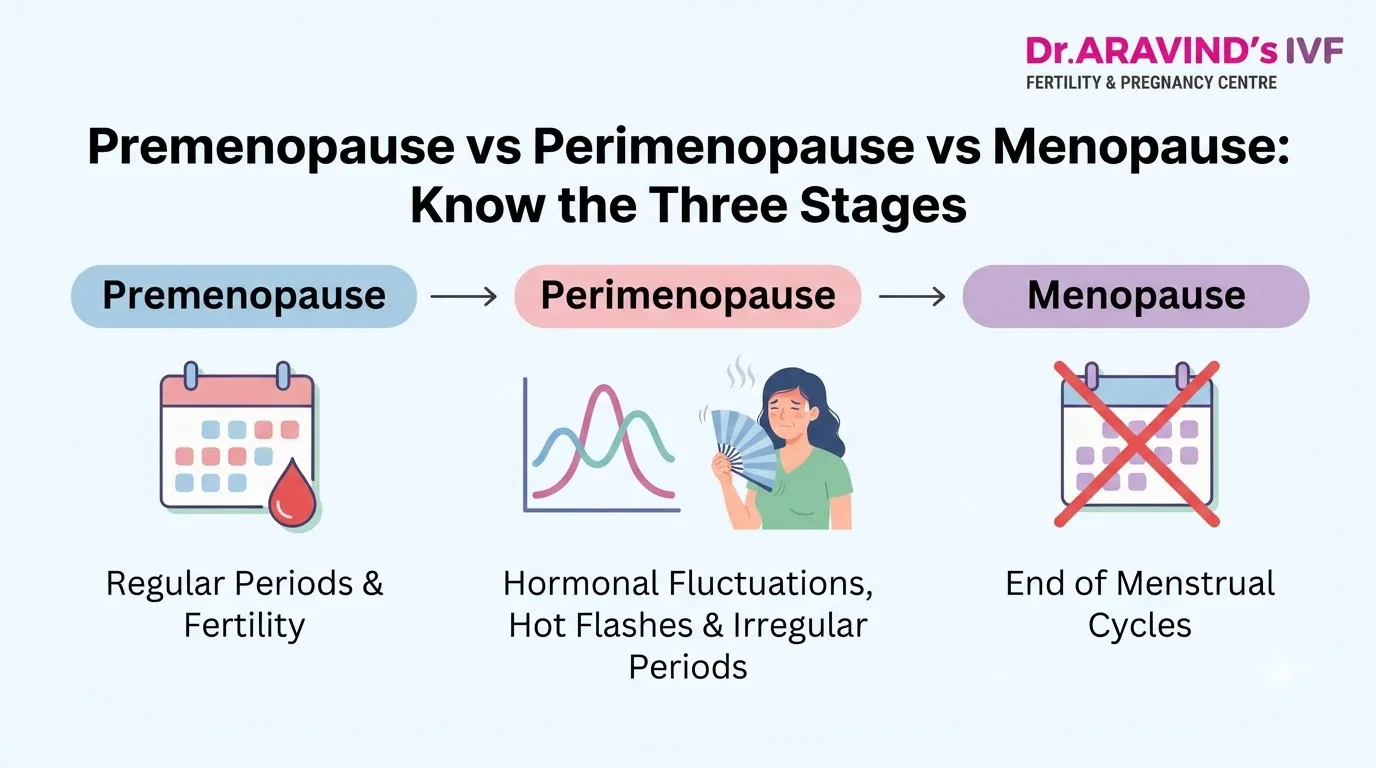
The three commonly discussed stages are:
- Premenopause: The reproductive years before the menopausal transition, when periods are generally regular.
- Perimenopause: The transition towards menopause, when hormone levels fluctuate and menstrual cycles may become irregular.
- Menopause: The point reached after 12 consecutive months without a menstrual period, when there is no other medical explanation.
These stages are different parts of one natural process. Their timing and symptoms can vary between women.
1. Premenopause: The Reproductive Stage Before Menopause
Premenopause refers to the years before perimenopause begins. During this stage, the ovaries generally release eggs regularly, and menstrual cycles tend to follow a predictable pattern.
Common Features of Premenopause
- Periods are usually regular.
- Ovulation generally occurs during menstrual cycles.
- Oestrogen and progesterone follow typical reproductive patterns.
- Pregnancy is possible.
- Some women experience common premenstrual symptoms, such as cramps or breast tenderness.
Premenopause does not mean that fertility remains the same throughout adulthood. Egg quantity and quality gradually decline with age, even when menstrual cycles are regular.
Women planning pregnancy should consider age and reproductive health rather than relying only on regular periods. A best fertility centre in Coimbatore can help assess fertility concerns and discuss suitable investigations when needed.
2. Perimenopause: The Transition Towards Menopause
Perimenopause is the stage when the ovaries gradually become less predictable in their hormone production and ovulation patterns. It commonly begins during the 40s, although some women notice changes earlier.
Oestrogen levels may fluctuate significantly during this time. These changes can affect periods, sleep, body temperature and emotional well-being.
Common Symptoms of Perimenopause
- Irregular menstrual cycles.
- Heavier or lighter menstrual bleeding.
- Hot flashes and night sweats.
- Difficulty sleeping.
- Mood changes or increased irritability.
- Vaginal dryness.
- Changes in sexual desire.
- Difficulty concentrating or occasional brain fog.
Not every woman experiences all these symptoms. Some have mild changes, while others find them disruptive.
Can You Get Pregnant During Perimenopause?
Yes. Pregnancy is still possible during perimenopause because ovulation may continue, even when periods become irregular. However, fertility generally declines as ovarian function changes.
Women who are trying to conceive should seek an assessment rather than assuming that irregular periods mean ovulation has stopped. A best fertility centre in Coimbatore can evaluate ovarian reserve, ovulation and other factors affecting pregnancy chances.
For a closer explanation of the earlier stages, read about the stages before menopause.
3. Menopause: When Menstrual Periods Stop
Menopause is confirmed when a woman has gone 12 consecutive months without a menstrual period, provided there is no other medical reason for the absence of periods.
The average age of natural menopause is around 51 years, although it can occur earlier or later.
Common Symptoms Around Menopause
Some women continue to experience symptoms that began during perimenopause, including:
- Hot flashes and night sweats.
- Vaginal dryness and discomfort.
- Sleep disturbances.
- Mood changes.
- Reduced sexual desire.
- Changes in bone health over time.
After natural menopause, the ovaries no longer release eggs regularly, and natural pregnancy is no longer expected. Women experiencing menopause before age 40 should seek medical evaluation because primary ovarian insufficiency or another condition may be involved.
Key Differences Between Premenopause, Perimenopause and Menopause
| Feature | Premenopause | Perimenopause | Menopause |
|---|---|---|---|
| Stage | Before transition | Transition period | Confirmed milestone |
| Periods | Usually regular | Often irregular | Absent for 12 months |
| Hormones | Generally more stable | Fluctuating | Ovarian hormone levels remain lower |
| Ovulation | Usually regular | Unpredictable | No regular ovulation |
| Natural pregnancy | Possible | Possible, but less likely | Not expected |
| Common symptoms | Usually no menopausal symptoms | Hot flashes, sleep and mood changes | Symptoms may continue |
How Are These Stages Diagnosed?
Doctors usually consider a woman's age, menstrual history and symptoms. There is no single blood test that reliably identifies every stage, especially during perimenopause when hormone levels fluctuate.
Depending on the symptoms, a doctor may recommend:
- Pregnancy testing if periods are delayed and pregnancy is possible.
- Thyroid testing to investigate other causes of menstrual changes.
- Hormone tests when early menopause or another hormonal condition is suspected.
- Additional investigations for unusually heavy, irregular or unexpected bleeding.
A best fertility centre in Coimbatore can help women understand whether their symptoms are related to reproductive ageing or another medical condition. Women exploring fertility treatment may also discuss options with a specialist at a best IVF centre in India, depending on their individual assessment.
When Should You Consult a Fertility Specialist?
Seek medical advice if your periods become unusually irregular, bleeding is very heavy, you experience bleeding between periods or after sex, or symptoms interfere with daily life.
If you are planning pregnancy in your late 30s or 40s, consider an early fertility consultation rather than waiting for menstrual changes to become severe. A best fertility centre in Coimbatore can help assess reproductive health and explain appropriate next steps.
Frequently Asked Questions
1. What are the three stages of menopause?
The three commonly discussed stages are premenopause, perimenopause and menopause. They describe the reproductive years before the transition, the transition itself and the point when periods have stopped for 12 consecutive months.
2. At what age does perimenopause usually begin?
Perimenopause commonly begins during the 40s, but some women experience changes in their late 30s. The timing varies from person to person.
3. Can a woman get pregnant during perimenopause?
Yes. Pregnancy is possible during perimenopause because ovulation may still occur, although fertility generally declines and cycles become less predictable.
4. How do you know when menopause has started?
Menopause is confirmed after 12 consecutive months without a menstrual period, provided pregnancy and other medical causes have been excluded.
5. Can menopause happen before the age of 40?
Yes. Menopause-like changes before age 40 require medical assessment. Primary ovarian insufficiency is one possible cause, and early evaluation can help guide reproductive and long-term health decisions.
Final Thoughts
Premenopause, perimenopause and menopause represent different stages of reproductive ageing. Knowing how periods, hormones and fertility change across these stages can help women make informed decisions about their health and pregnancy plans. If you have concerns about irregular periods, early menopausal symptoms or declining fertility, consulting a best fertility centre in Coimbatore can help you understand your reproductive health and available options.