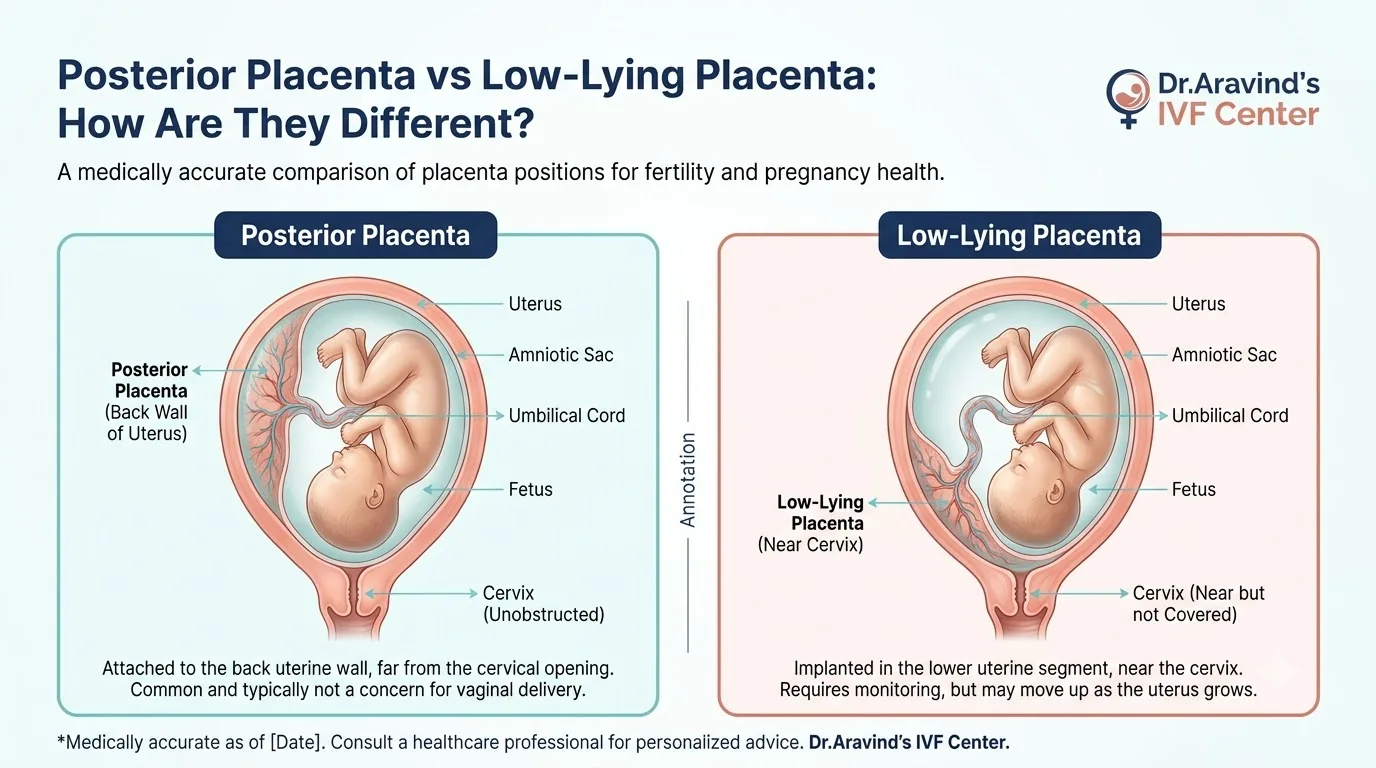
Seeing unfamiliar terms on a pregnancy ultrasound report can leave you wondering whether everything is progressing normally. Two terms that often cause confusion are posterior placenta and low-lying placenta. Although both describe where the placenta sits inside the uterus, they refer to different things.
For expectant parents seeking guidance from a fertility centre in trichy, understanding these ultrasound findings can help make pregnancy discussions with a doctor less stressful. The key difference is that a posterior placenta describes the placenta's position along the back wall of the uterus, while a low-lying placenta describes how close its lower edge is to the cervix.
What Is a Posterior Placenta?
The placenta is an organ that develops during pregnancy to supply the growing baby with oxygen and nutrients. It also helps remove waste products from the baby's blood.
A posterior placenta attaches to the back wall of the uterus, closer to the mother's spine. This is a common placental position and is generally considered normal.
A posterior placenta alone does not usually cause pregnancy complications. It may also mean that some mothers feel their baby's movements differently from those with an anterior placenta, which attaches to the front wall of the uterus. However, movement patterns vary between pregnancies.
What Is a Low-Lying Placenta?
A low-lying placenta is located in the lower part of the uterus, with its edge close to the cervix, which is the opening between the uterus and vagina.
In current obstetric practice, a placenta is generally described as low-lying when its edge is less than 20 mm from the internal opening of the cervix but does not cover it. If the placenta covers the opening, it is called placenta praevia.
A low-lying placenta identified during the second-trimester ultrasound does not necessarily remain low throughout pregnancy. As the uterus grows, the distance between the placental edge and the cervix often increases.
Posterior Placenta vs Low-Lying Placenta: Key Differences
The main difference is what each term describes.
- Posterior placenta: Describes the location of the placenta on the back wall of the uterus.
- Low-lying placenta: Describes the placenta's proximity to the cervix.
- Pregnancy implications: A posterior position is usually a normal finding, whereas a low-lying placenta may require follow-up scans and delivery planning.
- Possible complications: A posterior placenta by itself is not generally a concern. A low-lying placenta can increase the risk of bleeding, particularly later in pregnancy.
Importantly, these descriptions are not mutually exclusive. A placenta can be posterior and low-lying at the same time.
What Does a Low-Lying Posterior Placenta Mean?
A low-lying posterior placenta means the placenta is attached to the back wall of the uterus and its lower edge lies close to the cervix.
This finding does not automatically mean there is a serious problem. The next steps depend on the gestational age, the exact distance between the placental edge and the cervix, and whether there is any bleeding.
Your obstetrician may recommend a repeat ultrasound, often around 32 weeks, to check the placental position. If the placenta remains low, another scan around 36 weeks may help guide delivery planning.
A transvaginal ultrasound may be recommended to measure the distance accurately. When performed by trained professionals, it is considered a safe and reliable way to assess placental location.
Can a Low-Lying Placenta Move Up?
The placenta does not usually move independently through the uterus. Instead, as the uterus expands during pregnancy, the relationship between the placental edge and the cervix can change. This is often described as placental migration.
Many low-lying placentas identified at the mid-pregnancy scan are no longer low-lying later in pregnancy. However, some remain close to or cover the cervix, so follow-up is important.
If the placenta remains very close to the cervix or covers it near delivery, a caesarean birth may be recommended. The decision depends on the ultrasound findings and the mother's clinical circumstances.
What Symptoms Should You Watch For?
A posterior placenta generally does not cause symptoms. A low-lying placenta may also cause no symptoms, which is why ultrasound assessment is important.
The main warning sign is vaginal bleeding, which can sometimes be painless. If you experience bleeding during pregnancy, contact your maternity team promptly. Seek emergency care for heavy bleeding, severe pain, dizziness or fainting.
Do not wait for a routine appointment if concerning symptoms develop. Follow your obstetrician's advice about activity, intercourse and any other precautions based on your individual findings.
Does Placental Position Affect Fertility or Pregnancy Success?
Placental position is usually assessed after pregnancy has begun and is not, by itself, a measure of fertility. A posterior placenta does not generally reduce the chance of a healthy pregnancy.
For people who conceived through fertility treatment, including those attending an ivf clinic in trichy, the same principles of antenatal monitoring apply. Previous fertility treatment does not mean a posterior placenta is abnormal, and placental position alone cannot predict the pregnancy outcome.
Those researching a best ivf centre in india should also remember that fertility treatment and pregnancy care are different stages of the journey. Once pregnancy is established, regular antenatal appointments and appropriate ultrasound follow-up help monitor maternal and baby health.
Conclusion
Posterior placenta and low-lying placenta describe different aspects of placental location. A posterior placenta is usually a normal finding, while a low-lying placenta may need repeat scans to check whether it moves farther from the cervix as pregnancy progresses.
If your ultrasound report mentions either finding, discuss the exact measurements and recommended follow-up with your obstetrician. For fertility-related guidance and care at different stages of the reproductive journey, Dr.Aravind's IVF Center can help patients understand their options and the importance of appropriate specialist care.