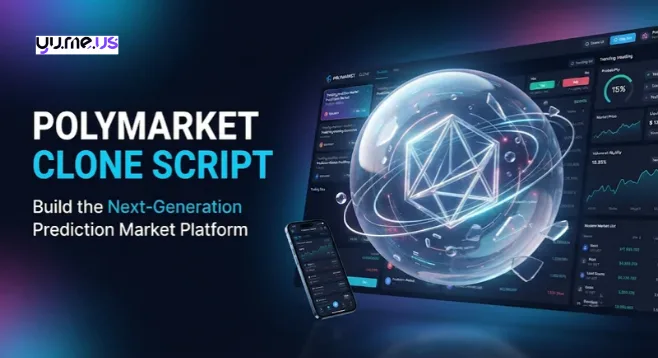
A Polymarket clone script development cost depends on the specific features, blockchain network, security audits, and customization level a business chooses for launching a decentralized prediction market. Building a functional Polymarket-like platform requires smart contracts, oracle integrations, liquidity pools, and a clean user interface that lets traders buy and sell outcome shares using cryptocurrency. Businesses planning to enter this market must evaluate technical requirements alongside ongoing operational expenses before committing capital.
Decentralized prediction markets have gained massive traction across global finance, politics, sports, and pop culture. Users trade on the outcome of real-world events, turning crowd wisdom into real-time probability data. Launching a dedicated platform allows entrepreneurs and Web3 startups to capture trading fees, liquidity rewards, and market creation charges.
How Much Does It Cost to Develop a Polymarket Clone Platform?
The total investment required for Polymarket clone development varies widely based on project scope, technical complexity, and the development approach selected. A basic white-label solution with standard binary markets sits at the lower end of the budget spectrum, whereas a custom-built platform with multi-outcome markets, advanced order books, and multi-chain compatibility demands a higher financial commitment.
Rather than focusing on a single fixed number, founders should view the budget across three core development tiers:
- Basic MVP Version: Includes core smart contracts, wallet connection, binary event creation, basic automated market maker logic, and standard admin controls.
- Mid-Tier Commercial Platform: Adds hybrid order book matching, automated oracle resolution, liquidity mining modules, referral systems, and mobile-responsive dashboards.
- Enterprise-Grade Ecosystem: Features custom smart contract architecture, multi-chain deployment, institutional APIs, fiat on-ramps, and multiple independent third-party security audits.
[Book a quick technical consultation with Yumeus to map out your platform scope and timeline.]
What Factors Determine the Cost of a Polymarket Clone Script?
Several technical and strategic variables directly influence the final budget for prediction market platform development. Understanding how each element impacts engineering hours helps founders prioritize features that drive user adoption without overspending on unnecessary extras early on.
Smart Contract Architecture and Security Audits
Smart contracts handle user deposits, share minting, order matching, and final payouts. Writing gas-optimized, bug-free contracts takes skilled Solidity or Rust developers. Once written, these contracts must undergo rigorous security audits by reputable third-party firms to prevent exploits and build trader trust.
Oracle Integration for Event Resolution
A prediction market relies on accurate real-world data to settle bets fairly. Integrating decentralized oracles like UMA or Chainlink adds development time and ongoing query fees. Complex disputes or subjective event outcomes require multi-stage verification mechanisms, increasing both backend logic and testing requirements.
User Interface and Trading Experience
Traders expect fast price charts, instant order execution, and clear portfolio tracking. Designing an intuitive frontend that displays real-time probability shifts, historical odds, and liquidity depth requires dedicated UI/UX designers and frontend engineers familiar with Web3 wallet libraries.
Polymarket Clone Script Development Cost Breakdown by Feature
Breaking down the budget by functional modules gives decision-makers clarity on where engineering resources go during prediction market software development. Each component plays a specific role in keeping the platform liquid, fair, and easy to navigate.
| Platform Module | Core Functionality Included | Budget Impact Level |
| Smart Contracts & AMM/Order Book | Conditional token framework, share minting, liquidity pools, and trade settlement logic | High |
| Decentralized Oracle System | Automated outcome reporting, dispute resolution windows, and external data feeds | High |
| User Trading Interface | Market discovery, real-time probability charts, wallet connect, and portfolio analytics | Medium |
| Liquidity Provider Dashboard | Pool creation, fee tracking, yield rewards, and automated market-making tools | Medium |
| Admin & Market Management Panel | Event approval, fee configuration, dispute moderation, and user analytics | Low to Medium |
| Security & Compliance Suite | Smart contract audits, geo-blocking tools, and anti-bot rate limiting | High |
Understanding the Prediction Market Business Model
A strong prediction market business model generates consistent revenue through small transaction fees collected across high trading volumes. Unlike traditional sportsbooks that take on directional risk against users, decentralized platforms act as neutral marketplaces where traders bet against one another.
Platform owners typically monetize through multiple streams:
- Trading Fees: Collecting a small percentage on every buy or sell order executed within active markets.
- Market Creation Fees: Charging users or partners a flat fee to list custom events and seed initial liquidity.
- Liquidity Spread Capture: Earning a share of the bid-ask spread when providing protocol-owned liquidity to new markets.
- Withdrawal and Settlement Charges: Applying minimal network or platform fees when winners redeem outcome shares for stablecoins.
[Request a live demo of Yumeus prediction market software to test the trading flow firsthand.]
How Does Blockchain Selection Affect Prediction Market Development Costs?
Choosing the right underlying blockchain directly affects both initial engineering expenses and long-term user retention. High transaction fees on congested networks discourage frequent trading, making Layer-2 networks and high-throughput chains far more practical for prediction markets.
Polygon and Ethereum Layer-2 Networks
Polymarket operates on Polygon to keep gas fees near zero and confirm trades within seconds. Developing on EVM-compatible Layer-2 chains like Polygon, Arbitrum, or Base lowers engineering overhead thanks to mature developer tools, battle-tested token standards, and wide wallet support.
Solana and High-Speed Non-EVM Chains
Building on Solana delivers sub-second finality and high throughput for active order books. At the same time, Rust development requires specialized talent, and adapting existing Ethereum conditional token frameworks to non-EVM environments increases custom coding hours.
Multi-Chain Deployment
Supporting deposits across multiple networks improves user accessibility, letting traders fund accounts from Ethereum, Arbitrum, or Solana seamlessly. Adding cross-chain bridges and unified liquidity routing expands the engineering scope and demands extra security testing.
Ready-Made Polymarket Clone Script vs Custom Development: Which Costs Less?
Founders face a clear choice between deploying a pre-built white-label script or building custom prediction market software from scratch. Each path carries distinct trade-offs regarding launch speed, upfront investment, and long-term flexibility.
| Comparison Factor | Ready-Made Polymarket Clone Script | Custom Development from Scratch |
| Initial Investment | Lower upfront budget with predictable package tiers | Higher capital requirement billed across development sprints |
| Time to Market | Rapid deployment within a few weeks | Extended timeline spanning several months |
| Customization Flexibility | Configurable UI themes, fee structures, and token pairs | Full control over smart contract logic and unique trading mechanics |
| Security Readiness | Pre-tested core contracts ready for final audit | Requires full architecture review and ground-up security auditing |
| Scalability | Built on proven frameworks suited for standard growth | Engineered specifically for bespoke high-volume workflows |
A ready-made script works best for startups validating market demand quickly without draining capital on repetitive boilerplate code. Custom development suits established enterprises needing proprietary matching engines, custom tokenomics, or deep institutional integrations.
Hidden Expenses Businesses Should Account for Before Launch
Many founders budget strictly for software coding and overlook critical post-development expenses required to run a live platform smoothly. Accounting for these operational items early prevents cash flow bottlenecks right after launch.
- Initial Market Liquidity Seeding: Prediction markets need active liquidity from day one so early visitors see tight spreads and fair odds. Businesses must allocate dedicated capital to seed initial pools across popular events.
- Third-Party Security Audits: Even when starting with tested code, any custom smart contract modifications require independent security verification before handling real user funds.
- Node Infrastructure and RPC Providers: High-traffic trading interfaces make constant blockchain queries for live prices and order updates, requiring paid enterprise RPC endpoints from providers like Alchemy or Infura.
- Legal and Regulatory Consulting: Operating prediction markets involves complex jurisdictional rules around event contracts and digital assets, requiring specialized legal guidance to configure regional access controls properly.
- Ongoing Maintenance and Oracle Gas Fees: Continuous server hosting, database scaling, and oracle resolution incentives add recurring monthly overhead once users begin trading daily.
[Talk to the Yumeus blockchain team to get a tailored roadmap for your prediction market launch.]
Why Choose Yumeus for Polymarket Clone Script Development Services?
Yumeus delivers end-to-end engineering for businesses looking to launch a reliable, high-performance Polymarket-like platform. Rather than offering rigid templates, Yumeus focuses on clean smart contract architecture, responsive trading interfaces, and seamless oracle integrations that keep markets running smoothly during peak event traffic.
Working with Yumeus gives businesses direct access to dedicated blockchain engineers who understand conditional token standards, automated market makers, and hybrid order books. Every deployment prioritizes gas efficiency, transparent settlement workflows, and intuitive admin controls so founders can focus on community growth and liquidity partnerships.
Ready to turn your prediction market concept into a live trading platform? Connect with Yumeus today to discuss your technical requirements, explore feature customizations, and kickstart your Polymarket clone development project.