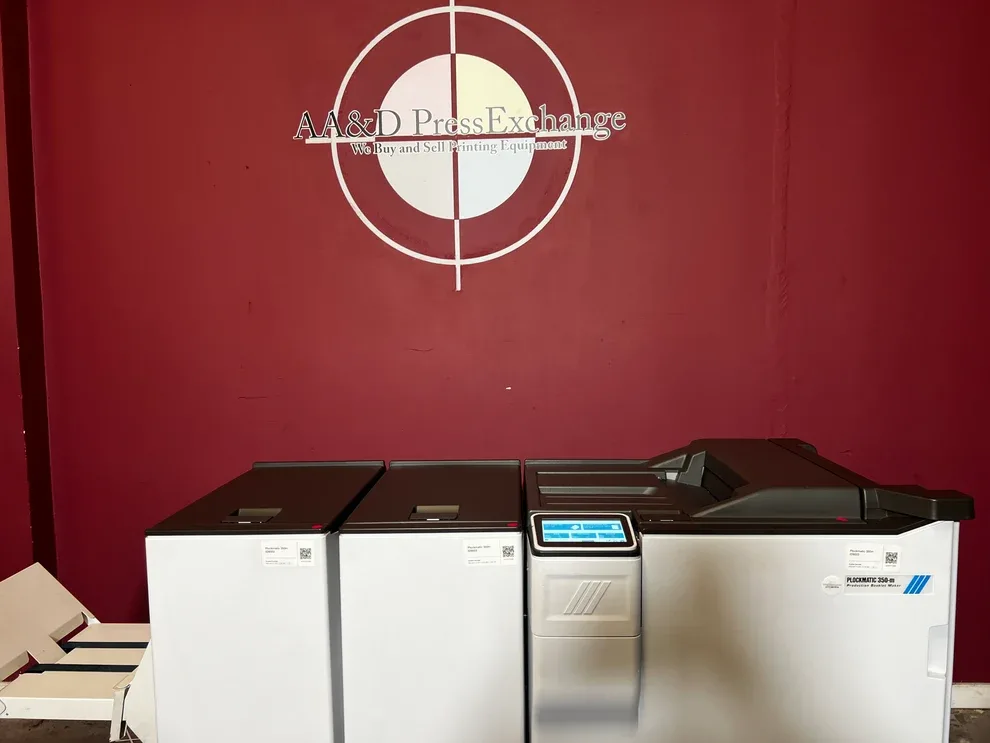
Producing professional-looking booklets can become a time-consuming job when folding, stapling, and finishing have to be handled separately. A production environment needs equipment that can turn printed sheets into finished booklets without adding unnecessary manual steps. That is where a dedicated booklet maker can make a meaningful difference.
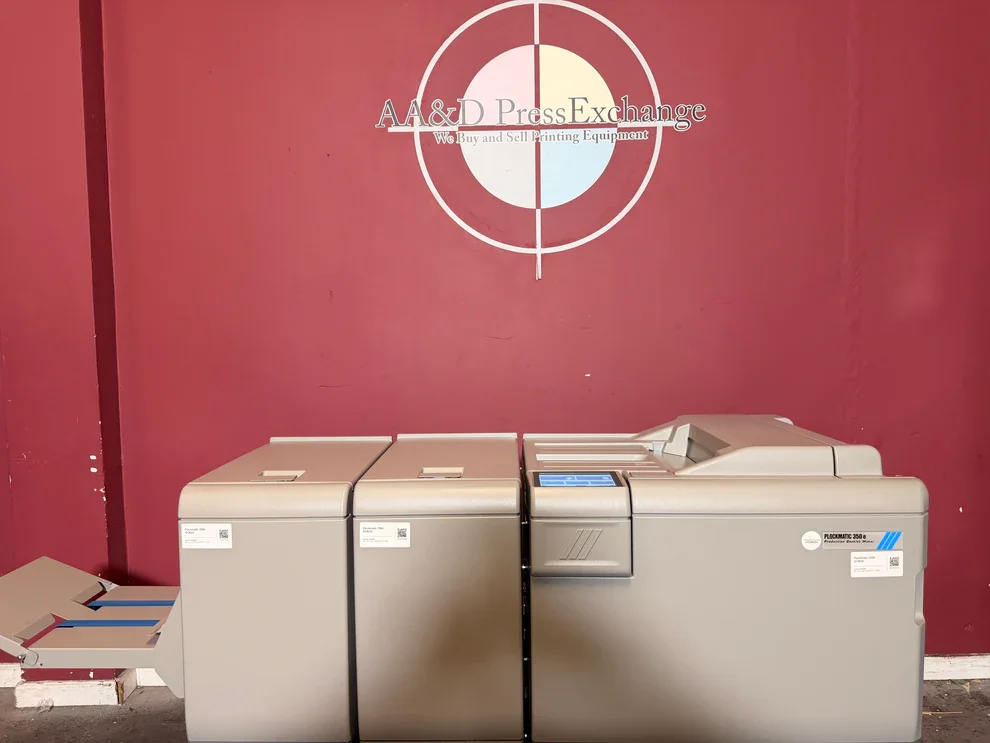
The Plockmatic 350-M Booklet Maker for Sale – 85K Meter is a used finishing machine designed for businesses that want to bring booklet production into a more organized workflow. This particular unit has an 85,000-meter count and is listed with a 30-day warranty covering its electronic parts. The current listing price is $8,000.
For a print shop, commercial printer, in-plant operation, or digital production department, buying used equipment can be an attractive alternative to investing in a new machine. The important thing is to understand what the machine can handle, where it fits into your workflow, and what support is available after purchase.
What Is the Plockmatic 350-M?
The Plockmatic 350-M is a booklet-making system intended to turn printed sheets into folded and stapled booklets. Instead of having an operator manually gather pages, fold the stack, and staple it, the machine brings several of these finishing steps together.
Think of it like a small production line. Printed pages enter one end, and the finished booklet comes out after the sheets have been assembled and finished.
The system can be used offline, meaning it does not necessarily have to be permanently connected to a particular digital press. This can give a print operation more flexibility when deciding how to organize its finishing department.
The 350-M is also designed around a broad selection of common paper formats. Supported sizes include A4, A3, B4, 8.5 x 11 inches, 8.5 x 14 inches, 9 x 12 inches, 11 x 17 inches, 12 x 18 inches, SRA4, SRA3, and custom sizes within the machine's operating range.
Why an 85K Meter Count Matters
When purchasing used print-finishing equipment, the meter count is one of the first details buyers usually examine.
An 85K meter count means the machine has recorded approximately 85,000 meters of production on its meter system. It provides buyers with useful information about the machine's previous usage, although the meter should not be treated as the only measure of condition.
Two machines with similar meter counts can have different histories depending on how they were operated, maintained, and serviced. It is similar to comparing two used cars with the same mileage: the mileage matters, but maintenance history and overall condition matter too.
For buyers considering this particular machine, the 85K count gives them a clear starting point when evaluating the equipment against other used Plockmatic units.
A Practical Choice for Booklet Production
One of the biggest advantages of a dedicated booklet maker is consistency.
Imagine producing 100 booklets by hand. Someone has to organize the pages, fold each set, align the sheets, and staple them. Even when the operator is careful, manual work can introduce small differences between finished pieces.
A production booklet maker approaches the same task in a much more controlled way. Once the job is properly set up, the machine performs the finishing process repeatedly according to the selected settings.
That can be especially useful for jobs such as:
- Training manuals
- Sales brochures
- Event programs
- School publications
- Product guides
- Small catalogs
- Instruction booklets
- Internal company reports
- Marketing materials
- Short-run publications
The machine's value is not simply about speed. It is also about reducing repetitive manual work and creating a more predictable finishing process.
Paper Sizes the 350-M Can Handle
Paper flexibility is important because print shops rarely produce only one type of document.
The listed 350-M supports paper widths from approximately 206 mm to 320 mm and lengths from approximately 275 mm to 457.2 mm. That range accommodates many commonly used commercial and digital-print formats.
For uncoated media, the listed minimum is 64 gsm, while coated stock has a listed minimum of 105 gsm. The maximum listed paper weight is 300 gsm, or approximately 110 lb Cover, with some media supporting up to 350 gsm.
This gives a production team room to work with different types of printed material rather than being limited to a single lightweight stock.
However, paper performance can vary according to the specific media, grain direction, coating, and job configuration. Buyers should always test their preferred stock before committing to a production workflow.
Booklet Capacity and Finishing
The PBM350 configuration is listed for stapled and folded sets of up to 35 sheets when using 80 gsm or 20 lb Bond paper. Non-stapled folding is listed for one to two sheets.
The practical number of pages in a finished booklet depends on how the pages are arranged. A booklet made from folded sheets effectively contains multiple pages from each sheet.
For example, a simple eight-page booklet does not require eight separate sheets. Instead, several printed sheets can be folded and nested to create the finished publication.
This makes booklet-making equipment useful for documents that need to look more like professionally produced publications rather than loose stacks of pages.
Optional Finishing Capabilities
The listed system specifications also describe several finishing modules that can be used with the booklet-making setup.
The Rotate, Crease, Bleed Trimmer module can handle booklet sizes within the booklet maker's range and provides trimming capabilities for finishing applications. The listed minimum total trimming is 10 mm, while the maximum is 60 mm. Asymmetrical trimming is also supported.
A face trimmer is another finishing option. It can provide additional trimming along the front edge of a finished booklet, with the listed maximum trimming reaching 25 mm. The system also supports multi-cut operation for producing shorter booklet formats from larger sheets.
These options demonstrate how a booklet finishing setup can go beyond simply folding and stapling sheets. Depending on the configuration, trimming and other finishing stages can help give the final product a cleaner appearance.
Why Used Equipment Can Make Sense
New production equipment can represent a substantial investment, particularly for a business that is building its finishing capabilities for the first time.
A used machine can provide another route.
Rather than paying the full cost of a new system, a buyer can purchase previously operated equipment and put the remaining budget toward other needs, such as paper stock, maintenance, additional finishing equipment, software, or production upgrades.
The key is buying carefully.
A used machine should be evaluated based on its model, meter count, physical condition, included modules, operating history, testing, and warranty. Looking at the asking price alone does not tell the complete story.
In this case, the listed 85K-meter Plockmatic 350-M is offered at $8,000 and includes a 30-day warranty on electronic parts from the seller.
That warranty is particularly useful because electronics are an important part of modern finishing equipment. A short warranty period does not eliminate the need for inspection, but it does provide an additional layer of confidence after the purchase.
Where the Plockmatic 350-M Fits in a Print Workflow
The booklet maker is best understood as a finishing solution rather than a printing device.
A typical workflow might look like this:
- A digital press or printer produces the individual pages.
- The printed sheets are organized for the booklet job.
- The sheets are fed into the finishing equipment.
- The booklet maker assembles the set.
- The sheets are folded and stapled.
- Additional trimming or finishing can be performed when the appropriate modules are installed.
- Finished booklets are collected for packaging or delivery.
This separation between printing and finishing can be useful because it allows a business to select the right equipment for each stage of production.
For example, a company may already have a digital press but lack an efficient way to finish short-run booklets. Adding a used Plockmatic system can address that specific bottleneck without replacing the printing equipment itself.
Preparing Booklets for Professional Delivery
Making the booklet is only one part of completing a print job. Once the products are finished, they may need to be boxed, palletized, protected, and transported to a customer.
This is especially important when equipment itself is being purchased and shipped.
Large print-finishing machines contain moving components and precision mechanisms. They should not simply be treated like ordinary boxed office supplies. Proper preparation can reduce the possibility of damage caused by movement, impact, or unsuitable handling during transportation.
For buyers located outside the seller's immediate area, Fort Worth Crating and Shipping Services can be an important consideration when arranging transportation for printing and finishing equipment.
Professional crating and shipping can help create a more controlled journey from the seller's facility to the buyer's production floor. Depending on the shipment, equipment may need to be secured to a pallet or placed inside a protective crate before transportation.
A good shipping plan should also account for the machine's dimensions, weight, loading requirements, destination, and unloading arrangements.
Buying from a Specialized Used Equipment Seller
Purchasing used printing equipment from a seller that regularly handles production machinery can make the process easier.
AA&D PressExchange lists used printing and finishing equipment for businesses looking for alternatives to purchasing new machinery. The company's listing for this particular 350-M identifies the 85K meter count, $8,000 asking price, and 30-day electronic-parts warranty.
Before purchasing, buyers should confirm exactly what is included with the machine. If photographs show additional modules or accessories, it is sensible to verify whether each component is included in the quoted price.
Buyers should also confirm electrical requirements, paper specifications, available accessories, machine dimensions, shipping arrangements, and warranty terms before completing the transaction.
What to Check Before Purchasing
A checklist can make the buying process much easier.
Start by confirming the meter count. Next, ask about the machine's operating condition and whether it has been tested. If possible, request a demonstration or production video showing the machine processing actual sheets.
It is also worth checking:
- What modules are included
- Whether the machine folds and staples correctly
- Whether trimming equipment is included
- Which paper stocks have been tested
- Whether any consumable parts need replacement
- What the warranty covers
- How long the warranty lasts
- What is excluded from the warranty
- How the machine will be prepared for shipment
- Who handles loading and transportation
- What installation requirements apply at the destination
These questions can prevent misunderstandings and help a buyer compare this unit with other used booklet makers.
Who Should Consider This Machine?
The Plockmatic 350-M may be worth considering for businesses that regularly produce finished booklets but want to avoid doing the final steps manually.
It can make sense for commercial print shops handling short and medium production runs, in-plant print departments producing internal documents, educational organizations creating manuals and programs, and businesses that need professional-looking marketing booklets.
It may also appeal to buyers who already have compatible printing equipment and want to add a dedicated finishing stage to their workflow.
The right choice ultimately depends on production volume, booklet size, paper requirements, available floor space, and the type of finishing the business needs.
Conclusion
The Plockmatic 350-M Booklet Maker for Sale – 85K Meter offers a practical way to add booklet finishing capabilities without automatically taking on the cost of new production equipment. Its listed specifications cover a useful range of paper sizes and weights, while the PBM350 configuration supports stapled booklet sets up to 35 sheets on the specified 80 gsm stock.
The 85K meter count provides a clear reference point for evaluating the machine's previous usage, while the listed 30-day warranty on electronic parts adds an extra measure of buyer protection.
For a print operation that wants to reduce manual folding and stapling, improve consistency, and create finished booklets more efficiently, a used Plockmatic 350-M can be a practical addition. As with any used production machine, the smartest purchase is one based on verified specifications, actual condition, included components, warranty coverage, and a well-planned shipping arrangement.
When those factors line up with your production requirements, the 350-M can become more than another piece of equipment—it can help turn a stack of printed sheets into a finished product ready for the customer.