
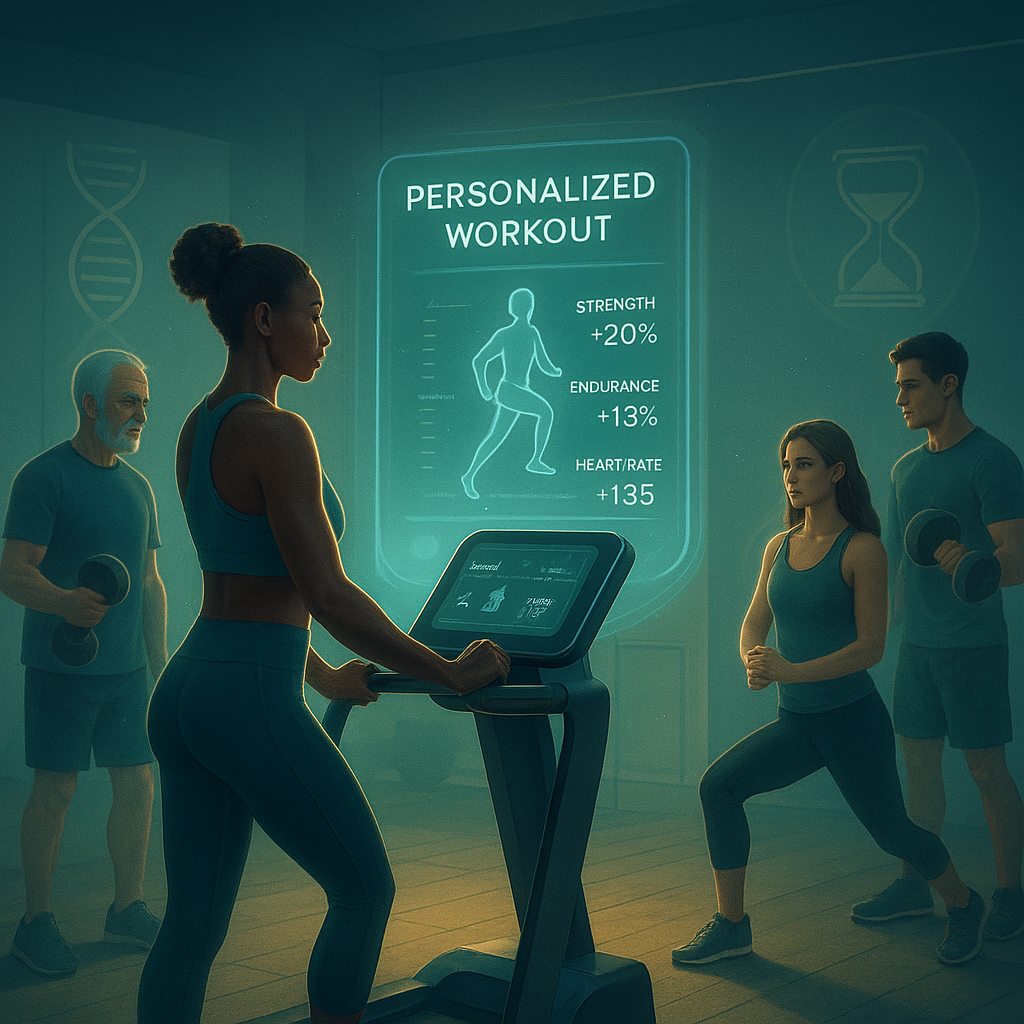
Unveiling the New Era of Fitness: From One-Size to Tailored Solutions
Imagine stepping into a gym where every machine, every workout, and every nutritional plan is calibrated precisely to your genetic makeup, lifestyle, and even your mental state. This isn’t a distant sci-fi fantasy but a reality taking hold in 2026. As sedentary lifestyles and chronic diseases continue to challenge public health worldwide, personalized fitness emerges as a beacon of hope, promising not just improved physical performance but lasting vitality.
According to the World Health Organization, physical inactivity is one of the leading risk factors for global mortality, contributing to 5 million deaths annually. Yet, despite decades of public health campaigns promoting exercise, a significant portion of the population remains inactive or fails to sustain fitness routines. The core issue: traditional fitness approaches often overlook individual variability.
Enter personalized fitness—a data-driven, science-backed approach that tailors exercise, nutrition, and recovery strategies to each person’s unique biological and psychological profile. With advances in genomics, wearable technology, AI coaching, and behavioral science, fitness is not just about moving more; it’s about moving smarter. This shift is reshaping wellness paradigms and forging a path toward enhanced longevity and quality of life.
“Personalized fitness transcends the cookie-cutter mentality, empowering individuals to unlock their full potential through tailored strategies grounded in science.” — Dr. Elaine Matthews, Chief Scientist at Vitality Labs
Historical Context: How Traditional Fitness Approaches Fell Short
The fitness industry has evolved dramatically over the past century, from calisthenics in early physical culture movements to the aerobics craze of the 1980s and the rise of high-intensity interval training (HIIT) in the 2010s. However, the underlying principle remained largely uniform: one standard program for all. This approach, while effective for some, often failed to consider genetic predispositions, metabolic differences, injury history, mental health, and motivation levels.
Research from the 2020s revealed that adherence rates to exercise programs rarely exceeded 50%, with most dropouts citing boredom, injury, or perceived inefficacy. Scientific studies, such as those published in the Journal of Applied Physiology, showed that individuals respond very differently to the same exercise stimuli, with genetic factors explaining up to 40% of the variance in aerobic capacity improvements.
The limitations of generalized fitness regimes became starkly apparent as the global population aged and chronic conditions like diabetes, cardiovascular disease, and obesity soared. Public health policies began to emphasize not just physical activity but personalized interventions. This laid the groundwork for integrating precision medicine principles into fitness, a transition accelerated by technological innovation.
“The era of one-size-fits-all fitness is behind us. Recognizing individual differences is crucial to effective and sustainable health outcomes.” — Prof. Samuel Ortega, Exercise Physiologist, University of Cambridge
Data-Driven Fitness: The Science and Technology Powering Personalization
In 2026, personalized fitness leverages a convergence of cutting-edge technologies to craft bespoke wellness plans. Central to this transformation are wearable devices equipped with multi-sensor arrays, capable of continuously monitoring heart rate variability, glucose levels, sleep quality, respiratory patterns, and even hydration status. These devices feed data into AI algorithms that interpret physiological responses in real time.
Genomic testing has become increasingly accessible and affordable, allowing for insights into muscle fiber composition, recovery capacity, nutrient metabolism, and inflammation markers. Companies like GenFit and MyVitalCode offer consumer-friendly reports that help trainers and users customize workouts and diets accordingly.
Here are some key components driving personalized fitness:
- Genetic Profiling: Determines individual predispositions such as fast-twitch vs. slow-twitch muscle dominance, influencing optimal training types.
- AI-Powered Coaching: Adaptive algorithms that modify exercise intensity, volume, and modalities based on real-time feedback.
- Biometric Feedback: Continuous monitoring of physiological metrics to prevent overtraining and optimize recovery.
- Behavioral Analytics: Psychological assessments to tailor motivation strategies and habit formation techniques.
- Nutrition Personalization: Diet plans aligned with metabolic and microbiome profiles for maximal performance and health.
Statista data shows that the global personalized fitness market has grown at a compound annual growth rate (CAGR) of 18% since 2022, reaching over $15 billion in revenue in 2025. This surge is driven by consumer demand for efficacy and convenience, as well as health insurers increasingly incentivizing personalized preventive care.
Current Fitness Landscape in 2026: Innovations and Industry Shifts
The fitness industry in 2026 is marked by rapid innovation and shifting consumer expectations. Gyms and wellness centers have evolved into hybrid hubs combining physical spaces with virtual and augmented reality experiences. Brands like FitSphere and CoreSync have pioneered immersive training environments where users engage in personalized workouts embedded in gamified, social contexts to boost adherence.
AI virtual trainers are now commonplace, with natural language processing enabling nuanced coaching conversations. These systems integrate holistic data, including stress indicators and circadian rhythms, to optimize timing and content of workouts.
Healthcare systems have embraced fitness as a pillar of preventive medicine. Several governments have launched programs subsidizing personalized fitness interventions for at-risk populations, yielding measurable reductions in healthcare costs. For example, Finland’s National Personalized Fitness Initiative reported a 22% decrease in cardiovascular incidents among participants over two years.
Moreover, the industry is witnessing the rise of personalized group fitness, where cohorts with similar profiles train together under algorithmic guidance, blending community support with individual optimization.
- Integration with Mental Health: Mindfulness and stress management incorporated into fitness plans.
- Wearable Evolution: Non-invasive glucose and cortisol monitoring becoming standard.
- Corporate Wellness: Customized employee fitness programs linked to productivity metrics.
- Sustainability Focus: Eco-friendly fitness gear and low-energy virtual platforms gaining traction.
Expert Insights: Industry Leaders on the Future of Fitness
Leading voices in the fitness and health technology sectors emphasize that personalization is not merely a trend but a fundamental shift in how we approach human performance and well-being. Dr. Anika Rao, CEO of BioFit Technologies, notes that the fusion of biology and technology enables unprecedented precision in health interventions.
"The ability to tailor fitness at the individual level is unlocking new frontiers in disease prevention and longevity," she explains. "We are beginning to see fitness prescriptions that rival pharmaceutical treatments in efficacy, without their side effects."
Fitness psychologists highlight the importance of behavioral customization. Dr. Mark Chen, a pioneer in digital coaching psychology, argues that understanding user motivation and mental resilience is critical. "Technology can track your heart rate, but it can’t yet feel your frustration or burnout. That’s where human-centered AI coaching comes in, bridging data and empathy."
The industry is also grappling with ethical considerations, including data privacy and equitable access. Experts advocate for transparent data policies and inclusive design to ensure the personalized fitness revolution benefits diverse populations.
“Personalized fitness is a holistic ecosystem integrating biology, technology, and psychology to foster sustainable health.” — Dr. Anika Rao, CEO, BioFit Technologies
“True personalization requires empathy as much as algorithms; the human element remains indispensable.” — Dr. Mark Chen, Digital Coaching Psychologist
Looking Ahead: What Personalized Fitness Means for Consumers and Society
The trajectory of personalized fitness promises profound implications for individuals and public health. As these tailored approaches become mainstream, they are expected to:
- Improve Adherence: Customized plans enhance motivation and reduce dropout rates.
- Reduce Injury: Precision in exercise prescription minimizes overuse and acute injuries.
- Enhance Longevity: Targeted interventions address risk factors early, extending healthspan.
- Lower Healthcare Costs: Preventive fitness reduces chronic disease burden.
- Promote Equity: Scalable personalized programs can reach underserved communities.
Consumers are advised to engage with certified professionals and validated technologies to navigate the expanding market. For those starting their fitness journey, resources like Starting Strong: A Practical Blueprint for Launching Your Fitness Journey offer guided pathways. Those interested in the science behind these advances should explore Why Personalized Fitness Is Becoming the Ultimate Health Revolution for a deeper understanding.
In sum, the era of personalized fitness is redefining what it means to be healthy and active. By harnessing data, technology, and human insight, it promises not only enhanced physical capabilities but a more vibrant, enduring quality of life.