
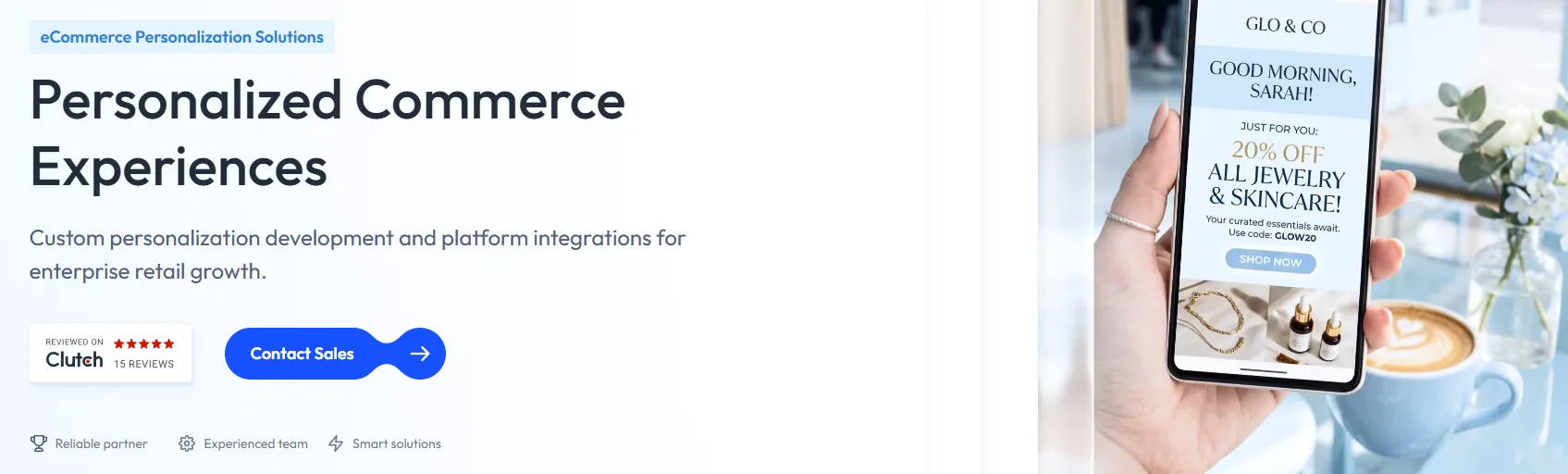
B2B eCommerce has undergone a significant transformation over the last decade. Modern business buyers no longer compare their digital experiences solely against competitors within their industry—they compare them against the seamless, personalized experiences they encounter every day as consumers. As a result, personalization has become a key differentiator for B2B organizations seeking to increase customer satisfaction, improve retention, and drive revenue growth.
Unlike traditional B2C personalization, which often focuses on individual preferences and impulse purchases, B2B personalization must address complex buying journeys, multiple stakeholders, account-specific pricing, negotiated contracts, and long-term customer relationships. Organizations that successfully implement personalization can simplify procurement processes, shorten sales cycles, and create stronger customer loyalty.
Why Personalization Matters in B2B eCommerce
Today's B2B buyers expect suppliers to understand their needs and provide tailored experiences. Generic product catalogs, irrelevant recommendations, and one-size-fits-all messaging can create friction and drive customers toward competitors.
Personalization helps businesses:
- Increase conversion rates
- Improve customer retention
- Accelerate purchasing decisions
- Boost average order value
- Strengthen customer relationships
- Reduce procurement complexity
- Enhance self-service capabilities
As digital commerce continues to dominate B2B purchasing, companies that fail to personalize risk losing market share to more customer-centric competitors.
Understanding B2B Personalization
B2B personalization involves adapting digital experiences based on customer data, account information, buying behavior, industry characteristics, and user roles.
Instead of delivering identical experiences to every visitor, businesses create customized interactions that align with each customer's specific needs.
Examples include:
- Account-specific pricing
- Personalized product catalogs
- Custom recommendations
- Industry-focused content
- Role-based dashboards
- Dynamic promotions
- Tailored search results
- Personalized email campaigns
The goal is to make every interaction more relevant and useful, enabling buyers to find what they need faster and complete purchases with less effort.
Building a Strong Data Foundation
Effective personalization starts with data.
Organizations must collect and unify information from multiple sources, including:
Customer Relationship Management (CRM)
CRM platforms provide valuable information about:
- Customer profiles
- Purchase history
- Account hierarchy
- Sales interactions
- Contract terms
Enterprise Resource Planning (ERP)
ERP systems contain operational data such as:
- Pricing agreements
- Inventory levels
- Order history
- Payment records
- Product availability
Website Analytics
Behavioral data reveals:
- Browsing patterns
- Product interests
- Search activity
- Abandoned carts
- Session behavior
Marketing Automation Platforms
Marketing tools provide insights into:
- Email engagement
- Campaign performance
- Content consumption
- Lead nurturing activities
By integrating these data sources, businesses gain a comprehensive view of each customer account and can deliver more accurate personalization.
Segment Customers Beyond Industry
Many B2B organizations segment customers solely by industry. While industry segmentation remains useful, modern personalization requires a deeper understanding of customer behavior.
Consider segmenting based on:
Purchasing Patterns
Analyze:
- Order frequency
- Average order size
- Seasonal demand
- Product categories
Account Value
Different experiences can be created for:
- Strategic accounts
- Mid-market customers
- Emerging customers
- New prospects
Customer Lifecycle Stage
Personalization should differ for:
- First-time buyers
- Active customers
- At-risk accounts
- Loyal advocates
Digital Maturity
Some customers prefer self-service portals, while others require additional support and guidance.
Advanced segmentation enables businesses to create more targeted and effective customer experiences.
Deliver Personalized Product Recommendations
Product recommendations are among the most impactful personalization tactics in B2B eCommerce.
Unlike B2C environments, B2B recommendations should account for:
- Historical purchasing behavior
- Contracted products
- Industry requirements
- Company size
- Purchasing roles
Effective recommendation strategies include:
Frequently Reordered Products
Highlight products customers regularly purchase to simplify reordering.
Complementary Products
Suggest related items that enhance previous purchases.
Industry-Specific Recommendations
Recommend products commonly used by similar organizations.
Contract-Based Recommendations
Prioritize items covered by negotiated pricing agreements.
Well-designed recommendation engines help customers discover relevant products while increasing average order values.
Implement Dynamic Pricing and Catalogs
One of the most powerful forms of B2B personalization involves tailoring pricing and product visibility.
Different customers often have:
- Negotiated pricing
- Custom contracts
- Exclusive products
- Regional restrictions
- Volume discounts
Dynamic catalogs ensure customers only see products relevant to their business.
Benefits include:
- Simplified purchasing
- Reduced confusion
- Faster decision-making
- Improved user experience
By presenting only relevant information, businesses make procurement more efficient and increase customer satisfaction.
Create Role-Based Experiences
B2B purchasing decisions often involve multiple stakeholders.
For example:
Procurement Managers
Typically focus on:
- Pricing
- Availability
- Order history
- Budget compliance
Engineers and Technical Teams
Need access to:
- Technical specifications
- Documentation
- Product comparisons
- Compatibility information
Executives
May prioritize:
- Strategic value
- Cost savings
- Supplier reliability
Role-based personalization ensures each user receives the information most relevant to their responsibilities.
Enhance Search with Personalization
Search functionality plays a critical role in B2B eCommerce.
Business buyers frequently know exactly what they need and expect search tools to help them find it quickly.
Personalized search can:
- Prioritize frequently purchased products
- Surface account-specific inventory
- Promote preferred brands
- Display negotiated pricing
- Recommend relevant alternatives
Artificial intelligence and machine learning can further improve search relevance by learning from customer interactions over time.
Use AI to Scale Personalization
As customer bases grow, manual personalization becomes impossible.
Artificial intelligence enables organizations to deliver personalized experiences at scale.
AI-powered capabilities include:
Predictive Recommendations
Predict future purchases based on historical behavior.
Behavioral Analysis
Identify customer interests and purchasing intent.
Dynamic Content Personalization
Automatically adapt website content based on visitor characteristics.
Forecasting
Predict inventory needs and future demand patterns.
Intelligent Customer Segmentation
Continuously update customer segments based on behavior and business activity.
AI helps organizations move from reactive personalization to proactive engagement.
Personalize Content Throughout the Customer Journey
Content personalization extends beyond product recommendations.
Businesses should tailor content across every stage of the buyer journey.
Awareness Stage
Provide:
- Industry insights
- Educational resources
- Market trends
Consideration Stage
Offer:
- Product comparisons
- Case studies
- Technical documentation
Decision Stage
Present:
- Pricing information
- ROI calculators
- Customer success stories
Post-Purchase Stage
Deliver:
- Training resources
- Product updates
- Support materials
Relevant content improves engagement and helps buyers make informed decisions.
Streamline Reordering Processes
Many B2B transactions involve repeat purchases.
Personalization can dramatically simplify reordering through:
- Saved order templates
- Favorite product lists
- Automated replenishment
- Quick-order forms
- Purchase history recommendations
Reducing friction in repeat purchases improves customer satisfaction while increasing revenue opportunities.
Enable Omnichannel Personalization
Modern B2B buyers interact across multiple channels, including:
- Websites
- Mobile applications
- Sales representatives
- Customer portals
Consistency is essential.
Customers should receive personalized experiences regardless of the channel they choose.
For example:
- Product recommendations should remain consistent.
- Account-specific pricing should be synchronized.
- Customer preferences should follow them across platforms.
An integrated omnichannel strategy ensures a seamless customer experience.
Measure Personalization Success
Successful personalization programs require continuous optimization.
Key performance indicators include:
Conversion Rate
Measure how personalization influences purchasing behavior.
Average Order Value
Track increases in transaction size.
Customer Lifetime Value
Evaluate long-term customer profitability.
Retention Rate
Monitor customer loyalty improvements.
Search Effectiveness
Assess how quickly users find products.
Engagement Metrics
Track content consumption and user activity.
Data-driven optimization helps organizations continuously improve personalization performance.
Common Challenges and How to Overcome Them
Data Silos
Many businesses struggle with disconnected systems.
Solution:
Implement data integration strategies that connect CRM, ERP, eCommerce, and marketing platforms.
Privacy Concerns
Customers expect transparency regarding data usage.
Solution:
Maintain clear privacy policies and comply with applicable regulations.
Scaling Personalization
As customer bases expand, complexity increases.
Solution:
Leverage automation and AI-powered personalization tools.
Legacy Technology
Older systems may limit personalization capabilities.
Solution:
Modernize digital infrastructure and invest in scalable platforms.
Choosing the Right Technology Partner
Technology plays a critical role in successful personalization initiatives.
Organizations should evaluate providers based on:
- Integration capabilities
- Scalability
- AI functionality
- Security standards
- User experience expertise
- Industry experience
Companies seeking advanced ecommerce personalization solutions often benefit from partnering with experienced technology organizations capable of integrating data, AI, and customer experience strategies into a unified platform.
How Zoolatech Supports B2B eCommerce Personalization
As digital commerce becomes increasingly sophisticated, many organizations require specialized expertise to implement enterprise-grade personalization initiatives.
Zoolatech helps businesses accelerate digital transformation by building scalable commerce platforms, integrating complex enterprise systems, and developing data-driven personalization capabilities. Through expertise in cloud technologies, artificial intelligence, analytics, and customer experience engineering, Zoolatech supports organizations seeking to create more relevant, efficient, and engaging B2B commerce experiences.
By combining advanced technology with business-focused solutions, companies can unlock new opportunities for customer retention, operational efficiency, and revenue growth.
Conclusion
Personalization has become a strategic necessity in B2B eCommerce. Business buyers expect relevant experiences that reflect their needs, preferences, and purchasing behavior. Organizations that invest in personalization can improve customer satisfaction, increase conversions, strengthen loyalty, and gain a significant competitive advantage.
Success requires more than simply recommending products. It demands a comprehensive approach that includes customer data integration, intelligent segmentation, role-based experiences, dynamic pricing, AI-powered recommendations, personalized content, and omnichannel consistency.
As customer expectations continue to evolve, businesses that prioritize personalization today will be better positioned to drive sustainable growth and build lasting relationships tomorrow.