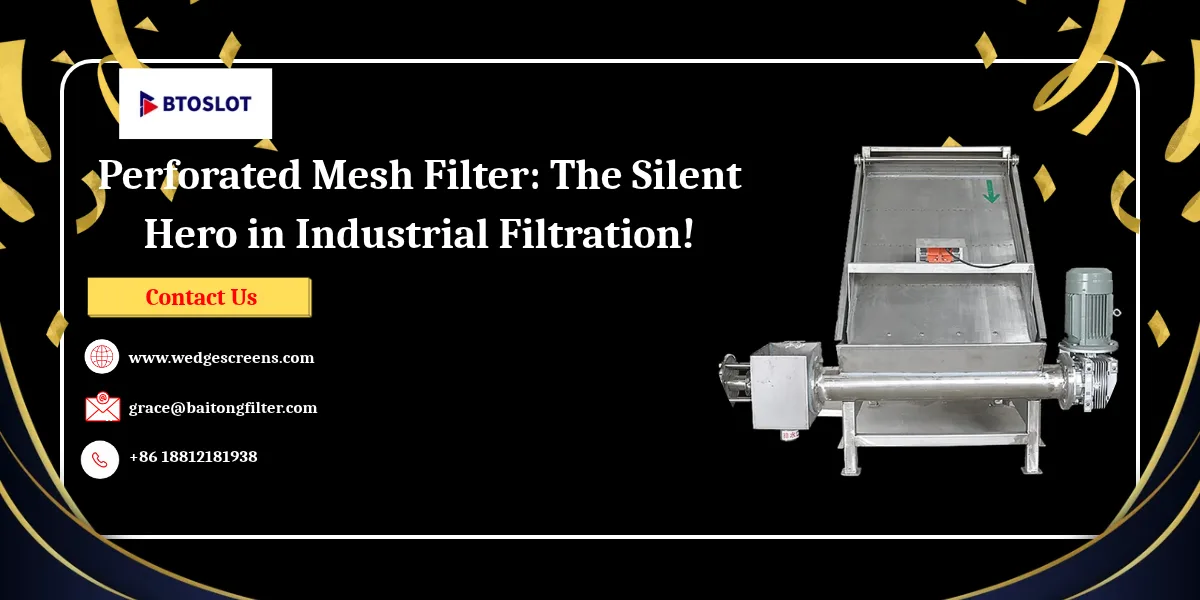
Industrial processes—whether in water treatment, chemical manufacturing, oil and gas, food and beverage, or pharmaceuticals—rely greatly on precise, robust, and cost-effective filtration. In this arena, certain technologies often get the spotlight for their complexity or novelty, yet it is frequently the simplest, most reliable components that remain at the heart of operational success. One such essential but often overlooked solution is the perforated mesh filter.
At Anping County BT Wire Mesh Products Co., Ltd., we have seen how the perforated mesh filter performs silent but crucial work across global industries. It quietly protects pumps from blockages, assures process purity, preserves machinery, and even enhances product quality. Though it might not grab attention in trade publications or conferences, the perforated mesh filter is genuinely an unsung hero—enduring tough environments, endless cycles, and evolving industrial demands with stoic reliability.
As industries undergo rapid transformation due to technological innovation, environmental pressure, and stricter regulatory controls, understanding the value and versatility of the perforated mesh filter is more important than ever. Choosing the right solution (and the right supplier) can help you boost efficiency, reduce costs, and achieve the sustainability goals essential for modern operations.
1. What is a Perforated Mesh Filter?
A perforated mesh filter is a filtration device constructed from a single (or multiple-layer) metal sheet that is punched or laser-cut with a pattern of holes (“perforations”). The result is a rigid, durable filter medium with predictable open area, excellent structural integrity, and precisely controlled pore sizes for reliable separation of solids and liquids or gases.
Key Features:
- Wide range of hole sizes and patterns: From ultra-fine (sub-millimeter) to larger (10mm+), with round, square, slot, or custom shapes
- High open area: Maximizes flow rates while maintaining filtration precision
- Available in various metals: Stainless steel, carbon steel, aluminum, copper, brass—and even plastic when corrosion resistance or weight savings are priorities
- Customization: Filters can be flat, cylindrical, conical, or pleated, and are easy to fabricate into baskets, tubes, panels, or strainers
- Excellent cleanability: Rigid structure withstands high-pressure backwashing and aggressive cleaning cycles
In essence, the perforated mesh filter bridges the gap between standard mesh (woven or welded wire) and more specialized filter media, combining the best of both worlds for many applications.
2. The Manufacturing Process: Crafting a Reliable Perforated Mesh Filter
The performance of every perforated mesh filter begins with its manufacturing process. At Anping County BT Wire Mesh Products Co., Ltd., we follow stringent quality protocols to guarantee filters meet or exceed technical demands.
a. Material Selection
The journey starts by choosing high-quality metal sheets.
Common options include:
- Stainless steel (304, 316L, 310, duplex, etc.) for corrosion resistance and food safety
- Carbon/mild steel for durability in less aggressive environments
- Aluminum, brass, titanium, or nickel alloys for specialized applications
b. Perforation
Precision punching, CNC stamping, rotary pin perforation, or laser cutting create the required hole pattern. The process ensures:
- Uniformity in hole size and spacing
- Customization for open area percent, strength, and flow rate
c. Trimming and Forming
Sheets can be shaped into cylinders, cones, domes, pleated panels, baskets, or custom forms per client design.
d. Welding and Assembly
Seams are joined using advanced welding or spot-fixing methods, and assemblies can include flanges, reinforcement rings, handles, or mounting brackets.
e. Surface Finishing
Deburring, polishing, pickling, or passivation (for stainless steel) ensures no sharp edges or contamination risk—especially vital for food or pharma applications.
3. Where Is Perforated Mesh Filter Used? (Industry Applications)
Thanks to their modularity, strength, and customizability, perforated mesh filters are key to a wide range of applications:
a. Water and Wastewater Treatment
- Intake screening: Protects pumps and membranes from debris and fouling
- Sludge thickening: Separates solids from liquids in primary and secondary treatment
- Rainwater and stormwater: Screens litter and large solids before runoff storage
b. Oil and Gas
- Sand control screens: In wells to keep formation sand out of production streams
- Pipeline strainers: Removing particulates from fuels, lubricants, chemicals
- Refinery filtration: Process safety and product purity
c. Food and Beverage
- Milk and juice clarification
- Edible oil de-gumming and screening
- Breweries: Removing spent grain or hop residues
- Sugar production: Separation during pressing and clarification
d. Pharmaceutical and Chemical Processing
- Sterile venting: Large open area designs for autoclaves and bioreactors
- Catalyst recovery and containment
- Powder screening and sizing
e. Pulp and Paper
- White water filtration: Reclaiming fibers, reducing product loss
- Bleach plant screens: Withstanding harsh chemicals
f. Industrial and Environmental
- Machine guarding: Without sacrificing airflow or visibility
- Acoustic screening: Reducing equipment noise while maintaining ventilation
- Mining/screens and vibrators: Rugged, wear-resistant grading of aggregates
4. Engineering Benefits of the Perforated Mesh Filter
a. Superior Mechanical Strength
Unlike woven wire, a perforated mesh filter maintains its structural integrity under high pressure, high flow rates, or even heavy solids loading.
b. Customizable Filtration Precision
Hole size, shape, and pattern density is entirely at your discretion, enabling both coarse and fine filtration to be achieved with the same base technology.
c. Cleanability
Rigid structure means that high-pressure jets, ultrasonic cleaning, or caustic solutions can be used without deforming the filter or enlarging the openings.
d. Longevity and Cost Efficiency
Durable construction ensures long service intervals, reducing downtime and minimizing spares inventory for maintenance teams.
e. Safety and Regulatory Compliance
Smooth surfaces, food-grade alloys, and precision fabrication mean easy integration into systems that must meet strict hygiene, FDA, or EU standards.
5. Customization Options: Making the Perfect Perforated Mesh Filter
No two applications are identical, which is why at Anping County BT Wire Mesh Products Co., Ltd., we consult closely with clients to deliver the ideal filter design.
Options include:
- Hole size (from microns to centimeters)
- Pattern (staggered, straight, slots, decorative)
- Sheet thickness and material
- Filter shape: cylinder, disc, basket, cone, etc.
- Open area % (affecting flow rate and dirt-holding capacity)
- Accessories: flanges, fitting rings, handles, gaskets
Specialty options:
- Multi-layer structures (with micro-mesh backup)
- Surface coatings (PTFE, electropolish, painted)
- Reinforced or framed for extra strength
Good design saves money and improves process reliability! Combine our experience and your process knowledge for superior results.
6. Perforated Mesh Filters vs. Alternatives
How does the perforated mesh filter compare to other popular filtration options?
a. Woven Wire Mesh
- Woven mesh: Excellent for very fine filtration, but lacks the rigidity of perforated metal.
- Perforated mesh: Rigid, easier to clean, supports larger flows and higher loading.
b. Expanded Metal
Expanded mesh offers high strength, but lacks the precision and uniformity of perforated mesh.
c. Synthetic Filters
Textiles, membranes, or plastics might offer ultra-fine filtration, but cannot match the robustness and chemical compatibility of all-metal perforated filters.
For many mid- to coarse-separation tasks, a perforated mesh filter is hard to beat.
7. Key Trends in Perforated Mesh Filter Technology
As demands change, so does the technology behind the perforated mesh filter:
- Laser and CNC advancements: Ultrahigh precision hole cutting for smaller and more complex patterns.
- Hybrid filters: Combination of perforated metal and micro mesh for multi-step filtration.
- Eco-friendly materials: Use of recycled metals and green surface treatments.
- Smart manufacturing: QR-coded filters for traceability and maintenance tracking.
- Modular systems: Panels and elements that can be replaced or cleaned quickly, minimizing downtime.
8. How to Ensure Maximum Efficiency from Your Perforated Mesh Filter
a. Correct Sizing
Determine the required flow capacity, pressure drop, and particle retention for your process. Oversized or undersized holes can compromise performance.
b. Material Compatibility
Confirm that your choice of metal or alloy will resist corrosion, chemical attack, and wear in its intended operating environment.
c. Maintenance and Cleaning
Regular inspections, backwashing, and appropriate chemical cleaning ensure optimal filter lifespan and minimal process interruptions.
d. Installation
Ensure correct orientation, reliable mounting, and tight sealing with other components—poor installation can lead to bypass or downstream issues.
e. Work with Experts
Consult with your supplier (like Anping County BT Wire Mesh Products Co., Ltd.) to ensure your filter matches all your operational parameters.
9. Why Choose Anping County BT Wire Mesh Products Co., Ltd.?
Customers around the world rely on us for:
- Multiple decades of manufacturing excellence
- Full customization to process or OEM needs
- Strict quality control (ISO-certified)
- Fast turnaround and competitive international shipping
- Responsive engineering support
- A commitment to green manufacturing and long-term relationships
Our mission: To help you achieve filtration reliability, operational savings, and long-term peace of mind.
The perforated mesh filter is not just a component; it is the silent hero that underpins process efficiency, product quality, and operational reliability across all sectors of industry. By choosing the right design and supplier, you unlock lower operational costs, improved sustainability, and peace of mind—confident that your critical systems will run smoothly, day after day.
Frequently Asked Questions (FAQ)
Q1: What is the minimum hole size available in a perforated mesh filter?
A: Advanced manufacturing (including laser perforation) allows for holes as small as 0.05mm, depending on material and thickness.
Q2: How thick can the sheet be for making a perforated filter?
A: Sheets typically range from 0.3mm to over 10mm thick; selection depends on your strength and flow needs.
Q3: Can perforated mesh filters be used for fine filtration?
A: Yes. For very fine separations, they’re often layered with micro-mesh or combined with filter cloth for hybrid assemblies.
Q4: Are all metals suitable for food or pharmaceutical use?
A: Only certain grades (like 304, 316L stainless) meet hygiene and regulatory standards for food, beverage, and pharma.
Q5: Do you provide prototype or small batch manufacturing?
A: Yes. We help clients from concept/prototype to full-scale mass production. Small or custom orders are welcome.
Q6: How are perforated mesh filters cleaned?
A: Most can be cleaned with water jets, ultrasonic baths, or solvents; selection depends on your process.
Q7: How long does a perforated mesh filter last?
A: With routine cleaning and proper material selection, filters can serve for years—even under challenging conditions.
Q8: Can I order filters with special edge treatments, frames, or gaskets?
A: Absolutely. We regularly provide filters with custom finishing for easy installation and superior sealing.
Q9: What information do I need to supply for a quote?
A: Tell us your application, filtration goals, dimensions, flow rates, preferred material, and any installation requirements.
Q10: Are your filters recyclable at end-of-life?
A: Yes. Most metal filters are 100% recyclable—supporting your corporate sustainability goals.