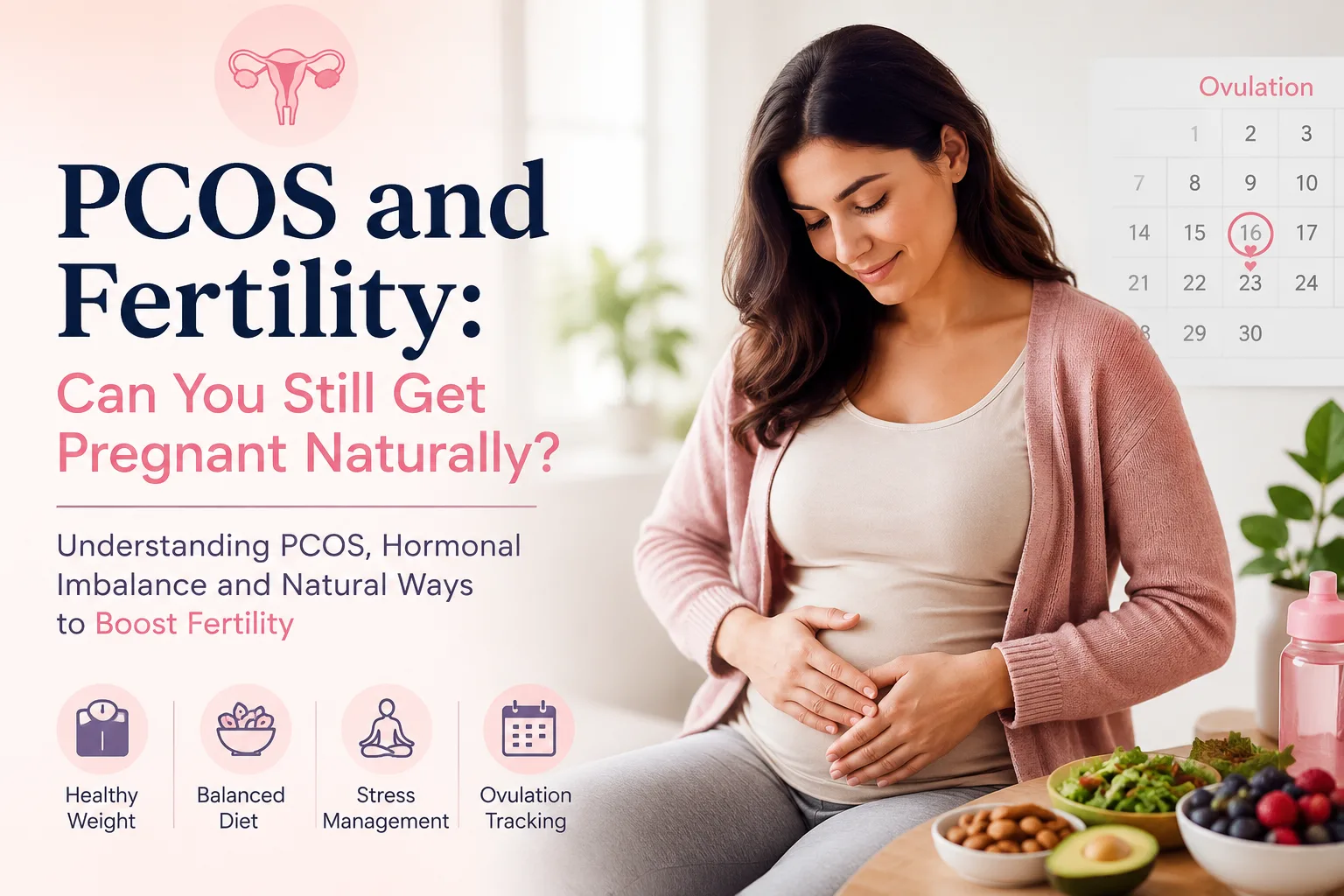
Polycystic Ovary Syndrome (PCOS) is one of the most common causes of infertility among women of reproductive age. Affecting hormonal balance and ovulation, it often raises concerns about the ability to conceive. However, despite these challenges, natural conception is possible for many women with PCOS. Understanding how PCOS impacts fertility and adopting the right lifestyle strategies can significantly improve the chances of pregnancy.
🧬 Understanding PCOS and Its Impact on Fertility
PCOS is a hormonal disorder characterized by irregular menstrual cycles, elevated levels of androgens (male hormones), and the presence of multiple small cysts in the ovaries. These hormonal imbalances can interfere with ovulation, making it difficult for the ovaries to release eggs regularly.
Ovulation is essential for pregnancy, and when it occurs irregularly or not at all, the chances of conception decrease. Additionally, insulin resistance, commonly associated with PCOS, can further disrupt hormone levels and reproductive function.
Despite these challenges, it is important to note that PCOS does not equate to infertility. Many women with PCOS ovulate occasionally, and with proper management, fertility can improve significantly.
🤰 Can You Get Pregnant Naturally with PCOS?
Yes, pregnancy with PCOS is achievable without medical intervention in many cases. The likelihood depends on several factors, including the severity of the condition, hormonal balance, body weight, and overall lifestyle.
Women who experience occasional ovulation still have a chance of conceiving naturally. The key lies in identifying fertile windows and optimizing reproductive health. With the right approach, many individuals successfully conceive without requiring advanced fertility treatments.
🌿 Factors That Influence PCOS Fertility
Several factors play a crucial role in determining fertility outcomes in women with PCOS:
- Hormonal Balance: Elevated androgens can disrupt ovulation
- Insulin Resistance: Affects hormone production and egg development
- Body Weight: Both overweight and underweight conditions can impact fertility
- Menstrual Regularity: Irregular cycles make ovulation tracking difficult
- Lifestyle Habits: Diet, stress, and physical activity influence reproductive health
Addressing these factors is essential for improving the chances of natural conception.
🌱 Natural Ways to Improve Fertility with PCOS
Adopting a healthy lifestyle is one of the most effective ways to manage PCOS and enhance fertility. Below are evidence-based strategies:
🥗 1. Maintain a Balanced, Low-Glycemic Diet
A diet rich in whole foods, lean proteins, healthy fats, and fiber helps regulate insulin levels. Reducing refined carbohydrates and sugar intake can improve hormonal balance and support ovulation.
🏃♀️ 2. Achieve and Maintain a Healthy Weight
Weight management plays a critical role in PCOS fertility. Even a modest weight loss of 5–10% can restore ovulation and improve the chances of conception.
🧘♀️ 3. Manage Stress Effectively
Chronic stress can negatively impact hormonal balance. Practices such as yoga, meditation, and adequate sleep can help regulate stress hormones and improve reproductive health.
📊 4. Track Ovulation Accurately
Understanding ovulation patterns is essential for natural conception. Women with PCOS can use:
- Ovulation predictor kits
- Basal body temperature tracking
- Menstrual cycle apps
These tools can help identify fertile windows, even in irregular cycles.
💊 5. Consider Nutritional Supplements
Certain supplements, when taken under medical supervision, may support fertility:
- Inositol: Helps improve insulin sensitivity and ovulation
- Vitamin D: Supports hormonal balance
- Omega-3 fatty acids: Reduce inflammation
⚠️ When to Seek Medical Advice
While natural methods are effective for many, professional guidance may be necessary in certain cases. You should consult a fertility specialist if:
- You have been trying to conceive for 6–12 months without success
- Menstrual cycles are highly irregular or absent
- There are additional reproductive or health concerns
Medical treatments such as ovulation induction or assisted reproductive techniques may be recommended if natural approaches are insufficient.
💛 Conclusion
PCOS presents unique challenges, but it does not eliminate the possibility of pregnancy. With the right combination of lifestyle changes, awareness, and timely intervention, many women can achieve natural conception successfully.
The journey may require patience and consistency, but the key lies in understanding your body and taking proactive steps toward hormonal balance and overall well-being. With proper management, PCOS and fertility can coexist, making pregnancy a realistic and achievable goal.