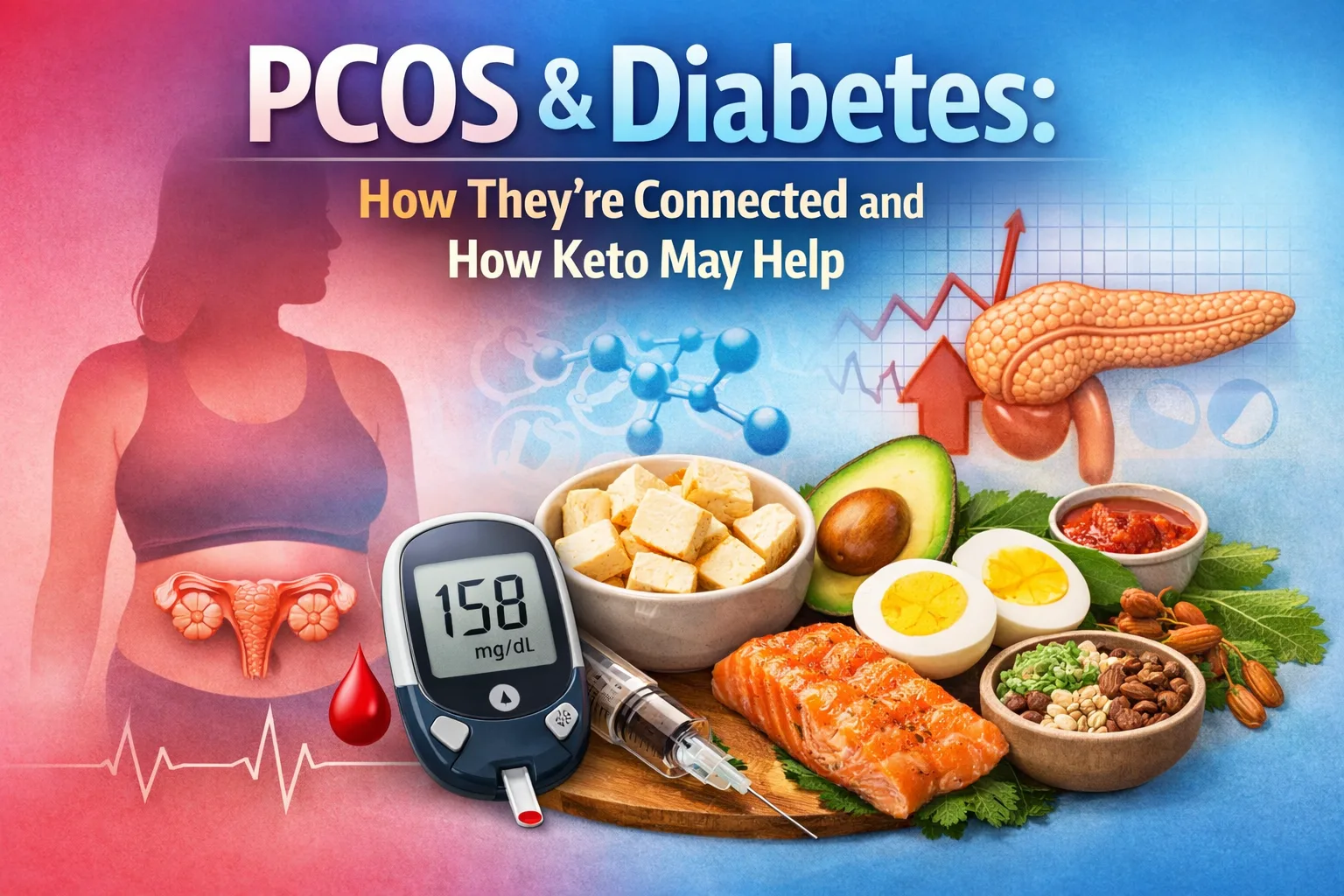
Polycystic Ovary Syndrome (PCOS) is more than a “period problem” – it is a hormonal and metabolic condition that can quietly raise a woman’s risk of prediabetes and type 2 diabetes over time. Many women with PCOS live with insulin resistance, weight gain, irregular cycles, and fatigue long before anyone mentions the word diabetes to them. In this article, I’ll explain the PCOS–diabetes connection in simple language and share how one of my clients used a ketogenic (keto) approach to turn her health around.
PCOS and Diabetes: The Hidden Connection
PCOS is diagnosed when at least two of the following are present: irregular or absent periods, signs of excess male hormones (such as acne or facial hair), and polycystic ovaries visible on ultrasound. Alongside these features, many women experience weight gain around the abdomen, low energy, mood swings, and difficulty managing cravings. All of these can be signs that the body is struggling with insulin resistance.
Insulin resistance means your cells do not respond properly to insulin, the hormone that helps move glucose from the blood into the cells for energy. To keep blood sugar within a normal range, the body starts producing more and more insulin. Over time, this “high‑insulin state” can worsen hormonal imbalance, encourage fat storage (especially around the waist), and push blood sugar into prediabetic or diabetic ranges. That is why women with PCOS are statistically more likely to develop type 2 diabetes, particularly if excess weight, sugary foods, and lack of movement are part of daily life.
The good news? PCOS can act as an early warning system. If we listen to it and act early with diet and lifestyle changes, we can reduce long‑term diabetes risk in a very real way.
Riya’s Story: From Fear of Diabetes to Metabolic Confidence
Let me share the journey of one of my clients, Riya (name changed), a 32‑year‑old working professional who came to me feeling defeated. She had been diagnosed with PCOS in her mid‑twenties. Over the years, her periods became more irregular, she gained about 12 kilos, and her face and chin started showing stubborn acne and hair growth. She had tried “eat less, move more” advice, cut portions here and there, and even experimented with random diet plans she found online. Nothing felt sustainable, and the weight refused to budge.
The turning point came during a routine health check. Her doctor mentioned that her fasting blood sugar was creeping upwards and that her HbA1c was now in the prediabetic range. The word “diabetes” hit her hard. She was too young, in her mind, to be facing this kind of diagnosis. She left the clinic scared – not just about the numbers, but about what they meant for her future energy, fertility, and long‑term health.
When Riya reached out to Keto For India, she didn’t ask for a “quick fix”; she wanted a plan that made sense for her Indian kitchen, work schedule, and emotional relationship with food. We started by looking at her usual meals: bread or paratha at breakfast, rice at lunch, biscuits with evening tea, and often roti plus a sweet dish at dinner. Her day was built around wheat, rice, and sugar. Together, we designed a ketogenic‑style plan that kept her satisfied but dramatically reduced her daily carbohydrate load.
Breakfast shifted to paneer bhurji cooked in ghee with a side of sautéed spinach. Lunch became a generous serving of sabzi and salad with grilled chicken or tofu, but without rice or roti. Her evening snack turned into nuts and seeds with unsweetened tea, and dinner featured a mix of low‑carb vegetables cooked in coconut oil, with eggs or paneer. We focused on real food, healthy fats, enough protein, and plenty of non‑starchy vegetables, and she began walking for 20–30 minutes most evenings.
The first two weeks were an adjustment – saying goodbye to bread and biscuits was emotional as much as physical. But within a month, she noticed her energy stabilising and her cravings calming down. Over six months, she lost around 8 kilos, her waist circumference shrank noticeably, and her cycles began to come more regularly. The most powerful moment for her was seeing her HbA1c drop back into the normal range and hearing her doctor say, “You’re moving away from diabetes risk, not towards it.” Her words to me afterwards were simple: “I don’t feel scared of the word diabetes anymore. I feel like I have tools.”
How Keto Can Help in PCOS and Diabetes Risk
Riya’s story reflects what emerging research is starting to show: a well‑designed ketogenic diet can be a useful tool for women with PCOS, especially those with clear signs of insulin resistance. By significantly reducing carbohydrate intake, keto keeps blood sugar more stable and reduces the amount of insulin the body needs to produce. Less insulin can mean less fat storage around the abdomen, fewer energy crashes, and a friendlier environment for hormones to rebalance.
Women following keto under guidance often report three main benefits: weight loss, improved blood sugar markers, and more regular cycles. For many, the biggest surprise is how full and satisfied they feel once they stop fearing fat and start embracing foods like paneer, eggs, nuts, and low‑carb vegetables. Keto is not magic, but it is a structured way to eat that directly addresses the metabolic roots of PCOS and diabetes risk.
Practical First Steps (Without Overwhelm)
You don’t have to jump into a strict ketogenic diet overnight to start helping your PCOS and blood sugar. You can begin with three simple steps:
- Remove sugar and obvious sweets from daily life.
- Cut back on refined flour and white rice, especially at night.
- Build each meal around protein (paneer, eggs, tofu, chicken), healthy fats (ghee, butter, coconut oil), and non‑starchy vegetables.
Layer on gentle lifestyle shifts: a daily walk, better sleep, and small stress‑management practices like deep breathing or light yoga. If you decide to go deeper into keto, do so with proper guidance, especially if you already take medications for blood sugar or have other medical conditions.
A Hopeful Closing – and Where Keto For India Fits In
PCOS and diabetes risk can feel heavy, but they are not a life sentence. They are signals, inviting you to pay attention to your metabolism and make wise choices before complications set in. Stories like Riya’s show that with the right dietary approach, practical Indian‑friendly meal ideas, and consistent lifestyle changes, it is possible to move away from fear and towards metabolic confidence.
Keto For India exists to make this journey easier – translating keto principles into real recipes, real routines, and real results for women living with PCOS, prediabetes, and beyond. If you see yourself in Riya’s story, know that change does not start with perfection; it starts with one plate, one walk, and one decision to take your health into your own hands.