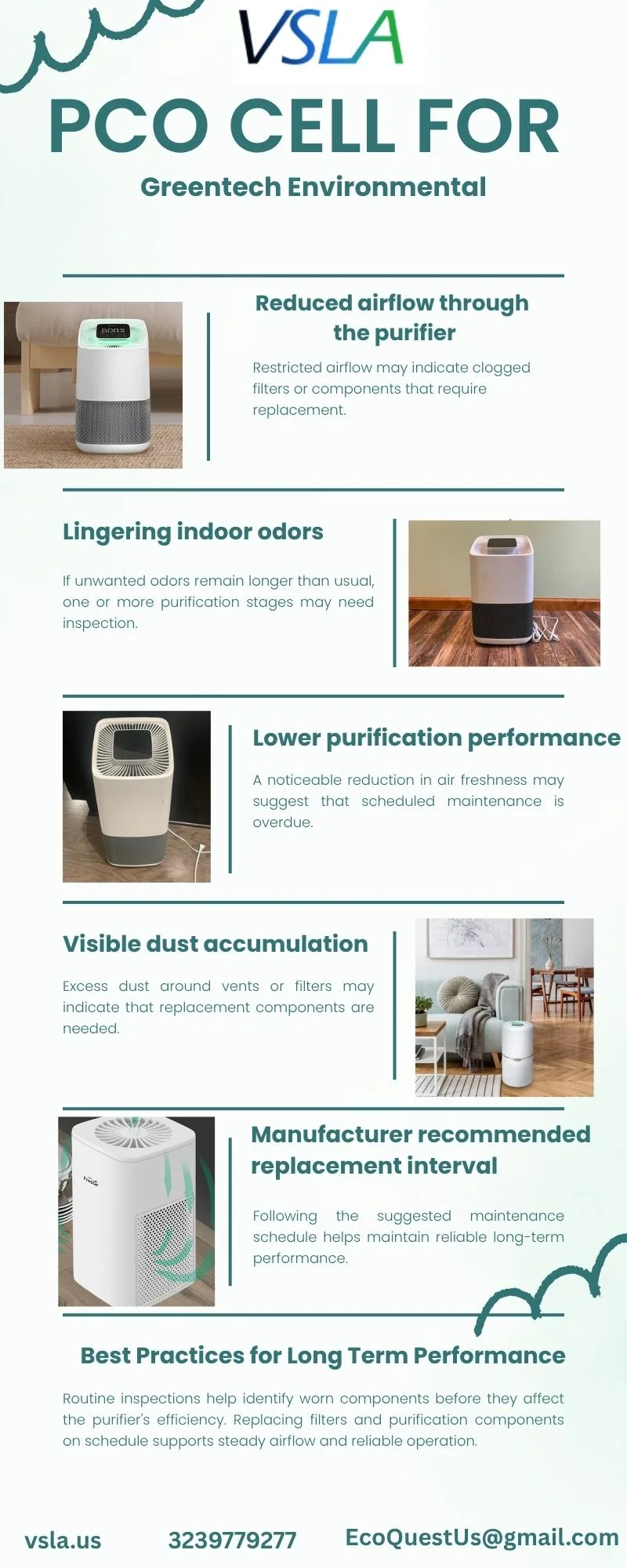
Indoor air quality can be affected by airborne particles, odors, and certain organic pollutants that circulate through heating, cooling, and air purification systems. One technology used in some air-cleaning equipment is photocatalytic oxidation, commonly abbreviated as PCO. A PCO CELL for Greentech Environmental is designed to support this type of air treatment by using light and a photocatalytic surface to help break down certain airborne contaminants.
Understanding how PCO technology works can help air purifier owners make better decisions about maintenance, replacement, and overall filtration. It is also important to understand that a PCO cell performs a different function from a conventional particle filter such as a HEPA filter.
What Is a PCO Cell?
A PCO cell is an air-cleaning component that uses photocatalytic oxidation technology. The component generally combines a photocatalyst-coated surface with a light source. As air passes through the treatment area, the light activates the catalyst and creates a chemical reaction that can help decompose certain organic compounds.
Unlike a standard mechanical filter, a PCO cell does not primarily work by physically trapping particles. Instead, it is intended to chemically transform certain pollutants as air passes through the system.
How Photocatalytic Oxidation Works
The basic PCO process involves several stages:
- Air containing certain contaminants enters the purification system.
- The air passes across the photocatalytic surface.
- A suitable light source activates the catalyst.
- Chemical reactions occur at the catalyst surface.
- Some target organic compounds can be broken down into simpler substances.
The actual performance depends on factors such as airflow, catalyst condition, light intensity, pollutant concentration, humidity, and the design of the purification system.
Why PCO Technology Is Used in Air Purification
PCO technology is generally considered a complementary air-treatment method rather than a replacement for every other type of filtration.
Mechanical filters are especially useful for capturing particles. PCO technology, on the other hand, is intended to address certain gaseous or organic contaminants through oxidation.
This difference is important because indoor air contains many types of pollutants. Dust, pollen, pet dander, smoke particles, odors, and volatile organic compounds do not necessarily respond to the same treatment method.
PCO Compared With HEPA Filtration
HEPA filtration and PCO technology serve different purposes.
A HEPA filter is designed to physically capture very small airborne particles as air moves through its filter media. PCO technology instead uses a chemical reaction to help break down selected compounds.
For example, someone researching Hepa filters for XL-15 may be looking for a mechanical particle-filtration component, while a PCO cell belongs to a different part of an air-treatment system.
Similarly, Hepa filters for Fresh Air by EcoQuest and PCO cells should not automatically be considered interchangeable components. Their functions, construction, and maintenance requirements can differ.
PCO Cell vs. HEPA Filter
The following comparison explains the basic distinction:
FeaturePCO CellHEPA FilterPrimary functionHelps oxidize certain pollutantsCaptures airborne particlesMain mechanismPhotocatalytic reactionMechanical filtrationTargetsCertain organic compounds and odorsDust, pollen, dander, and other particlesLight sourceTypically requiredNot requiredPhysical filter mediaNot the primary componentCentral componentMaintenanceCell and light system may require inspectionFilter replacement is generally requiredRole in purificationComplementary air treatmentParticle removalThis distinction is useful when selecting replacement components. A replacement should match the function and specifications of the original component rather than simply fitting physically inside the machine.
How to Maintain a PCO Cell
Proper maintenance can help an air purification system operate as intended. The maintenance procedure depends on the specific equipment, so the manufacturer's instructions should always take priority.
Inspect the Cell Regularly
Visual inspection can help identify dust accumulation, physical damage, discoloration, or other obvious problems.
Turn the equipment off and disconnect it from power before opening the unit or inspecting internal components.
Check the Light Source
PCO systems typically depend on a light source to activate the photocatalytic process. If the light source has degraded or stopped operating, the system may not perform as designed.
Replacement intervals vary according to the equipment and component specifications.
Keep Airflow Unrestricted
Airflow is important because the air must pass through the treatment area for the PCO process to interact with airborne contaminants.
Blocked vents, heavily loaded filters, or excessive dust can restrict airflow and reduce overall system performance.
Replace Related Filters on Schedule
A PCO cell and a particle filter may work together in some purification systems. The mechanical filter can capture particles before or after other treatment stages, depending on the system's design.
For people comparing Hepa filters for air purifiers, it is important to check the exact model, dimensions, filter configuration, and manufacturer specifications before purchasing a replacement.
Signs That a PCO Component Needs Attention
Several signs can indicate that an air purifier requires inspection:
- Unusual noises or vibrations
- Reduced airflow
- Visible dust buildup
- A non-functioning indicator light
- Physical damage to the cell
- Unusual odors from the equipment
- Filters becoming heavily loaded
- Noticeable changes in system operation
These signs do not necessarily mean the PCO cell itself has failed. Problems can also result from the fan, filter, electrical components, airflow restrictions, or light source.
Actionable Tips for Air Purifier Owners
A few practical habits can make maintenance easier.
Record Replacement Dates
Keep a simple record of when filters, lamps, or other serviceable components were installed. This makes it easier to follow recommended maintenance intervals.
Verify the Model Before Ordering
Air purification equipment can have multiple generations or configurations. Before buying a replacement PCO CELL for Greentech Environmental, verify the exact equipment model and the component specifications.
Do Not Judge a Component Only by Appearance
Two cells can look similar while having different electrical, physical, or performance specifications. Compatibility should be confirmed using the equipment documentation.
Avoid Unapproved Modifications
Changing wiring, mounting systems, light sources, or internal components can affect equipment safety and operation. Replacement parts should be installed according to the applicable instructions.
Maintain the Entire Air-Cleaning System
Replacing one component does not eliminate the need to maintain the rest of the system. Filters, fans, vents, seals, and electrical components may all influence performance.
PCO Technology and Indoor Air Quality
PCO technology is one of several approaches used in indoor air treatment. It should be considered as part of a broader indoor air-quality strategy.
Source control is often an important first step. Removing or reducing the source of pollutants can be more effective than relying exclusively on an air-cleaning device.
Ventilation can also help introduce outdoor air and reduce concentrations of certain indoor pollutants when outdoor conditions are suitable.
Filtration is another important strategy. HEPA-based systems can be useful when the primary concern involves airborne particles.
People Also Ask
What does a PCO cell do?
A PCO cell uses photocatalytic oxidation to help break down certain organic airborne compounds through a light-activated chemical reaction.
Is a PCO cell the same as a HEPA filter?
No. A HEPA filter primarily captures airborne particles, while a PCO cell uses photocatalytic oxidation to chemically transform certain pollutants.
How often should a PCO cell be replaced?
There is no universal replacement schedule. The appropriate interval depends on the specific equipment, operating conditions, and manufacturer's recommendations.
Can a PCO cell replace a HEPA filter?
Generally, they should not be treated as direct substitutes because they perform different air-treatment functions.
How can I choose the correct PCO replacement?
Check the air purifier's exact model number, the original component specifications, physical dimensions, electrical requirements, and manufacturer's compatibility information before purchasing a replacement.
Frequently Asked Questions
Does a PCO cell remove dust?
A PCO cell is not primarily designed to capture dust. Mechanical filtration, including appropriately specified HEPA filtration, is generally used for airborne particle removal.
Does PCO technology remove odors?
PCO technology may help address certain odor-causing organic compounds, although effectiveness varies depending on the pollutant, concentration, airflow, catalyst, and system design.
Does a PCO cell need electricity?
A PCO system generally requires a light source to activate the photocatalytic process, so the complete system normally requires electrical power.
Can a dirty filter affect PCO performance?
Yes. A heavily loaded filter can restrict airflow, which may affect the amount of air passing through the PCO treatment area.
Should I clean or replace a PCO cell?
The answer depends on the specific cell and equipment instructions. Some components may have cleaning procedures, while others are intended to be replaced after their useful service period.
Final Takeaway
A PCO cell is a specialized component used in some air purification systems to support photocatalytic oxidation. It differs fundamentally from mechanical particle filters and should be evaluated according to its intended function, system compatibility, and maintenance requirements.
When researching a PCO CELL for Greentech Environmental, users should confirm the exact equipment model and replacement specifications rather than relying solely on appearance or general compatibility claims. Regular filter maintenance, adequate airflow, proper inspection, and timely replacement of serviceable components can all contribute to reliable air-cleaning system operation.
Author Bio: This educational guide is prepared by V.S.L.A. to provide general information about air purification components, filtration technologies, and equipment maintenance.