Training a retriever is a rewarding journey that requires patience, consistency, and proven methods. Whether you're raising a young Labrador Retriever or preparing an experienced hunting companion for the field, following a structured training program is essential for long-term success. Professional trainers understand that every retriever learns through repetition, clear communication, and gradual progression. Pat Nolan has built a reputation for helping handlers develop confident, reliable retrievers using practical training techniques that emphasize both performance and the relationship between dog and handler.
Why a Structured Training Program Matters
A successful retriever is not created overnight. Every great hunting dog begins with strong obedience, early socialization, and positive learning experiences. Building these foundational skills prepares dogs for more advanced field work while preventing common training challenges later.
A structured program focuses on developing:
- Reliable obedience
- Confidence in different environments
- Strong retrieving instincts
- Consistent communication
- Self-control and focus
These skills create a dependable retriever that performs well both in everyday situations and during hunting season.
Pat Nolan Dog Training Philosophy
The Pat Nolan dog training approach centers on teaching dogs through consistency, fairness, and clear expectations. Instead of rushing through advanced drills, each lesson builds naturally on previously learned skills.
This step-by-step progression allows retrievers to understand what is expected before new challenges are introduced. The result is a confident dog that responds reliably under varying field conditions.
Professional training is not about forcing behavior but helping dogs develop the skills needed to think, respond, and retrieve with confidence.
Teaching Lab to Retrieve Successfully
One of the most common questions from new retriever owners is how to begin teaching Lab to retrieve. Labrador Retrievers naturally enjoy carrying objects, making retrieving an enjoyable learning experience when introduced correctly.
Training should begin with simple retrieves using soft bumpers in distraction-free environments. Young Labradors benefit from short sessions that encourage enthusiasm without creating pressure.
Helpful early training tips include:
- Keep retrieves short.
- Reward successful returns.
- End sessions while the puppy remains interested.
- Avoid excessive repetition.
- Focus on building confidence before adding difficulty.
As the dog matures, retrieves can become longer and more challenging while introducing varied terrain and realistic hunting situations.
Improve Performance with Retriever Marking Drills
Advanced retrievers rely heavily on memory and focus. Well-designed retriever marking drills teach dogs to watch carefully, remember where a bird or bumper lands, and retrieve it accurately.
Marking drills improve:
- Memory
- Concentration
- Visual tracking
- Confidence
- Precision
- Field awareness
Training usually begins with single marks before progressing to double and triple marks. As experience grows, trainers introduce hills, cover, water, and other natural obstacles that simulate actual hunting environments.
Gradually increasing difficulty helps retrievers develop dependable marking skills without becoming overwhelmed.
Golden Retriever Hunting Training
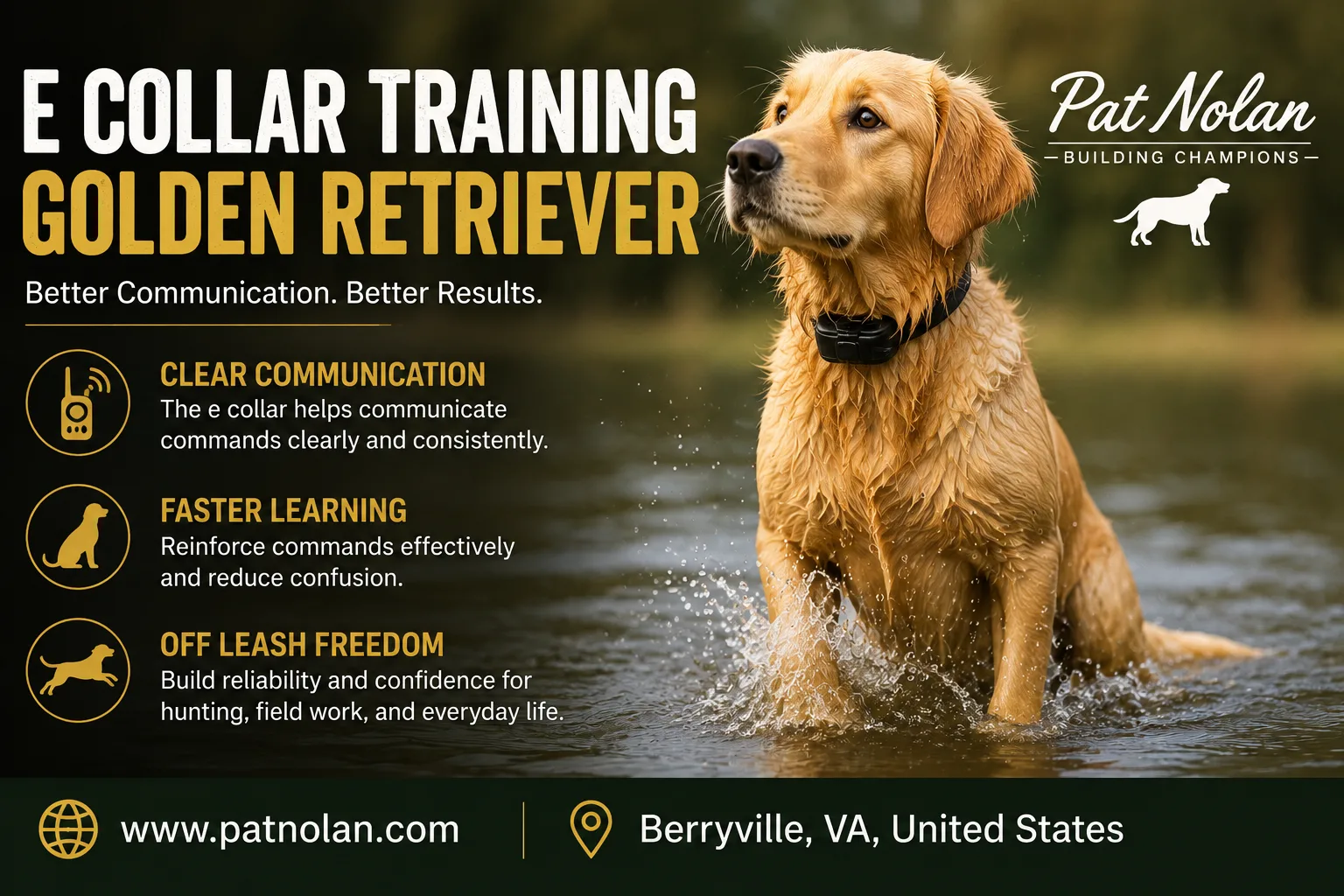
Although Golden Retrievers are known for their friendly personalities, they are also exceptional hunting companions. Effective golden retriever hunting training combines obedience, retrieving skills, and exposure to realistic field conditions.
Training focuses on:
- Steady behavior
- Accurate marking
- Reliable recalls
- Water confidence
- Handling skills
- Controlled retrieves
Golden Retrievers respond well to positive reinforcement and consistent routines. Building trust during training often produces better long-term results than relying solely on correction-based methods.
The Importance of Gun Dog Obedience Training
Before introducing advanced hunting exercises, every retriever should master gun dog obedience training. Obedience creates the control necessary for safe and effective field performance.
Essential commands include:
- Sit
- Stay
- Heel
- Come
- Place
Reliable obedience allows handlers to guide their dogs confidently in challenging hunting situations while minimizing confusion and distractions.
As obedience improves, trainers can safely introduce whistles, hand signals, remote handling, and more advanced retrieving exercises.
Training for Real Hunting Conditions
Many dogs perform well in familiar training areas but struggle in new environments. Experienced trainers gradually expose retrievers to different fields, water, cover, weather conditions, and distractions.
Training in realistic conditions improves adaptability while preparing dogs for the unpredictable situations encountered during hunting seasons.
Confidence grows when retrievers repeatedly experience success in new environments.
Consistency Creates Reliable Retrievers
The most successful retriever owners understand that consistent daily practice produces better results than occasional long training sessions. Even fifteen to twenty minutes of focused work several times each week helps reinforce learned behaviors.
Successful handlers also understand the importance of patience. Every retriever learns at its own pace, and steady progress is more valuable than rushing through advanced skills.
Conclusion
Developing a dependable retriever requires time, dedication, and proven methods. Whether you're interested in Pat Nolan dog training, teaching Lab to retrieve, improving retriever marking drills, advancing golden retriever hunting training, or strengthening gun dog obedience training, success comes from building strong fundamentals before progressing to advanced field work.
By following a structured training approach that emphasizes consistency, confidence, and positive communication, owners can develop retrievers that perform reliably while strengthening the bond between handler and dog. Investing in quality training today helps create a skilled hunting companion that will continue to learn, improve, and perform confidently for years to come.