Introduction to Communication Gaps
In the modern digital age, schools and public libraries often encounter challenges that hinder smooth interaction. Misaligned communication channels or outdated methods can result in inefficiencies, including delays in resource sharing or missed opportunities to collaborate on educational programs. These challenges highlight the need for reliable and direct communication tools that cater specifically to the unique needs of librarians and educators. An efficient solution to these issues lies in leveraging targeted email lists, which can facilitate more streamlined and effective exchanges of information.
Benefits of Using Email Lists
Email lists provide an effective way to streamline communication by allowing quick and direct contact with large groups of recipients. A well-structured Librarian Mailing List helps institutions share essential updates, organize events, or distribute resources without unnecessary delays. This approach reduces the reliance on slower communication methods and ensures that librarians receive timely and relevant information. With the ability to segment recipients based on specific criteria, email lists also support more targeted communication, allowing schools and libraries to cater to the unique needs of different groups. Additionally, email lists can be easily integrated with other tools to track engagement and measure the effectiveness of outreach efforts. This data can be used to refine communication strategies and ensure messages are resonating with the intended audience. By utilizing email lists, organizations can foster better collaboration, encourage information exchange, and create a more cohesive network among librarians and educational professionals.
How InfoGlobalData Can Help
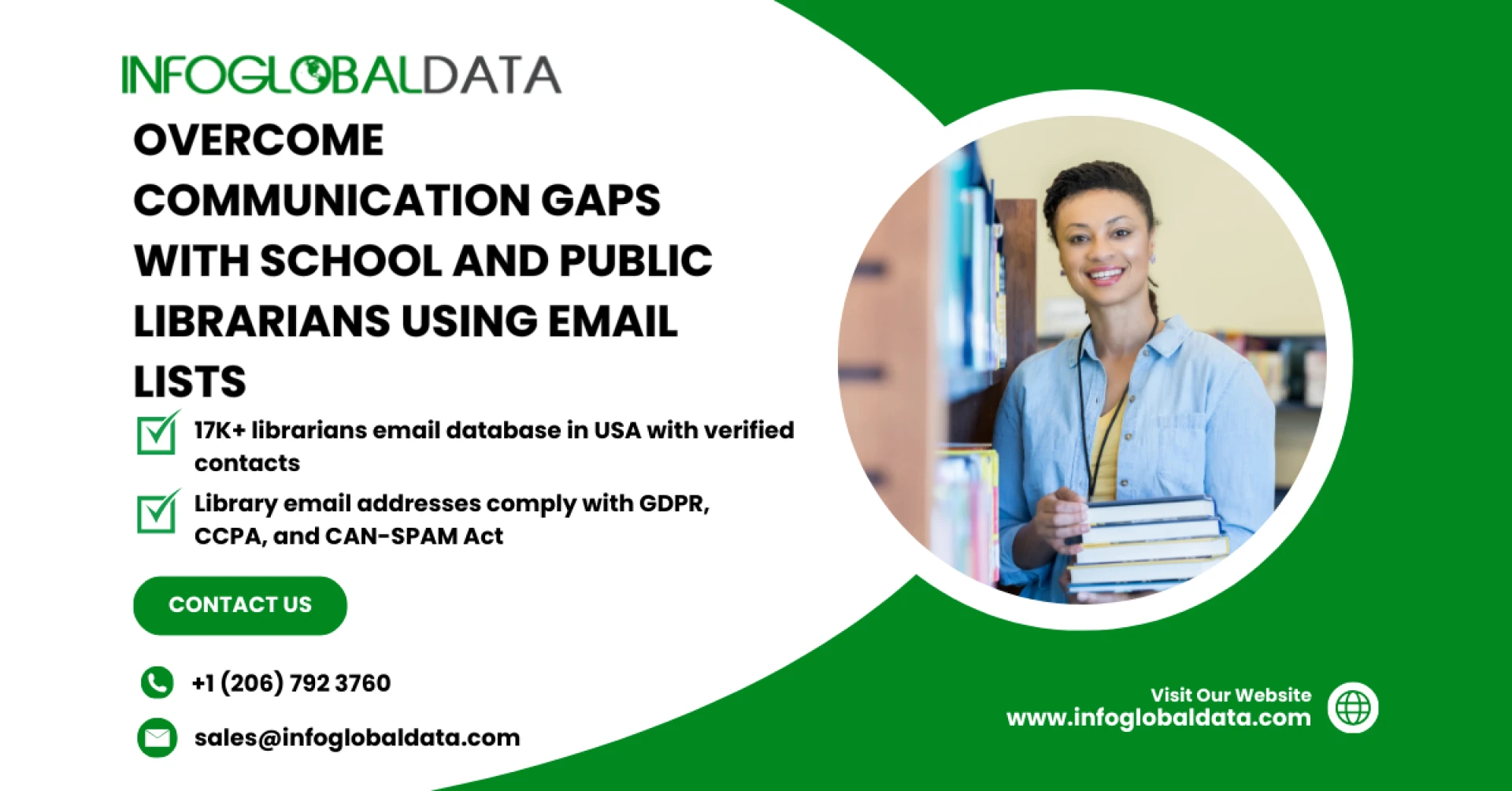
InfoGlobalData specializes in providing a high-quality Librarian Email Database designed to meet the communication needs of schools and public libraries. With verified and up-to-date contact information, their database ensures that users can connect with the right individuals efficiently. The service includes segmented email lists, enabling tailored messaging based on specific criteria such as location, institution type, or job role. This targeted approach helps organizations deliver relevant messages directly to the intended audience, improving engagement and communication outcomes. InfoGlobalData also offers tools to support analytics, allowing users to track the performance of their outreach efforts and refine their strategies as needed.
Steps to Build Effective Communication
To improve email communication with librarians, it’s crucial to focus on personalization and clarity. Personalizing your messages shows recipients that you understand their specific needs, making them more likely to engage with your communication. Use the recipient's name and reference relevant topics or past interactions where possible. Structuring your email content is equally important—organize your message with clear headings or bullet points to make it easier to read and digest. Avoid lengthy paragraphs and focus on delivering the most important information upfront. Including a strong call-to-action can guide recipients on the next steps, whether it’s attending an event, providing feedback, or accessing shared resources. Additionally, regularly reviewing and maintaining your email database ensures that messages are sent to valid and active addresses, minimizing bounce rates and increasing efficiency. Timing also plays a role in effective communication—sending emails at optimal times can significantly impact open rates and responses. Make use of analytics tools to track performance and adjust your communication strategy based on engagement metrics for the best results.
Success Stories
Educational institutions across the country have experienced significant improvements in communication by adopting targeted email lists. For example, a public library system in Texas implemented a segmented email database to better coordinate with local schools. This allowed librarians and educators to efficiently share updates about new programs, resources, and events, resulting in a noticeable increase in participation and collaboration. Similarly, a midwestern school district utilized an email list to streamline communication with multiple libraries in its region. By tailoring messages to address specific needs, they saw enhanced engagement from librarians, who appreciated the clear and direct communication. Another success story involves a university library that used a specialized email list to organize a virtual workshop series with high school librarians. The program successfully increased attendance and fostered stronger professional relationships, proving the value of targeted outreach. These examples showcase the transformative impact of well-maintained and strategically used email lists, helping to build stronger connections between schools and libraries while addressing the unique communication requirements of each institution.
Conclusion
Investing in a Librarian Email List allows schools and libraries to foster direct and efficient communication tailored to their specific needs. This tool ensures that key updates, event details, and resource announcements reach the right audience promptly. By utilizing segmented email lists, organizations can deliver more relevant messages, improving engagement and building stronger professional relationships. These lists also reduce the risk of delays or miscommunication, which are common with less direct communication methods. With accurate contact information and the ability to track outreach performance, email lists help streamline operations and ensure better collaboration across institutions.
FAQ's
1. What is a Librarian Email List?
A Librarian Email List is a collection of email contacts tailored to connect with librarians. It enables educational institutions and libraries to share updates, coordinate events, and improve communication efficiently.
2. How does InfoGlobalData ensure the accuracy of its Librarian Email Database?
InfoGlobalData verifies its email database through stringent data validation processes. This ensures that all contact information is up-to-date and accurate, providing reliable communication channels for users.
3. Why is segmentation important in a Librarian Mailing List?
Segmentation allows you to group recipients based on specific criteria like location, job role, or institution type. This ensures that messages are relevant to the audience, improving engagement and fostering better connections.
4. How can email lists enhance collaboration between schools and public libraries?
By offering a direct and organized channel of communication, email lists allow schools and libraries to exchange resources, share updates, and plan joint initiatives more effectively, ultimately enhancing collaboration.
5. How often should a Librarian Email Database be updated?
Regular updates are crucial to maintaining the effectiveness of your database. Removing inactive addresses and adding new contacts every few months helps ensure accurate outreach and minimizes issues like high bounce rates.
6. What should I include in emails to librarians?
Focus on concise, clear messaging that highlights key details, such as event information or important updates. Incorporating personalization, using a friendly tone, and including a clear call-to-action can significantly boost engagement.
7. Are email lists a cost-effective solution for communication?
Yes, email lists are a cost-effective way to reach large groups while maintaining a targeted approach. They reduce the need for traditional communication methods, saving time and resources.