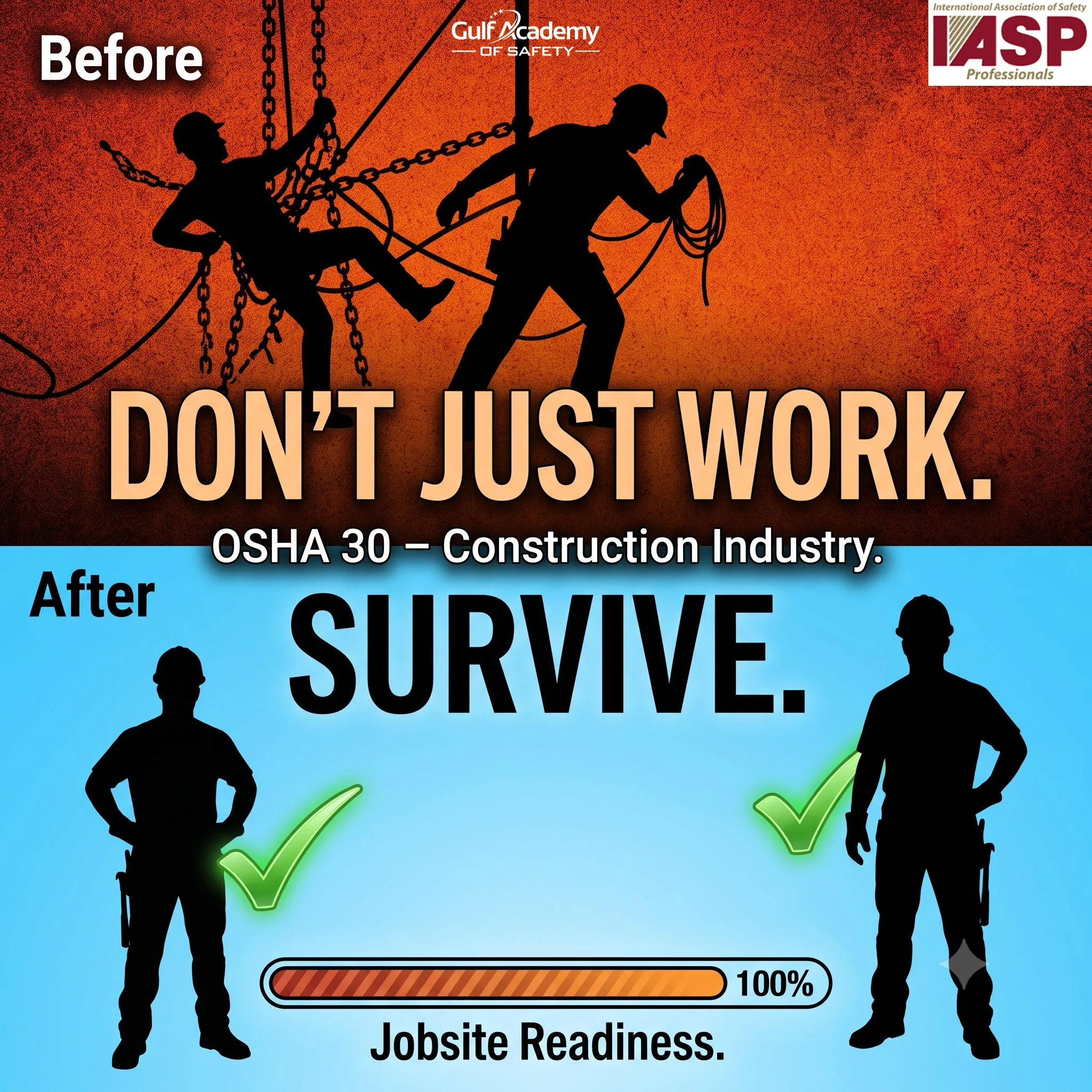
If you're new to the construction industry — or new to the world of formal safety certifications — the idea of enrolling in a 30-hour training program can feel a little overwhelming. What does it actually cover? Who is it meant for? Is it hard to complete alongside a full-time job? This guide walks through everything a beginner needs to know before signing up.
What This Course Actually Is
At its core, this is an outreach training program developed under guidelines from the Occupational Safety and Health Administration (OSHA) in the United States. It was created to give construction workers, supervisors, and safety personnel a thorough understanding of the hazards common to construction environments, along with the regulations and best practices designed to prevent injuries.
Despite its origin in U.S. regulation, the training has become widely recognized internationally. Many companies across the Gulf, the Middle East, and other regions view it as a meaningful benchmark for safety knowledge, even outside strict U.S. jurisdiction.
Who Is This Course Really For?
Contrary to a common assumption, this program isn't only for people already in senior positions. It's genuinely useful for a wide range of professionals, including:
- Site supervisors and foremen who oversee daily operations
- Civil engineers and project managers responsible for planning and compliance
- Health and safety officers tasked with maintaining site standards
- Construction workers looking to move into leadership positions
- Anyone hoping to work internationally and needs a recognized safety credential
Beginners often assume they need years of experience before pursuing a certification like this, but in practice, the training is structured to build knowledge progressively — meaning newcomers with limited field experience can still follow along and benefit significantly.
What Topics Does the Course Cover?
For someone unfamiliar with the format, it helps to understand the general scope of what's taught. A well-structured program typically walks learners through:
- An introduction to workplace safety regulations and worker rights
- Fall protection systems and why falls remain a leading cause of site injuries
- Electrical hazard awareness, since unguarded wiring and faulty equipment pose serious risks
- Scaffolding and stairway safety, covering stability and proper setup
- Personal protective equipment (PPE) and how to use it correctly
- Excavation and trenching safety, addressing the dangers of cave-ins
- Health hazards such as dust, noise, and chemical exposure
- Fire prevention and emergency response basics
- Safe material handling techniques to prevent strain injuries
- Site inspection methods and how to build effective safety programs
Because the curriculum spans this many areas, learners come away with a broad, practical understanding rather than narrow, situation-specific knowledge.
How Long Does It Take, and How Is It Structured?
As the name suggests, the training totals roughly 30 hours of instruction. However, this doesn't need to be completed in one continuous stretch. Most providers allow learners to spread the coursework across days or weeks, which makes it manageable for people balancing work schedules or other commitments.
At the end of the program, learners typically complete a final assessment to confirm their understanding of the material. Passing this assessment is what qualifies a participant to receive their certification.
Do You Need to Take It In Person?
Not necessarily. Many training providers now offer fully online formats, complete with interactive learning tools, structured modules, and support from qualified trainers. This is particularly helpful for beginners who may feel more comfortable learning at their own pace rather than in a fast-moving classroom environment.
For those who prefer face-to-face instruction — or who are completing the training as part of a company-wide initiative — in-person and corporate training sessions are usually available as well.
The OSHA 30 Hours Construction Course offered by Gulf Academy of Safety is a good example of this flexibility, providing both online and offline learning paths so beginners can choose whichever format suits their schedule and learning style.
Is the Certification Difficult to Earn?
Beginners often worry that a 30-hour program with a final assessment will be difficult to pass. In reality, the training is designed to be thorough but accessible. As long as learners engage with the material consistently rather than rushing through it, the concepts build logically from one module to the next, making the final assessment a reasonable checkpoint rather than a high-stress hurdle.
Support systems such as live doubt-clearing sessions and trainer guidance also make a significant difference for newcomers who may need extra clarification on specific topics like electrical safety standards or excavation procedures.
What Happens After Certification?
Once certified, professionals typically receive a card or document confirming their completion of the program. While this certification does not technically expire, many employers recommend refreshing the training every few years to stay current with updated standards and evolving best practices.
For beginners, this certification often becomes a foundational credential — one that supports future career moves, strengthens job applications, and builds a base of safety knowledge that will remain relevant throughout their career in construction.
Final Thoughts
Starting a career in construction safety doesn't require years of prior experience — it requires a willingness to learn the fundamentals properly. This training program offers exactly that: a structured, beginner-friendly path into one of the most respected safety credentials in the industry, setting the stage for a safer, more confident, and more career-ready future.