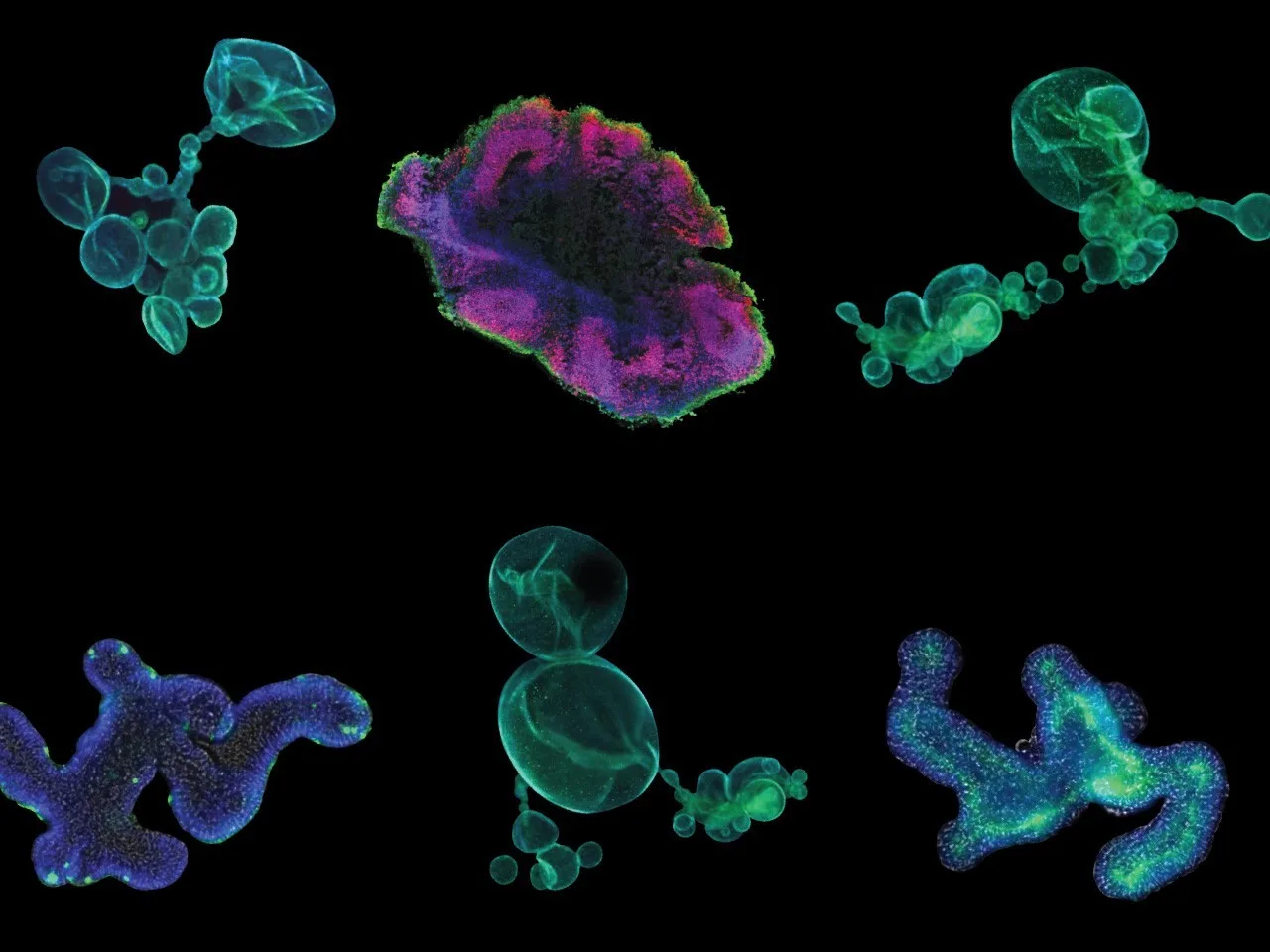
Organoids have become an important tool in modern biological research because they can replicate selected structural and functional characteristics of human organs. These three-dimensional, miniature tissue models are developed from stem cells or organ-specific cells and offer researchers opportunities to study disease mechanisms, evaluate potential treatments, and investigate human biology under controlled laboratory conditions. Despite their promise, several pain points continue to influence the adoption and commercialization of organoid technologies.
The organoids market faces challenges involving production costs, inconsistent experimental outcomes, technical complexity, limited standardization, and difficulties in scaling laboratory processes. Addressing these concerns is essential for improving research reliability and expanding the practical applications of organoids across pharmaceutical development, personalized medicine, toxicology testing, and regenerative medicine.
High Production Costs and Resource Requirements
One of the primary pain points affecting organoid development is the substantial cost associated with producing and maintaining these complex biological models. Specialized culture media, growth factors, extracellular matrices, laboratory equipment, and highly trained personnel are often necessary to establish reliable organoid cultures.
Unlike conventional two-dimensional cell cultures, organoids require carefully controlled conditions to support three-dimensional growth and tissue organization. Researchers must frequently optimize culture protocols according to the cell source, organ type, and intended application. These requirements can increase operational expenses and extend experimental timelines.
Smaller research laboratories, universities, and early-stage biotechnology companies may find these costs particularly difficult to manage. Limited budgets can restrict experimentation, reduce the number of samples evaluated, and slow the adoption of advanced organoid platforms. More affordable culture systems, standardized materials, and improved production methods could help make organoid technologies accessible to a wider research community.
Variability and Reproducibility Challenges
Another significant concern is the variability observed between organoid batches. Differences in cell sources, donor characteristics, culture conditions, growth factor concentrations, and handling procedures can produce organoids with different sizes, shapes, cellular compositions, and functional properties.
Such variations create difficulties when researchers attempt to reproduce experiments across laboratories or compare results from separate studies. Even organoids produced using similar protocols may not develop identical tissue structures or demonstrate the same biological responses.
Reproducibility is especially important in pharmaceutical research, where experimental findings can influence decisions about drug safety, efficacy, and further development. Inconsistent results may lead to additional testing, increased costs, and uncertainty about whether observed effects reflect genuine biological responses or differences in model preparation.
Improving quality-control procedures, documenting culture conditions, and establishing common evaluation criteria can help address these limitations. Automated imaging and analytical tools may also assist researchers in identifying variations before they affect experimental conclusions.
Limited Standardization Across Applications
The absence of universally accepted standards remains a persistent pain point for organoid development. Different laboratories may use distinct protocols for cell differentiation, tissue maturation, culture maintenance, and functional assessment. These variations make it difficult to establish consistent benchmarks for organoid quality.
Standardization is complicated by the biological diversity of organoids themselves. Intestinal, liver, brain, kidney, and tumor organoids have different structural requirements and intended uses. A quality-control approach suitable for one model may not adequately evaluate another.
For pharmaceutical companies and contract research organizations, inconsistent standards can complicate the integration of organoid testing into established workflows. Organizations need confidence that a model performs consistently and produces meaningful results before incorporating it into routine research programs.
Developing application-specific standards, reference materials, validated protocols, and transparent reporting practices could improve confidence in organoid-based experiments. Collaboration among academic institutions, biotechnology companies, equipment manufacturers, and regulatory stakeholders will be important in advancing these efforts.
Difficulties in Scaling Production
Scaling organoid production from small laboratory experiments to larger research programs presents additional challenges. Traditional organoid cultivation often involves manual handling, repeated monitoring, and careful adjustment of culture conditions. These activities can become difficult to maintain when hundreds or thousands of samples must be processed simultaneously.
Large-scale production also requires consistent access to suitable cell sources, reliable reagents, contamination controls, and equipment capable of supporting three-dimensional cultures. Differences in oxygen availability, nutrient distribution, and waste removal may affect tissue development as production volumes increase.
These limitations can delay commercial deployment and restrict the use of organoids in high-throughput drug screening. Pharmaceutical developers generally need platforms capable of generating reliable results across large numbers of compounds and biological samples.
Automation, advanced bioreactors, standardized culture vessels, and improved manufacturing workflows may help overcome these obstacles. However, such systems must balance production efficiency with the biological complexity that makes organoids valuable in the first place.
Technical Complexity and Skills Shortages
Organoid research requires specialized knowledge of stem cell biology, tissue engineering, cell culture, imaging, and analytical methods. Developing an appropriate model can involve extensive protocol optimization and troubleshooting, particularly when researchers work with complex tissues or disease-specific cell populations.
Laboratories without experienced personnel may struggle to maintain stable cultures or interpret experimental results accurately. Training new researchers can require considerable time, while staff turnover may interrupt ongoing projects and affect consistency.
The technical burden also extends to data analysis. Organoid experiments can generate large volumes of imaging, molecular, and functional data that require appropriate analytical methods. Researchers must distinguish meaningful biological patterns from technical variation and incomplete tissue maturation.
Simplified protocols, comprehensive training programs, automated monitoring, and accessible analysis software could reduce these barriers. Service providers offering organoid development and testing may also help organizations access specialized capabilities without building every function internally.
Biological Limitations and Model Complexity
Although organoids reproduce selected characteristics of human tissues, they do not always capture the full complexity of an intact organ. Depending on the model, they may lack mature vascular networks, complete immune components, functional connections with other organs, or the mechanical and biochemical signals present in living tissue.
These limitations can influence how accurately organoids represent disease progression and treatment responses. For example, a model that lacks relevant immune cells may not fully reproduce interactions between a tumor and the immune system. Similarly, limited vascularization can affect nutrient delivery and tissue maturation in larger structures.
Researchers are exploring co-culture systems, organ-on-chip technologies, vascularization strategies, and more advanced tissue engineering techniques to improve biological relevance. Nevertheless, increasing complexity can introduce new challenges involving reproducibility, cost, and experimental interpretation.
Selecting the right model for a particular research question remains essential. Organoids should be evaluated according to their demonstrated capabilities rather than assumed to represent every feature of a human organ.
Regulatory Uncertainty and Commercial Adoption
Regulatory expectations can also affect the wider adoption of organoid technologies. Companies developing pharmaceutical products need to understand how organoid-based findings may support existing testing strategies and how such evidence should be documented.
Because organoid systems vary significantly in design and application, demonstrating their reliability for a specific purpose can require extensive validation. Organizations may also need to establish how results from organoid experiments relate to findings from established laboratory models and clinical observations.
Uncertainty about acceptance criteria can slow investment and discourage organizations from replacing familiar testing methods. Clearer validation frameworks, transparent documentation, and collaborative evaluation programs could help build confidence in these technologies.
Commercial adoption will depend not only on scientific progress but also on demonstrating that organoid platforms deliver dependable results and practical benefits within established research and development processes.
Conclusion
The organoids market offers substantial opportunities across disease modeling, drug discovery, toxicology, and personalized medicine, but several interconnected pain points continue to limit its expansion. High production costs, biological variability, limited standardization, scaling difficulties, technical complexity, and regulatory uncertainty remain important concerns.
Progress will depend on coordinated improvements in manufacturing, automation, quality assurance, model validation, and workforce training. Researchers must also continue refining organoid systems to improve their biological relevance without making them prohibitively expensive or difficult to reproduce.
As these challenges are addressed, organoid technologies could become more practical and dependable tools for biomedical research. Their long-term commercial success will depend on producing consistent, application-specific models that provide meaningful scientific insights and support better-informed decisions throughout drug development and disease research.
Learn More : https://www.pristinemarketinsights.com/organoids-market-report