
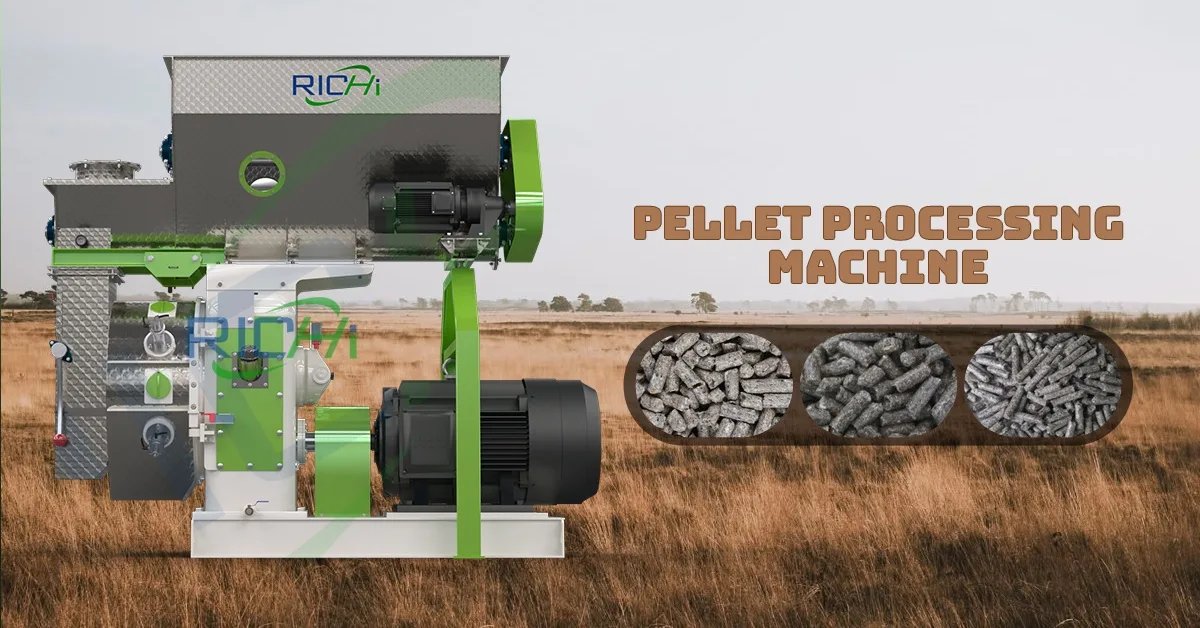
The agricultural industry produces a massive amount of organic waste every year, including livestock manure, crop straw, and food processing residues. Proper treatment and recycling of these materials have become important challenges for modern agriculture. The organic fertilizer pellet making machine provides an effective solution by converting organic waste into high-quality fertilizer pellets that can be used in sustainable farming systems.
As demand for environmentally friendly fertilizers continues to increase, more fertilizer manufacturers are investing in advanced fertilizer pellet making machine technology. These machines help reduce pollution, improve soil fertility, and create valuable agricultural products from waste materials.
Importance of Organic Fertilizer Production
Organic fertilizers are widely recognized for their ability to improve soil structure and increase microbial activity. Unlike chemical fertilizers, they provide long-term benefits for soil health while reducing environmental risks.
The organic fertilizer making machine plays an important role in this process by converting raw organic materials into commercially valuable products. Through proper processing, agricultural waste can become nutrient-rich fertilizer suitable for different crops and farming systems.
A complete organic fertilizer production line allows manufacturers to process large quantities of organic waste efficiently while maintaining stable product quality.
Working Process of Organic Fertilizer Pellet Machine
The organic fertilizer pellet machine operates through several stages. First, raw materials are fermented to remove pathogens and stabilize nutrients. Fermentation is a critical step because it improves fertilizer safety and effectiveness.
After composting, the materials are crushed and mixed evenly. The prepared mixture is then fed into the fertilizer pellet machine, where rollers and dies compress the material into dense pellets.
The pellets are dried and cooled before final packaging. The fertilizer pelletizer machine ensures consistent pellet size and hardness, improving product appearance and storage stability.
Advantages of Fertilizer Pellet Making Machine
Using a fertilizer pellet making machine offers many benefits:
- Improved fertilizer quality
- Easier transportation and storage
- Reduced moisture content
- Better nutrient distribution
- Higher production efficiency
The fertilizer pellet machine also reduces waste volume, making agricultural waste management more efficient and environmentally friendly.
Organic Fertilizer Production Line for Industrial Manufacturing
A complete organic fertilizer production line integrates multiple machines into one coordinated production system. Typical equipment includes compost turners, crushers, mixers, pelletizers, dryers, coolers, and packaging machines.
The organic fertilizer pellet making machine is the core equipment in this line because it determines the final pellet quality. High-capacity production lines are widely used in commercial fertilizer plants and agricultural cooperatives.
Modern systems are highly automated, reducing labor costs and improving operational efficiency.
Future Development Trends
As sustainable agriculture continues to grow worldwide, the market demand for fertilizer pelletizer machine equipment is expected to increase significantly. Future machines will focus on automation, energy efficiency, and intelligent control systems.
The organic fertilizer production line will continue to evolve with improved environmental protection technologies and higher productivity standards. These innovations will support the long-term development of eco-friendly agriculture.
Conclusion
The organic fertilizer pellet making machine is an essential technology for sustainable fertilizer production. By transforming agricultural waste into high-quality pellets, it supports environmental protection and efficient resource recycling.
Combined with advanced fertilizer pellet making machine systems and a complete organic fertilizer production line, manufacturers can achieve large-scale and profitable fertilizer manufacturing while contributing to greener agriculture.