
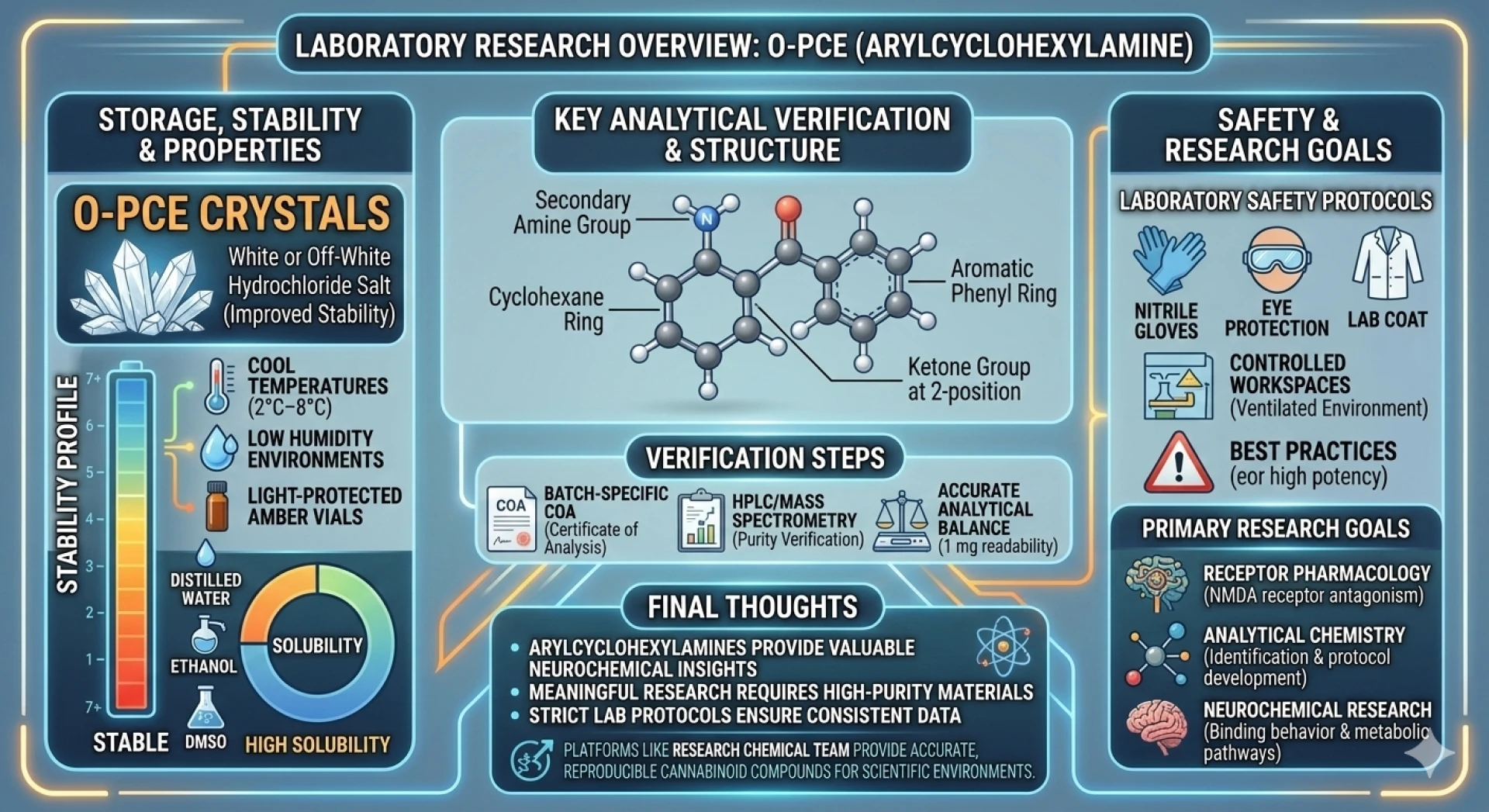
Within modern chemical research, the arylcyclohexylamine family represents one of the most studied classes of dissociative compounds. This category includes well-known molecules such as Ketamine and Phencyclidine, as well as newer analog compounds like O-PCE (2′-Oxo-PCE).
For laboratories exploring receptor pharmacology, neurochemical pathways, or analytical identification methods, understanding the structure, stability, and safe handling of O-PCE crystals is essential. Researchers must also ensure they source materials from verified chemical suppliers such as Research Chemical Team, where laboratory standards and documentation are prioritized.
What Is O-PCE?
O-PCE (2′-Oxo-PCE) is a synthetic dissociative compound belonging to the arylcyclohexylamine class. Structurally, it is related to eticyclidine (PCE) and shares a core molecular architecture common to other compounds in this chemical family.
Its structure typically includes:
- A cyclohexane ring
- An aromatic phenyl ring
- A secondary amine group
- A ketone functional group at the 2-position
These structural elements influence the compound’s binding behavior, solubility, and chemical stability, which is why O-PCE often appears in research examining receptor interactions and dissociative pharmacology.
In laboratory environments, O-PCE is most commonly encountered as white or off-white crystalline hydrochloride salt, a form that provides improved stability and easier storage compared with freebase variants.
Why Researchers Study Arylcyclohexylamines
The arylcyclohexylamine class has long been of scientific interest due to its interaction with NMDA receptors, a critical component of the brain’s glutamate signaling system.
Researchers investigating compounds such as O-PCE often focus on:
Receptor Pharmacology
Understanding how NMDA receptor antagonists influence neural communication.
Analytical Chemistry
Developing testing protocols to identify and distinguish emerging analog compounds.
Neurochemical Research
Exploring how structural changes in arylcyclohexylamines affect binding behavior and metabolic pathways.
Because of these complex research goals, laboratories require high-purity reference materials and well-documented compound specifications.
Solubility and Stability of O-PCE Crystals
In controlled research settings, solubility and stability are key factors when preparing analytical samples.
Typical properties include:
Solubility
O-PCE hydrochloride crystals are generally soluble in:
- Distilled water
- Ethanol
- DMSO (Dimethyl sulfoxide)
These solvents allow laboratories to create standardized solutions for chromatographic or spectrometric analysis.
Stability
Crystalline O-PCE tends to remain stable under appropriate storage conditions. Recommended storage includes:
- Cool temperatures (2°C–8°C)
- Low humidity environments
- Light-protected containers such as amber glass vials
Proper storage prevents oxidation and helps preserve compound integrity over extended research periods.
Laboratory Safety When Handling O-PCE
Because compounds within the arylcyclohexylamine family can be highly potent, strict laboratory safety protocols are essential.
Best practices include:
Analytical Precision
Researchers typically rely on analytical balances capable of 1 mg readability for accurate measurement.
Personal Protective Equipment (PPE)
Standard laboratory PPE should include:
- Nitrile gloves
- Eye protection
- Lab coat
Controlled Workspaces
Handling should occur in ventilated laboratory environments to minimize accidental exposure and prevent cross-contamination.
Maintaining these protocols helps ensure safe and consistent experimental conditions.
Sourcing High-Quality Research Materials
A frequent challenge faced by research laboratories is finding reliable suppliers that provide verified chemical standards. Many online listings lack the necessary analytical documentation or purity verification required for scientific work.
When sourcing compounds like O-PCE, researchers should prioritize suppliers that provide:
- Batch-specific Certificates of Analysis (COA)
- HPLC or Mass Spectrometry verification
- Proper chemical labeling and storage guidelines
Trusted platforms such as Research Chemical Team focus on supplying research-grade compounds intended for laboratory and analytical study, helping researchers maintain reliable experimental standards.
Final Thoughts
Arylcyclohexylamines remain an important subject of study within neurochemistry and analytical pharmacology. Compounds like O-PCE provide valuable insights into how structural variations influence receptor activity and chemical stability.
However, meaningful research depends on precision, safety, and high-purity materials. By sourcing compounds responsibly and following strict laboratory protocols, researchers can ensure their work contributes valuable data to the growing field of chemical science.