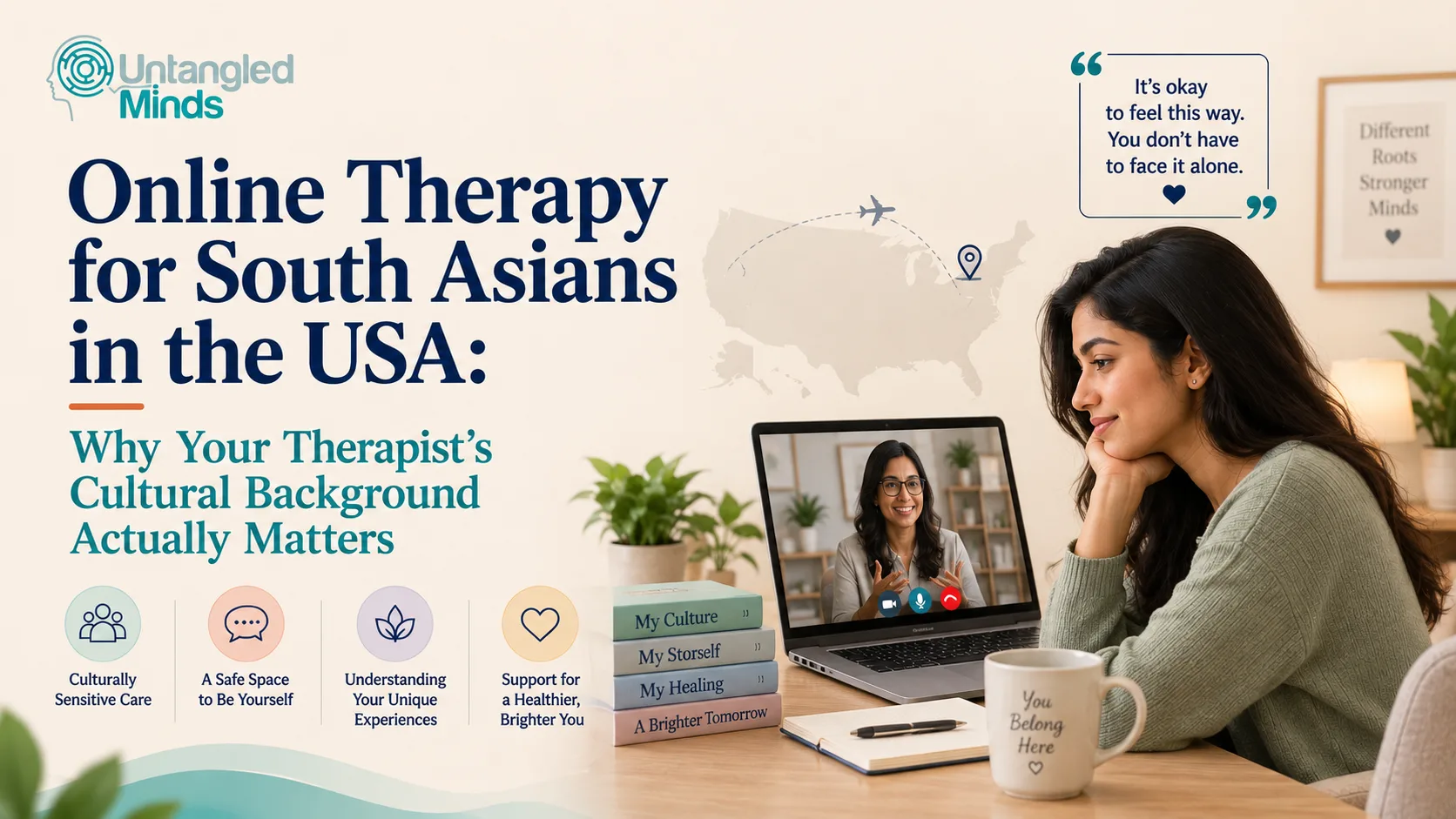
There's a particular moment that comes up regularly when South Asians in America describe their experience of Western therapy. It's the moment where they have to stop and explain something to their therapist - something that should require no explanation, that any Indian person would understand immediately - but which requires five minutes of cultural context before the actual conversation can begin.
It might be the specific weight of parental expectation. The architecture of guilt in a South Asian household. The way duty and love get so thoroughly tangled in Indian families that separating them feels like betrayal rather than growth. The exhaustion of being the first in your family to do something, of carrying everyone's hopes across an ocean along with your own.
You know what these things feel like from the inside. Explaining them to someone who's never lived anywhere near that inside is a different kind of exhausting.
What Cultural Fluency Actually Means in Therapy
There's a phrase that gets used a lot - "culturally sensitive therapy." It sounds good, and it means something, but it doesn't mean enough.
Cultural sensitivity means your therapist has read about South Asian culture and is careful not to apply Western frameworks uncritically. That's better than nothing. But it's not the same as cultural fluency - where the therapist doesn't need the framework explained, because they've lived inside something close enough to it to already understand what you mean.
For South Asians in the USA, this distinction is significant. The mental health presentations specific to this community don't map cleanly onto Western diagnostic categories. The specific guilt of leaving - of being the one who "made it out" while parents aged without you nearby. The model minority pressure - the expectation of excellence that allows no room for difficulty without it feeling like failure. The identity negotiation of being Indian at home and something different in every professional and social context outside it.
A therapist who understands these things without requiring explanation allows the actual therapeutic work to begin much faster, and go much deeper.
The Things South Asians Most Commonly Can't Say to a Western Therapist
I've spoken with enough people in this situation to notice some consistent themes. The things that are hardest to bring into a room with someone who doesn't share the cultural context:
The ambivalence about parents - loving them deeply and finding the relationship suffocating simultaneously, and not having the cultural permission to say both things are true at once.
The specific shame of needing mental health support when you're supposed to be the successful one. When your family sacrificed so much for your opportunity, needing a therapist can feel like a referendum on whether that sacrifice was worth it.
The marriage pressure - the specific texture of it in Indian families, where being unmarried at a certain age is a family problem, not an individual one, and where arranged marriage dynamics are so contextual they require explanation most Western therapists can't fully receive.
How Online Therapy Across Time Zones Works
The practical question I get asked frequently: is it actually manageable to do therapy with someone in India when you're in the USA?
For most people, yes. Many of my sessions with clients in the USA happen in the early evening for them and in the morning for me - the time zone overlap isn't as tight as some imagine. Sessions are conducted over secure, encrypted video platforms. The quality of the conversation isn't affected by the distance.
What it does require is some scheduling flexibility on both ends, and a stable internet connection. Both are usually manageable.
About Shyamolie Desai
I'm a Clinical Psychologist based in Mumbai. I trained and practice in India, which means the cultural framework I work within isn't academic - it's the framework I've lived and practiced inside for my entire career. I work with clients online across India and internationally, including South Asians in the USA, UK, UAE, and elsewhere who are looking for support from someone who genuinely understands the context without it needing to be explained. My clinical training is evidence-based - CBT and related approaches - and I work personally with every client I see.
Frequently Asked Questions
Can I see an Indian psychologist online if I live in America?
Yes. Online consultations across time zones are effective for most therapeutic concerns. With some scheduling flexibility, the overlap between Indian and US time zones is workable.
What mental health issues are most common for South Asians in the USA?
Immigration-related stress and grief, intergenerational conflict, model minority pressure, identity negotiation, relationship difficulties in bicultural contexts, depression, and anxiety are among the most frequently presenting concerns.
Is online therapy as effective as in-person?
For most presentations, research shows comparable outcomes. The therapeutic relationship and consistency of attendance matter more than the medium.
Do I need to explain Indian culture to you in sessions?
No. The cultural context is part of the framework I already work within - it doesn't require explanation before the actual therapeutic conversation can begin.