
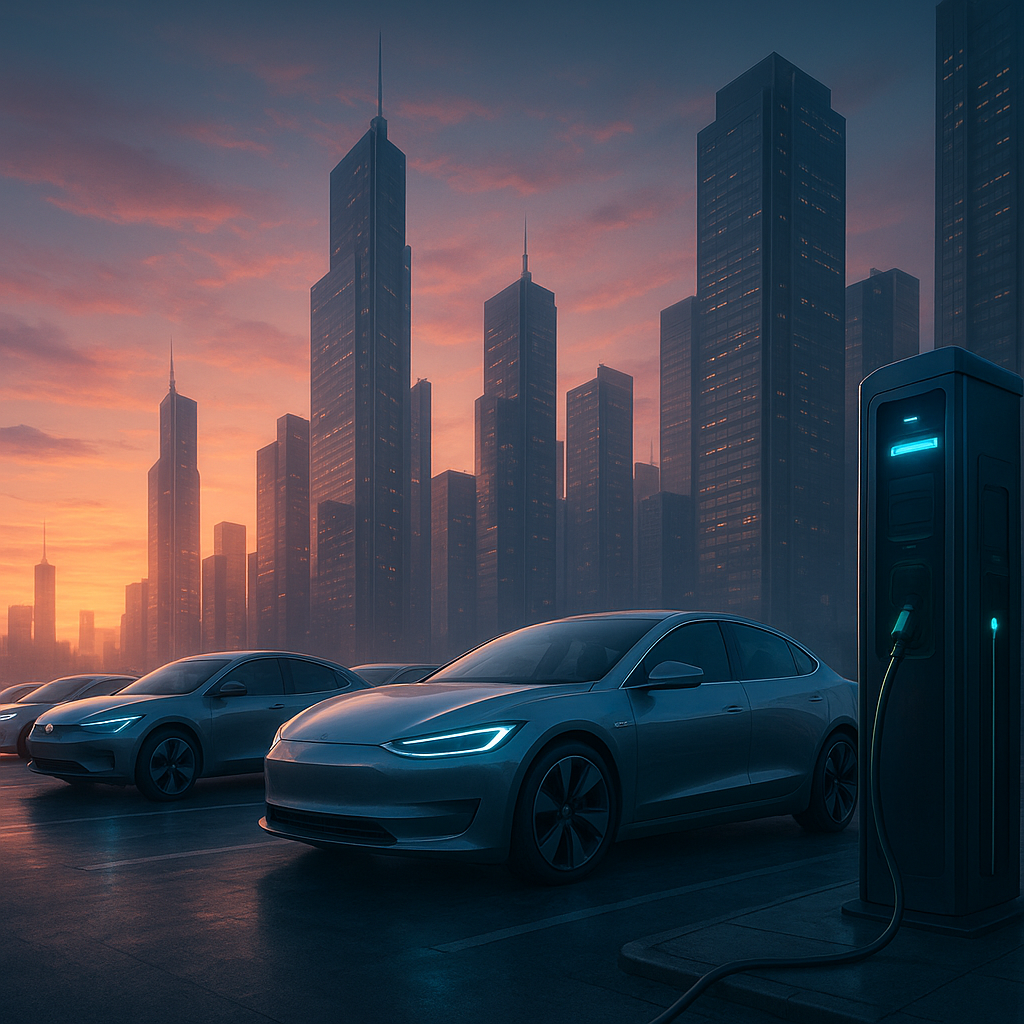
When Gas Prices Soared: A Pivotal Moment in Automotive History
In the first quarter of 2026, global oil prices surged dramatically, reaching levels not seen since the early 2010s. The immediate cause was a confluence of geopolitical tensions and supply chain disruptions, culminating in a swift shock to the oil markets. Consumer gasoline prices spiked by over 35% in many regions within weeks, forcing drivers and fleets alike to reconsider their fuel choices. This sudden disruption created a ripple effect that accelerated the electric vehicle (EV) market’s resurgence, reversing a slowdown that had persisted since the tail end of the 2020s.
Across urban centers from Los Angeles to Berlin, the streets buzzed with conversations about fuel costs, and many saw the economics of electric cars in a new light. The oil shock wasn’t merely a price hike; it became a catalyst, triggering a renewed push towards EV adoption and infrastructure investment. Industry insiders now regard this moment as a turning point where electric vehicles broke through a plateau and began a steep climb to mainstream dominance.
Electric vehicles, long touted for sustainability, suddenly gained a fresh appeal as a practical economic choice amid energy volatility. The shockwave rippled through car manufacturers, governments, and consumers, setting into motion a rapid transformation that is reshaping the automotive landscape in 2026.
Tracing the Road to 2026: EV Market Evolution and Oil Dependency
The 2010s and early 2020s marked the first major wave of electric vehicle adoption, driven by advances in lithium-ion battery technology, government incentives, and growing environmental awareness. By 2025, global EV sales accounted for roughly 20% of new car sales, with China, Europe, and North America leading adoption. However, despite this progress, the automotive sector remained heavily reliant on fossil fuels; internal combustion engines still dominated the global vehicle fleet.
Several factors had slowed EV momentum in the early 2020s: supply chain bottlenecks for battery materials, inconsistent charging infrastructure, and fluctuating policy support. Meanwhile, oil prices remained relatively stable or only moderately volatile, which dulled the urgency for switching to electric alternatives. Automakers also faced challenges in scaling EV production profitably while maintaining competitive pricing against gasoline-powered vehicles.
Nevertheless, the groundwork for a shift was laid by sustained investments in battery innovation, improvements in energy density, and a gradual build-out of public and private charging networks. According to TheOmniBuzz’s 2026 automotive report, the industry had been on an inflection point—ready for acceleration but awaiting a trigger.
Meanwhile, global oil markets were increasingly vulnerable. Geopolitical flashpoints in oil-producing regions, including the Middle East and parts of Africa, created periodic supply shocks. On top of that, the lingering effects of the post-pandemic economic shifts left many supply chains fragile. This made the oil market susceptible to sudden price spikes, which in early 2026 became the catalyst for a decisive shift in consumer behavior and industry strategies.
Quantifying the Impact: Data and Trends Accelerating EV Adoption
The oil shock of early 2026 saw Brent crude prices jump from around $85 per barrel in late 2025 to nearly $130 per barrel by February 2026. The direct consequence was a surge in gasoline and diesel prices at the pump, with some regions reporting average prices exceeding $6 per gallon. This sudden cost increase made the total cost of ownership (TCO) of internal combustion engine (ICE) vehicles noticeably less attractive.
Within three months of the price surge, EV sales in key markets such as the U.S., Europe, and China increased by an average of 40% compared to the previous quarter. This was not merely a short-term spike; industry analysts project sustained growth driven by shifting consumer preferences and corporate fleet electrification.
- U.S. EV sales: rose from 15% of new vehicle sales in Q4 2025 to 21% in Q1 2026.
- European EV market share: climbed from 28% to 37% within the same period.
- China’s EV sales: surged to over 30% market share, consolidating its leadership in global EV production and adoption.
These figures illustrate a clear market response to energy price shocks. Beyond consumer purchases, automakers accelerated EV model launches. For example, Tesla announced expanding production lines for the Model 3 and introduced a new affordable compact EV aimed at price-sensitive buyers. Legacy automakers such as Volkswagen and Hyundai increased their EV investments by billions of dollars, signaling strategic commitment to electrification.
Charging infrastructure also saw renewed investment. Public and private sector initiatives expanded fast-charging networks, addressing one of the lingering barriers to EV adoption. Governments across Europe and North America unveiled stimulus packages aimed at supporting EV purchases and infrastructure upgrades, further catalyzing the transition.
“The 2026 oil shock was the jolt the EV market needed. It transformed electric vehicles from a niche sustainable choice into an economic imperative for consumers and businesses alike,” said Dr. Matthew Lin, an automotive energy analyst.
2026 Developments: Industry Shifts and Policy Responses
The ripple effects of the oil shock reached far beyond consumer behavior, influencing policy frameworks and corporate strategies. Governments, recognizing the fragility of oil dependence, intensified support for clean energy and EV adoption. In the United States, the Biden administration expanded the Inflation Reduction Act’s EV tax credits, including higher incentives for domestically produced batteries and vehicles. The European Union accelerated its Fit for 55 climate package, introducing stricter emissions targets and expanded subsidies for EV infrastructure.
Meanwhile, major automakers adjusted production priorities. Ford, General Motors, and Stellantis announced accelerated timelines to phase out internal combustion engine models, some moving their targets from 2035 to as early as 2030. The focus on battery research intensified, with companies investing in solid-state batteries promising longer range and faster charging.
On the supply side, raw material sourcing became a critical challenge. Demand for lithium, nickel, and cobalt surged, prompting mining expansions and new recycling initiatives. Governments and companies prioritized securing stable supply chains to avoid bottlenecks that had hampered earlier EV growth phases.
In the energy sector, utilities stepped up efforts to modernize grids to handle increased EV loads, a challenge detailed in our analysis of grid readiness. Smart charging and vehicle-to-grid technologies began scaling, enabling EVs to serve as distributed energy resources and stabilize electricity demand.
- Expanded EV incentives and rebates
- Automaker commitments to end ICE vehicle production early
- Battery technology breakthroughs and production scale-up
- Supply chain diversification and recycling initiatives
- Grid modernization and smart charging infrastructure
“Electric vehicles are no longer just an environmental priority; they are a strategic economic asset in an uncertain energy landscape,” noted Dr. Elena García, head of sustainable mobility at the European Commission.
Industry Voices and Market Implications
Industry leaders widely agree that the oil shock has injected new momentum into the EV market, reshaping automotive strategies and consumer expectations. Mary Barra, CEO of General Motors, emphasized the urgency: “The recent energy market volatility only underscores the need to accelerate our transition to electric vehicles. It’s about resilience as much as sustainability.”
Startups in the EV space have also gained fresh investor interest. Companies specializing in battery recycling, charging networks, and EV fleet management attracted record funding rounds in early 2026. The market dynamics shifted to favor integrated clean energy solutions, blending vehicle electrification with renewable energy and storage.
Financial analysts note the evolving valuation landscape for automakers. Companies with robust EV portfolios and supply chains are outperforming peers focused on traditional powertrains. Investors increasingly view EV leadership as a proxy for future profitability and risk mitigation amid volatile fossil fuel markets.
The oil shock has also highlighted equity issues in EV adoption. Lower-income households face challenges in upfront costs and charging access. Policymakers and NGOs are pushing for targeted programs to ensure inclusive benefits of electrification, from affordable EV models to community charging hubs.
In addition, the commercial vehicle sector is accelerating electrification. Delivery fleets, buses, and trucks represent a growing segment, with companies like Rivian and Tesla Semi gaining orders from logistics giants. Electrified fleets reduce exposure to fuel price shocks and offer operational savings.
Looking Ahead: What the Future Holds for Electric Vehicles
As the world adjusts to the new energy reality, the trajectory for electric vehicles appears steep and sustained. Industry forecasts suggest that by 2030, EVs could represent over 50% of new vehicle sales globally, propelled by ongoing technological improvements, policy support, and shifting consumer demand.
Key factors to watch include battery innovation, raw material supply stability, and grid integration. Breakthroughs in solid-state batteries, improved recycling, and next-generation charging technologies will be critical to sustaining growth. At the same time, addressing grid capacity constraints and ensuring equitable access to EV technology remain urgent priorities.
The oil shock of 2026 serves as a sharp reminder of the vulnerabilities tied to fossil fuel dependence. It has catalyzed a reckoning in the automotive sector, transforming electric vehicles from a green alternative into a mainstream economic necessity.
For consumers, the message is clear: the cost calculus of car ownership is changing, and electric vehicles are increasingly the rational choice. For policymakers and industry leaders, the challenge is to maintain momentum while ensuring infrastructure, supply chains, and social equity keep pace.
As detailed in TheOmniBuzz’s overview of 2026 automotive trends, the coming years will be defined by rapid innovation, investment, and an evolving ecosystem that integrates vehicles, energy, and digital technologies.
- Continued EV market share growth, potentially exceeding 50% by 2030
- Ongoing battery tech breakthroughs and recycling scale-up
- Expansion of charging infrastructure, including ultra-fast and wireless options
- Greater integration of EVs with renewable energy and smart grids
- Policies to promote equity and accessibility in EV adoption
In conclusion, the 2026 oil shock has not just disrupted markets; it has reshaped the automotive future. Electric vehicles are no longer a niche or a luxury—they are becoming the backbone of a resilient, sustainable, and economically sensible transportation system.