Revolution on Wheels: A Snapshot of the 2026 Automotive Landscape
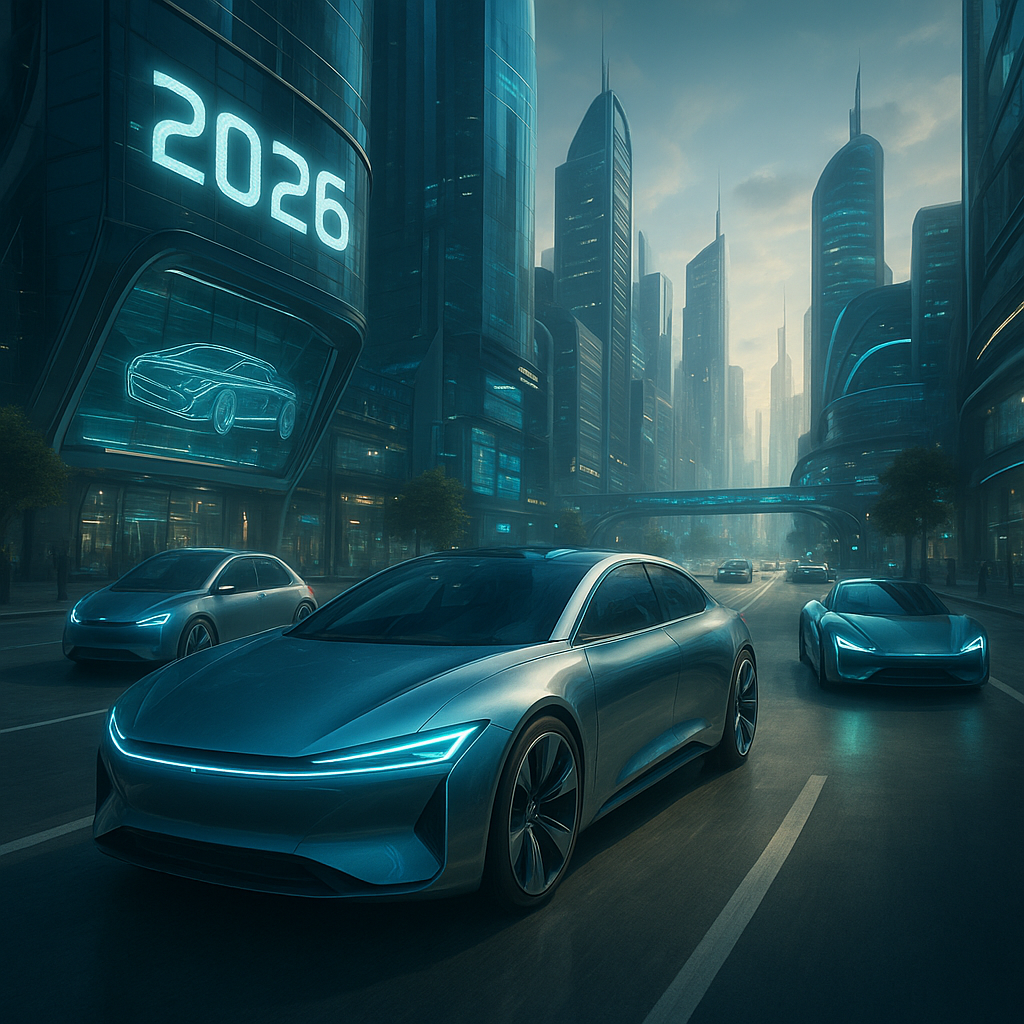
As the morning light filters through the city skyline, the streets buzz with a new kind of vehicle — one that no longer relies on traditional gasoline engines or manual controls. In 2026, cars have transcended their former identity as mere transportation tools to become complex nodes of AI, sustainability, and connectivity. The global automotive market, now valued at over $4.3 trillion according to industry estimates, is undergoing a transformation driven by technological breakthroughs and shifting consumer priorities. This new era is marked not only by electric powertrains but also by autonomous driving, smart infrastructure integration, and evolving ownership models.
“The car of 2026 is not just a machine, but a platform for seamless mobility, digital interaction, and environmental stewardship.” – Dr. Elena Morozova, Automotive Futurist
In sprawling metropolises from Tokyo to Los Angeles, electric vehicles (EVs) account for over 65% of new registrations, a figure that was barely 10% a decade ago. This shift reflects more than market preference; it signals a fundamental reorientation of the automotive industry’s commitments and strategic directions. Yet, behind the sleek designs and digital dashboards lies a complex web of supply chain realignments, regulatory pressures, and geopolitical tensions, all shaping the contours of automotive innovation in 2026.
To fully appreciate the current state and future trajectory of cars, it is essential to understand the historical context, the data-driven dynamics of the present, and the expert insights that illuminate what lies ahead.
Tracing the Road: Historical Context Behind 2026’s Automotive Evolution
The modern car’s journey began over a century ago with the advent of the internal combustion engine, dominating personal and commercial transport through the 20th century. However, environmental concerns and technological progress gradually catalyzed a paradigm shift. The 2010s and early 2020s were pivotal decades as governments worldwide enforced stricter emissions standards and incentivized electric mobility. The Paris Agreement of 2015 set ambitious carbon reduction goals that accelerated commitments to EV adoption.
Simultaneously, advances in battery technology — particularly lithium-ion and emerging solid-state batteries — reduced costs and improved energy density, making EVs more accessible and practical. Automakers such as Tesla, BYD, and Volkswagen led the charge, investing billions into electric vehicle development and charging infrastructure. Parallel to electrification was the rise of autonomous driving research, with companies like Waymo, Cruise, and Mobileye pioneering various levels of vehicle autonomy.
Global urbanization trends also played a role, prompting innovation in shared mobility and smart city integration. Car-sharing platforms, combined with government initiatives promoting public transit and non-polluting vehicles, fostered an ecosystem where cars became part of a broader mobility network rather than isolated assets. These developments laid the groundwork for the multifaceted automotive landscape witnessed in 2026.
“The shift from horsepower to software power has been the defining narrative of the past decade in automotive history.” – Prof. Michael Anders, Transportation Historian
Under the Hood: Core Analysis of 2026 Automotive Innovations and Market Data
The 2026 automotive industry is a tapestry woven from electrification, automation, connectivity, and sustainability. Each thread is supported by robust data and market developments that underscore the sector’s transformative nature.
Electrification Trends: By 2026, global EV sales have surged to 35 million units annually, representing close to 70% of all new vehicle sales, according to industry reports. China remains the largest market, commanding nearly 45% of global EV sales, while Europe and North America follow closely. Battery costs have plummeted to under $70 per kWh, a milestone that has made EVs competitively priced against traditional internal combustion engine vehicles.
Autonomous Driving Progress: Level 3 and Level 4 autonomous vehicles are increasingly common on highways and in urban centers. Tesla’s Full Self-Driving (FSD) suite and Waymo’s autonomous taxi service have expanded their operational footprints, with safety records showing a 30% reduction in accidents compared to human-driven vehicles. Regulatory frameworks are evolving to accommodate and oversee these technologies, balancing innovation with public safety.
Connectivity and Smart Features: Cars in 2026 are deeply integrated with the Internet of Things (IoT), enabling vehicle-to-vehicle (V2V) and vehicle-to-infrastructure (V2I) communication. This connectivity allows for real-time traffic management, predictive maintenance, and personalized in-car experiences powered by AI assistants. The average new car now generates over 25 gigabytes of data daily, feeding into cloud platforms for analytics and continuous improvement.
Sustainability Metrics: Automakers have committed to ambitious carbon neutrality goals. By 2035, major manufacturers aim to produce only zero-emission vehicles, with many already operating carbon-neutral manufacturing plants. Lifecycle assessments reveal that EVs now have a 40% lower total carbon footprint than conventional vehicles when factoring in raw material extraction, production, and end-of-life recycling.
Below is a snapshot of key automotive data points for 2026:
- Global EV market share: Approximately 68%
- Average battery cost per kWh: $68
- Autonomous vehicle accident reduction: 30%
- Annual global automotive data generated: 4 exabytes
- Carbon footprint reduction in EV lifecycle: 40%
Such figures illustrate the scale and impact of ongoing innovations and their penetration into consumer markets.
2026 Automotive Industry: Current Developments and Market Dynamics
The present automotive ecosystem is shaped by several significant trends and challenges that define 2026.
Supply Chain Resilience and Raw Materials: The surge in EV production has intensified demand for critical minerals like lithium, cobalt, and nickel. Mining operations have expanded in Australia, South America, and Africa, but supply bottlenecks persist. Recycling technologies have advanced, with over 50% of battery materials now sourced from recycled cells, mitigating some ecological and geopolitical risks.
Regulatory Landscape: Governments worldwide have accelerated regulations favoring zero-emission vehicles. The European Union increased penalties for automakers missing emission targets, while the U.S. expanded its EV tax credit programs. China’s aggressive subsidies continue to foster domestic EV brands, intensifying global competition.
Consumer Behavior Shifts: Ownership models are evolving. Subscription services and vehicle-as-a-service (VaaS) platforms have gained traction, especially among younger urban populations. These models prioritize convenience and flexibility over traditional car ownership, reshaping dealership and financing models.
Emerging Technologies: Solid-state batteries entered commercial production, offering faster charging and greater safety. Hydrogen fuel cell vehicles have found niche applications in heavy transport and long-haul logistics, complementing the EV boom. In parallel, software-defined vehicle architectures empower over-the-air updates and modular upgrades, extending vehicle lifespans.
These developments collectively underscore a vibrant, complex, and rapidly evolving industry.
For readers interested in the broader environmental impacts of automotive innovation, you might enjoy our detailed coverage on Sustainability in 2026: Progress, Challenges, and Future Pathways.
Voices from the Industry: Expert Perspectives on Automotive Transformation
Leading voices within the automotive sector provide valuable insights into the forces shaping 2026 and beyond. Executives, researchers, and policy makers emphasize both opportunities and challenges.
“The convergence of AI, electrification, and connectivity means we are not just building cars — we are building intelligent ecosystems that redefine mobility.” – Ana Delgado, CTO of NovaAuto
Industry experts highlight the critical importance of collaboration across sectors. Partnerships between automakers, tech firms, and governments are essential to build infrastructure, develop standards, and foster consumer trust. The rise of new entrants like technology startups challenges traditional manufacturers to innovate faster and rethink their value propositions.
Moreover, social equity concerns are gaining prominence. Ensuring that advanced mobility solutions are accessible to underserved populations is a priority, with pilot programs in cities across Europe and the U.S. demonstrating inclusive mobility options.
“Mobility must be equitable and sustainable. Our future depends on technology that serves all, not just a privileged few.” – Dr. Rajesh Kumar, Urban Mobility Specialist
These perspectives suggest an automotive future that balances innovation with responsibility.
Looking Ahead: Future Outlook and Key Takeaways for Cars Beyond 2026
Forecasting the automotive sector’s trajectory reveals several critical themes and actionable insights.
Electrification as the Default: The global transition to EVs is expected to continue unabated, with forecasts projecting a near-total phase-out of internal combustion engines by 2040. Advances in battery chemistry and recycling will further reduce costs and environmental impact.
Autonomy and AI Integration: Higher levels of vehicle autonomy will gradually become mainstream, particularly in controlled environments such as highways and urban zones equipped with smart infrastructure. AI-powered driver assistance will evolve into fully autonomous mobility services.
New Mobility Models: Ownership will increasingly give way to shared, on-demand mobility solutions. Subscription and leasing models that bundle insurance, maintenance, and software updates are poised to dominate, especially in urban centers.
Regulatory and Ethical Challenges: Policymakers will face ongoing challenges in regulating data privacy, cybersecurity, and safety standards. Ethical frameworks for AI decision-making in autonomous vehicles will be essential to gain public trust.
Environmental and Social Responsibility: Carbon neutrality goals will drive innovation in manufacturing, supply chains, and end-of-life vehicle processing. Ensuring equitable access to these technologies will be vital for sustainable societal impact.
Below is a summary of key takeaways for stakeholders:
- Invest in battery and recycling technologies to secure sustainable supply chains.
- Adapt business models to embrace shared mobility and digital services.
- Collaborate across industries to develop interoperable standards and infrastructure.
- Address ethical and regulatory challenges proactively to build consumer confidence.
- Prioritize inclusive solutions to ensure equitable access to mobility innovations.
For a deeper understanding of how legal frameworks are adapting to these changes, explore our analysis on Law in 2026: Trends, Challenges, and Transformations Shaping Justice.
As the automotive sector accelerates into the future, the vehicles on our roads in 2030 and beyond will represent not only technological marvels but also reflections of society’s values and priorities. The journey from the combustion engine to intelligent mobility continues to redefine what it means to move.