The early years of a child’s life are filled with curiosity, imagination, and rapid development. A nursery school provides the ideal environment where children can learn through enjoyable experiences rather than formal instruction alone. Instead of focusing only on books or worksheets, modern nursery education encourages children to discover the world through play, creativity, movement, and meaningful interactions.
Learning through fun helps children develop confidence, communication skills, emotional balance, and problem-solving abilities. Every activity introduces new opportunities to explore, ask questions, and build essential life skills. A well-designed nursery school creates a safe and supportive atmosphere where every child feels encouraged to participate and grow at their own pace.
Why Play Is an Important Part of Early Learning
Play is one of the most effective ways young children learn. Whether they are building blocks, solving puzzles, drawing pictures, or participating in group games, children naturally develop important abilities without feeling pressured.
During play, children improve their language skills by communicating with friends and teachers. They also strengthen fine and gross motor skills while handling toys, running, jumping, or engaging in creative activities. Most importantly, play teaches patience, sharing, cooperation, and empathy through everyday interactions.
These experiences prepare children for future academic learning while helping them enjoy the educational journey from the beginning.
Learning Through Everyday Exploration
Young children are naturally curious about everything around them. A quality nursery school encourages exploration by allowing children to observe nature, experiment with simple materials, ask questions, and discover answers through guided experiences.
Activities such as gardening, storytelling, water play, art projects, music sessions, and sensory learning stimulate different areas of brain development. These hands-on experiences make learning memorable because children actively participate instead of simply listening.
Exploration also develops critical thinking. Children begin comparing objects, identifying patterns, understanding cause and effect, and expressing their observations with growing confidence.
Building Social and Emotional Skills
Academic knowledge is only one part of early childhood education. Nursery schools also play a major role in developing emotional intelligence and social awareness.
Daily interaction with classmates teaches children how to make friends, solve disagreements peacefully, take turns, and respect others' opinions. Teachers guide children in expressing emotions appropriately while encouraging kindness and teamwork.
These experiences build confidence that supports children throughout their educational journey. A child who feels emotionally secure is often more willing to participate, ask questions, and try new activities.
The Value of Structured Daily Routines
Children feel comfortable when they know what to expect. A balanced daily routine provides consistency while keeping learning enjoyable and engaging.
Morning greetings, circle time, creative activities, outdoor play, snack breaks, storytelling, music, and quiet time each contribute to a child's overall development. These routines improve attention span, self-discipline, and independence while maintaining a healthy balance between learning and relaxation.
Parents interested in understanding daily activities that make play school fun today can see how thoughtfully planned schedules combine education with excitement, making every school day meaningful.
Creating a Safe and Stimulating Learning Environment
Children learn best when they feel safe, valued, and encouraged. A well-designed nursery school includes clean classrooms, age-appropriate learning materials, secure outdoor play spaces, and caring educators who understand children's developmental needs.
Colorful learning corners, interactive games, reading spaces, and creative art stations inspire children to explore independently while remaining under proper supervision.
Teachers carefully observe each child's progress and adjust activities according to individual learning styles. This personalized attention allows every child to develop at a comfortable pace while enjoying the learning process.
The Role of Parents in Nursery Education
Parents and teachers work together to create consistent learning experiences for children. Simple activities at home, including reading stories, talking about daily experiences, singing songs, and encouraging imaginative play, reinforce classroom learning.
Regular communication between parents and teachers also helps identify each child's strengths, interests, and areas where additional encouragement may be helpful. This partnership builds trust and ensures children receive consistent support both at school and at home.
Positive reinforcement from parents motivates children to remain excited about learning while strengthening their confidence.
Choosing the Right Nursery School
Selecting a nursery school is one of the most important decisions parents make during their child's early years. Families should consider teaching methods, classroom environment, teacher qualifications, safety measures, activity planning, and opportunities for creative learning.
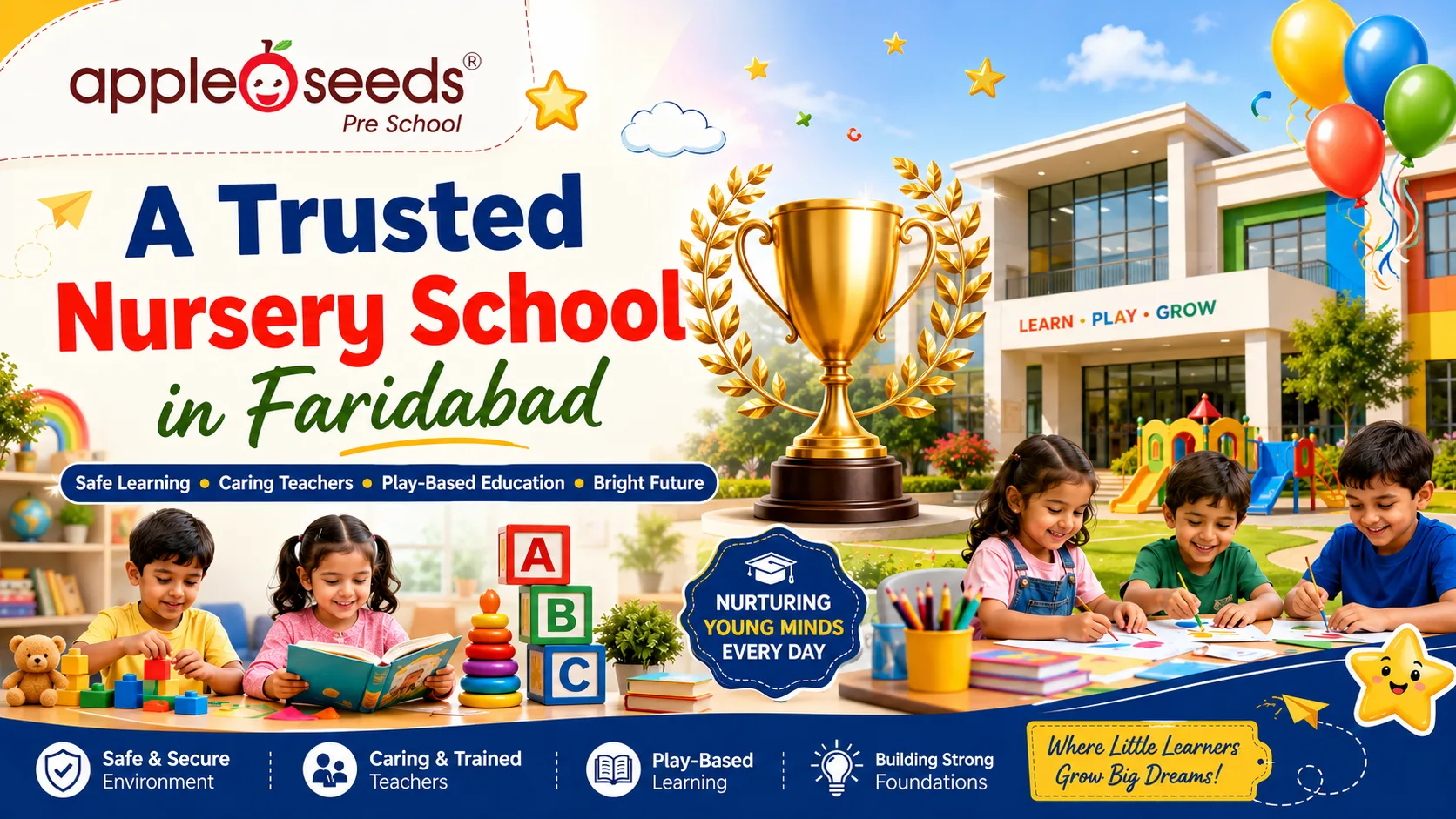
Many parents looking for the best play school in faridabad seek an institution that balances academic readiness with joyful exploration. Apple Seeds School follows a child-centered approach where learning happens naturally through engaging experiences, supportive teachers, and carefully planned activities that nurture curiosity and confidence.
Parents also appreciate programs designed to support every stage of early childhood development. Those searching for the no.1 ranked nursery school in faridabad often value environments that combine structured learning with creativity, emotional development, and active participation, helping children build a strong foundation for future success.
Conclusion
Nursery school education is about much more than preparing children for primary school. It creates opportunities for exploration, creativity, friendship, and joyful discovery that shape a child's lifelong attitude toward learning.
Through meaningful play, engaging daily activities, supportive relationships, and safe environments, children develop the confidence and essential skills needed for future academic and personal success. Apple Seeds School continues to support this philosophy by creating learning experiences that inspire curiosity, encourage independence, and make every child's early educational journey enjoyable, rewarding, and filled with opportunities to grow.