Introduction
Many professionals want to work as nurses in Germany. They often struggle to find clear salary details. You might see conflicting numbers online. This confusion makes it hard to plan your career. It also makes it difficult to manage your finances. This article will help you understand exactly how much you can earn. You will learn about starting salaries and taxes and ways to increase your pay.
Average Salary for Nurses in Germany
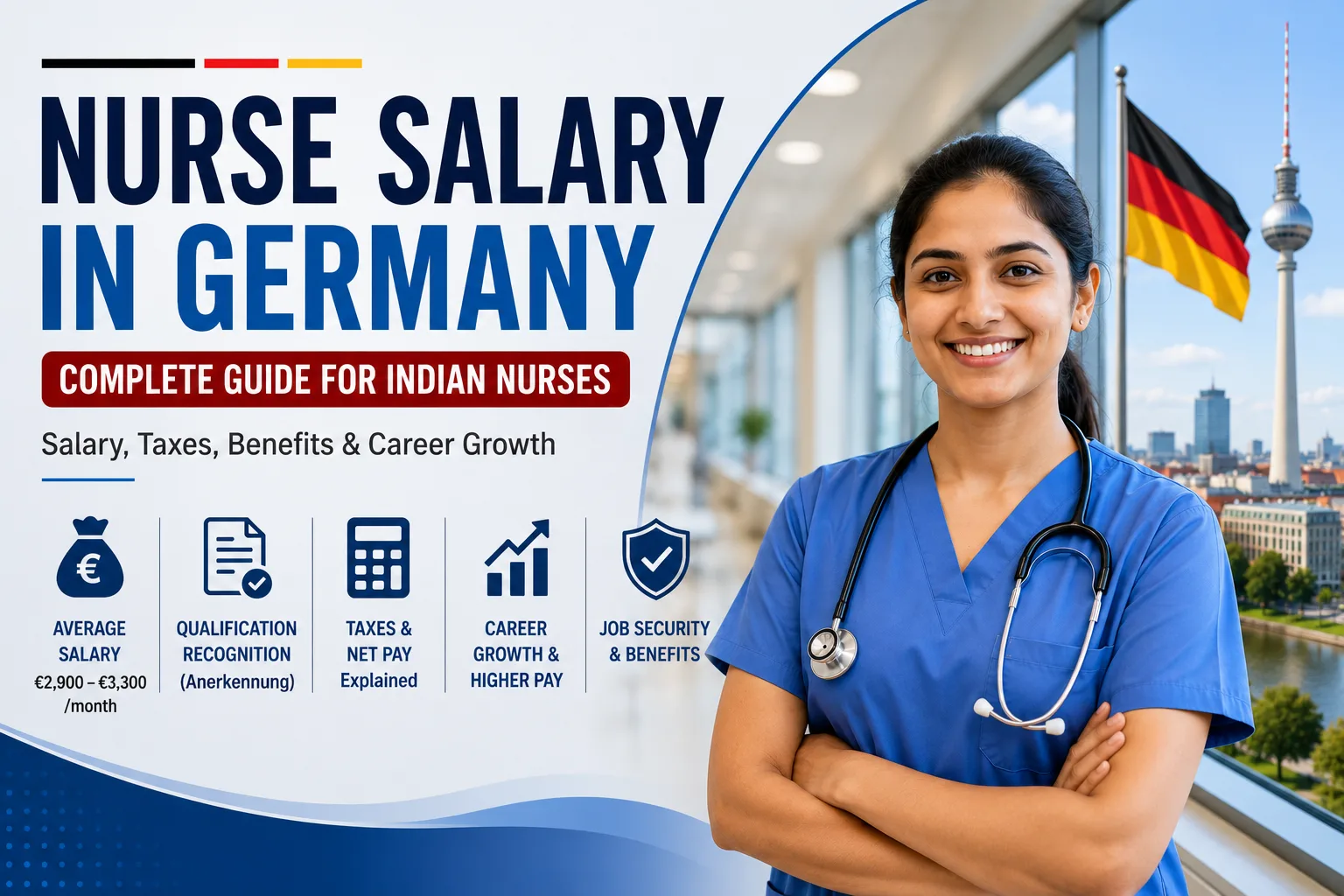
The salary for a registered nurse in Germany depends on experience. It also depends on the specific region. A newly qualified nurse earns a good starting wage. The gross salary is about €2,900 to €3,300 per month [1]. This amount is before taxes are taken out. The German healthcare system highly values trained medical staff. Hospitals often pay slightly more than private care homes. Public hospitals follow strict tariff agreements. These agreements guarantee regular pay increases over time. how ausbildung courses in germany helps you start a successful nursing career with excellent job opportunities for Indian nurses.
Starting Salaries for International Nurses
International nurses face a different initial pay scale. You must first get your foreign qualifications recognized in Germany. The government calls this process Anerkennung. You will work as a nursing assistant during this recognition phase. A nursing assistant earns around €2,300 to €2,800 per month [2]. You cannot work as a full nurse without this recognition. Your salary will increase immediately once your qualifications are fully approved. The approval process can take several months.
"Getting your qualifications recognized quickly is the fastest way to jump from an assistant salary to a full registered nurse salary in Germany."
Understanding Net Pay After Taxes
You must remember that gross salary is not what you take home. Germany has high taxes. It also has mandatory social security contributions. A single person without children falls into tax class 1. This tax class has the highest deduction rate. You will pay around 35% of your gross income in taxes and insurance. A gross salary of €3,000 will leave you with roughly €2,000 net per month [3]. This covers your health insurance. It also covers your pension fund and unemployment benefits.
Factors That Increase Your Salary
You can boost your nursing income through several methods. Shift work offers extra pay. You get bonuses for working nights. You also get paid more for weekends or public holidays. These shift bonuses are often completely tax-free. You can also take specialized training courses. An intensive care nurse earns significantly more than a general ward nurse. A surgical nurse also commands a higher salary. Specialization can push your gross monthly salary well above €4,000 [4].
"Shift allowances and weekend bonuses can increase a nurse's monthly take-home pay by up to 20 percent without moving into a higher tax bracket."
Cost of Living vs Nursing Pay
You need to balance your expected salary with the local cost of living. Your salary alone does not determine your lifestyle. Cities like Munich are very expensive. Frankfurt and Stuttgart are also costly places to live. Your rent will consume a large part of your net income in these cities. Cities in eastern Germany are much cheaper. Smaller towns offer lower rent prices. Many nurses find they save more money living outside major metropolitan areas. You should calculate your living costs carefully before accepting any job offer.
Regional Salary Differences
Salaries vary between different German states. Hospitals in southern Germany usually pay the highest wages. Western Germany also offers excellent compensation. The states of Bavaria and Baden-Württemberg offer top salaries for medical staff. States in eastern Germany tend to pay slightly less. The lower cost of living in the east balances out the lower pay scale [5]. You must always weigh the salary against local rent prices.
"The severe shortage of medical professionals in Germany means nurses enjoy strong job security and excellent bargaining power for promotions."
Career Growth and Long Term Outlook
Germany faces a massive shortage of healthcare workers. The aging population creates a constant demand for medical care. This makes nursing a highly secure job. You will have a permanent contract after your probation period. You can grow your career by becoming a ward manager. You can also become a nursing director. Some nurses move into healthcare management roles. Others prefer to take on teaching roles at nursing schools. The salary increases steadily with every year of experience you gain.
How to Prepare for Your Move
You need to learn the German language first. This is the most important step. You must reach at least a B2 level in German. This level is required to work as a registered nurse. Many language academies offer specialized medical German courses. You should also start the document translation process early. The German authorities require certified translations of your degrees. The entire procedure can take 12 to 18 months. You must be patient during this time.
"Mastering the German language up to the B2 level is your ultimate key to unlocking higher salary tiers and leadership roles in German hospitals."
Work Life Balance and Benefits
Money is not the only reward in Germany. The country offers excellent working conditions. Full-time nurses work around 38 to 40 hours per week. You are entitled to at least 24 days of paid vacation per year. Many hospitals offer up to 30 days of paid leave. You also receive full pay when you are sick. The law protects pregnant women with generous maternity leave. These benefits make the overall compensation package very attractive.
Final Thoughts on Nursing in Germany
Working as a nurse in Germany is financially rewarding. The system offers great benefits. It also provides strong labor protections. You will earn a comfortable living if you manage your taxes wisely. You must also monitor your living expenses. Focus on your language skills first. Make sure you get your credentials recognized as soon as possible. This preparation will ensure a smooth start to your new career abroad.