
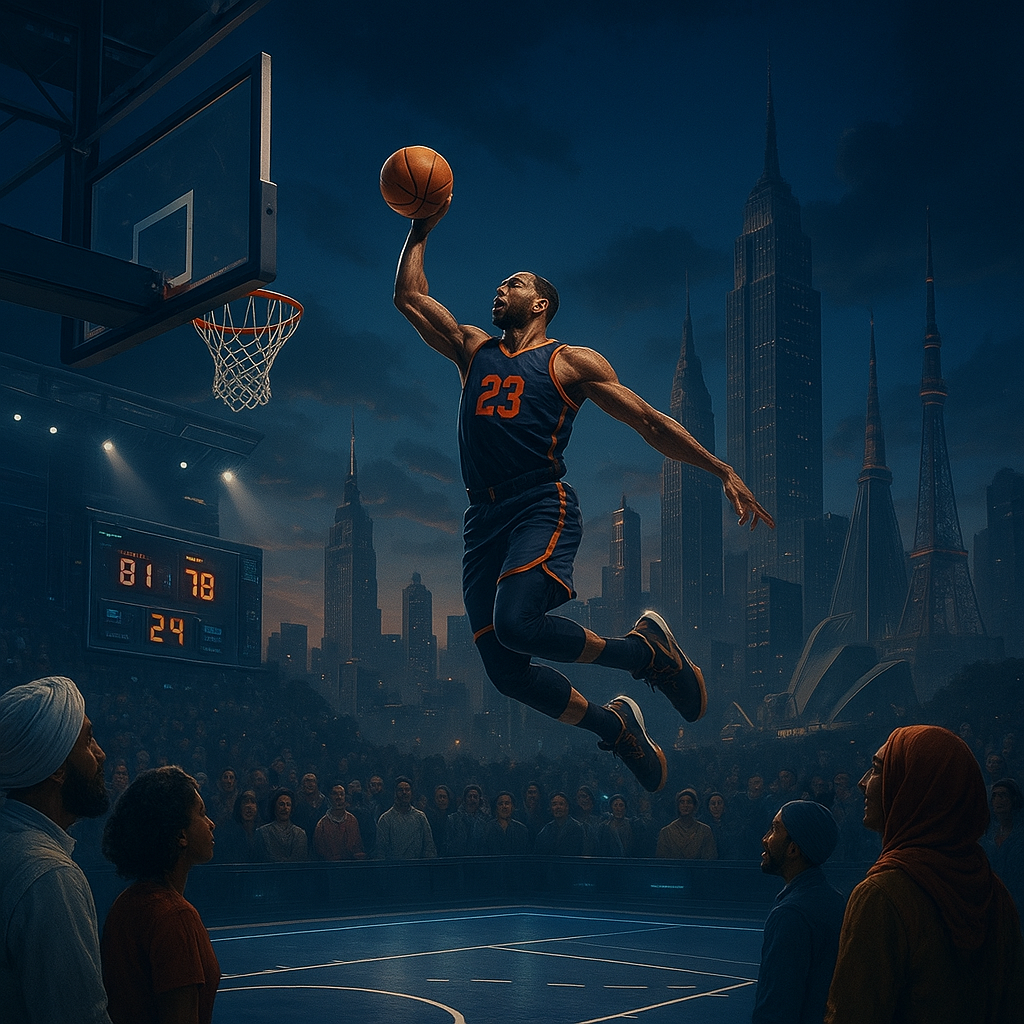
The Courts are Changing: A 2026 Tip-Off Scene
The 2026 NBA playoffs began with a palpable energy in arenas worldwide, underscoring how basketball’s heartbeat has evolved dramatically over the past decade. The opening night showcased the Phoenix Suns, a franchise emblematic of the league’s shifting dynamics. With a roster blending seasoned veterans and international phenoms, they demonstrated an unprecedented style of play—fast-paced, three-point heavy, and analytically driven. This scene typifies the NBA’s current identity: a melting pot of talent, technology, and cultural influence that transcends borders.
Long gone are the days when the NBA was primarily an American spectacle. Today, it’s a global phenomenon. Attendance figures from the 2025–26 season reveal international viewership surpassing domestic numbers for the first time, with markets like China, Europe, and Africa leading the surge. The NBA’s global digital platforms reported a staggering 45% increase in engagement year-over-year, according to league sources.
"The NBA is no longer just a league; it’s a global cultural movement," said a senior league executive in a recent interview. "Our players are ambassadors, and technology is our bridge to fans everywhere."
This international surge is not just about numbers but about a fundamental transformation in how basketball is played, consumed, and monetized. The NBA’s new era is replete with data-driven strategies, cross-continental player development, and innovative fan experiences, all converging to redefine the sport’s global pulse.
From Hardwood to High-Tech: Tracing the NBA’s Evolution
The NBA’s roots stretch back to the mid-20th century as a primarily North American league. However, the seeds of its global dominance were planted in the 1980s and ’90s with the rise of iconic players like Michael Jordan and the league’s initial forays into international marketing. The 2000s accelerated this expansion, with stars such as Yao Ming catalyzing basketball’s explosion in Asia.
Yet, the real transformation began in the late 2010s and early 2020s, as technology and globalization reshaped the league’s structure and outreach. The infusion of advanced analytics revolutionized coaching and player evaluation, while media rights deals expanded into new international territories. The NBA instituted developmental programs abroad, including academies in Africa and Europe, to nurture local talent and feed the league’s growing demand for diversity and skill.
Financially, the NBA became a powerhouse, with revenue exceeding $16 billion in 2024. This growth was propelled by lucrative broadcasting contracts, sponsorship deals, and the burgeoning esports scene tied to the league’s digital ventures. Moreover, the NBA embraced social justice initiatives, aligning its brand with global movements, thus deepening fan loyalty beyond the game itself.
As sports economist Dr. Linda Chau explains, "The NBA’s ability to integrate technology, social issues, and global marketing has set a new standard for professional sports leagues worldwide."
Understanding this evolution is critical to appreciating the NBA’s current landscape, where player mobility, fan engagement, and business innovation converge in unprecedented ways.
Numbers Speak Louder: The Data Behind the NBA’s Contemporary Success
Analyzing the NBA through a data lens reveals why the league is thriving in 2026. Player statistics have become increasingly sophisticated, with teams leveraging machine learning models to predict performance and injury risks. The average pace of play has increased by 12% since 2020, reflecting a strategic shift toward faster, perimeter-oriented basketball.
Financially, the NBA’s global revenue is projected to hit $22 billion by the end of 2026, with international markets contributing nearly 40% of the total. Sponsorship deals with tech giants like Meta and Apple have injected fresh capital, while NFT and blockchain initiatives have created new revenue streams and fan engagement opportunities.
In terms of player demographics, the 2025–26 season featured a record 28% of players born outside the United States, highlighting the league’s international recruitment success. The African contingent grew notably, with players from Nigeria, Senegal, and Cameroon leading teams in scoring and defensive metrics.
- Top 5 NBA Markets by International Viewership in 2026:
- China
- Spain
- Brazil
- France
- South Africa
- Average Player Efficiency Rating (PER) Trends from 2020 to 2026:
- 2020: 15.3
- 2023: 16.7
- 2026: 17.4
- Revenue Breakdown by Source in 2026:
- Broadcasting rights: 45%
- Sponsorships: 30%
- Merchandising and tickets: 15%
- Digital products (NFTs, apps): 10%
Additionally, the NBA’s commitment to data transparency has increased fan engagement, with real-time stats and augmented reality features enhancing broadcasts. This blend of analytics and entertainment is a hallmark of the league’s modern appeal.
2026 Developments: Innovation and Integration on and off the Court
The current NBA season is marked by several groundbreaking developments that are shaping the league’s future trajectory. One of the most notable is the widespread adoption of wearable technology that monitors player biometrics in real time. This has led to a 15% reduction in injuries compared to 2022, according to league medical reports.
On the court, rule adjustments continue to prioritize pace and scoring. The introduction of a 14-second shot clock reset after offensive rebounds has increased possessions and intensified game tempo. Teams have embraced hybrid defensive schemes blending man-to-man and zone defenses, optimized by AI-driven analytics.
Off the court, the NBA’s digital footprint has expanded with the launch of NBAverse, a blockchain-powered metaverse platform offering immersive fan experiences such as virtual courtside seats and player interactions. This platform has attracted over 10 million users worldwide within its first year, making it a significant driver of fan engagement and revenue.
The league has also deepened its commitment to sustainability, with all arenas transitioning to green energy sources by 2026. This initiative aligns with global environmental goals and enhances the NBA’s corporate social responsibility profile.
NBA Commissioner Mark Taylor commented, "Our innovations reflect a commitment to excellence both in competition and community. We’re building a league that’s smarter, safer, and more connected than ever."
These developments illustrate how the NBA is not just a sports league but a forward-thinking enterprise that integrates technology, culture, and social impact.
Voices from the Hardwood: Expert Perspectives and Industry Impact
Experts across sports analytics, business, and culture emphasize the NBA’s pioneering role in transforming professional sports. Dr. Rajiv Patel, a noted sports data scientist, highlights how the league’s embrace of AI has reshaped coaching strategies: "NBA teams now have predictive models that inform everything from player rotations to injury prevention, setting a benchmark in sports science."
From a business standpoint, marketing strategist Carla Mendoza notes the league’s success in cultivating global brand ambassadors: "Players like Luka Dončić and Victor Wembanyama are transcending basketball, becoming cultural icons that drive merchandise sales and media consumption worldwide."
The social impact is equally significant. The NBA’s initiatives promoting racial justice and community development have elevated the league’s stature beyond sports. According to sociologist Dr. Emily Rivers, "The NBA exemplifies how sports organizations can leverage their platforms for social change, influencing public discourse and policy."
- Key NBA Industry Impacts in 2026:
- Set standards for AI integration in sports
- Drove global youth basketball participation up 30%
- Led professional sports in environmental sustainability
- Expanded digital fanbase with immersive tech
- Notable Player Ambassadors and Their Influence:
- Luka Dončić: European and Latin American markets
- Victor Wembanyama: African and French markets
- Jalen Green: Asian markets and youth engagement
NBA marketing chief Sarah Nguyen summarized, "Our players are the league’s heartbeat. Their global appeal reflects our inclusive, innovative ethos."
These expert insights underscore the NBA’s multifaceted impact in 2026, spanning technology, culture, and commerce.
Looking Ahead: What the NBA’s Future Holds
The NBA’s trajectory suggests a continued melding of sport, technology, and global culture. One key trend to watch is the deepening integration of virtual reality (VR) in fan experiences, potentially revolutionizing how audiences interact with games and players. League insiders indicate plans to launch VR-based training tools for youth academies worldwide, democratizing access to elite basketball education.
Player development will likely become even more international, with the NBA expanding its footprint in emerging markets such as India and Southeast Asia. This expansion is anticipated to diversify talent pools and open new commercial opportunities.
On the governance front, the NBA is exploring more flexible scheduling models and player workload management protocols to sustain athlete health amid increasingly demanding seasons. Innovations in sports medicine and AI will be critical to these efforts.
- Future NBA Priorities:
- Enhancing VR and AR fan engagement
- Expanding global youth development programs
- Prioritizing player health and workload balance
- Increasing sustainability initiatives
- Potential Challenges:
- Balancing commercial growth with player welfare
- Managing global political and economic fluctuations
- Ensuring equitable access to new technologies
As the NBA continues to innovate, it remains a bellwether for professional sports, illustrating how tradition and technology can coalesce effectively. For those interested in broader sports transformations, you might enjoy exploring Sports in 2026: Evolution, Trends, and Future Outlook on TheOmniBuzz.
Simultaneously, the league’s digital strategies echo wider trends in entertainment and technology, topics also covered in Why Remote Work Is Rewriting the Rules of Career and Collaboration.