
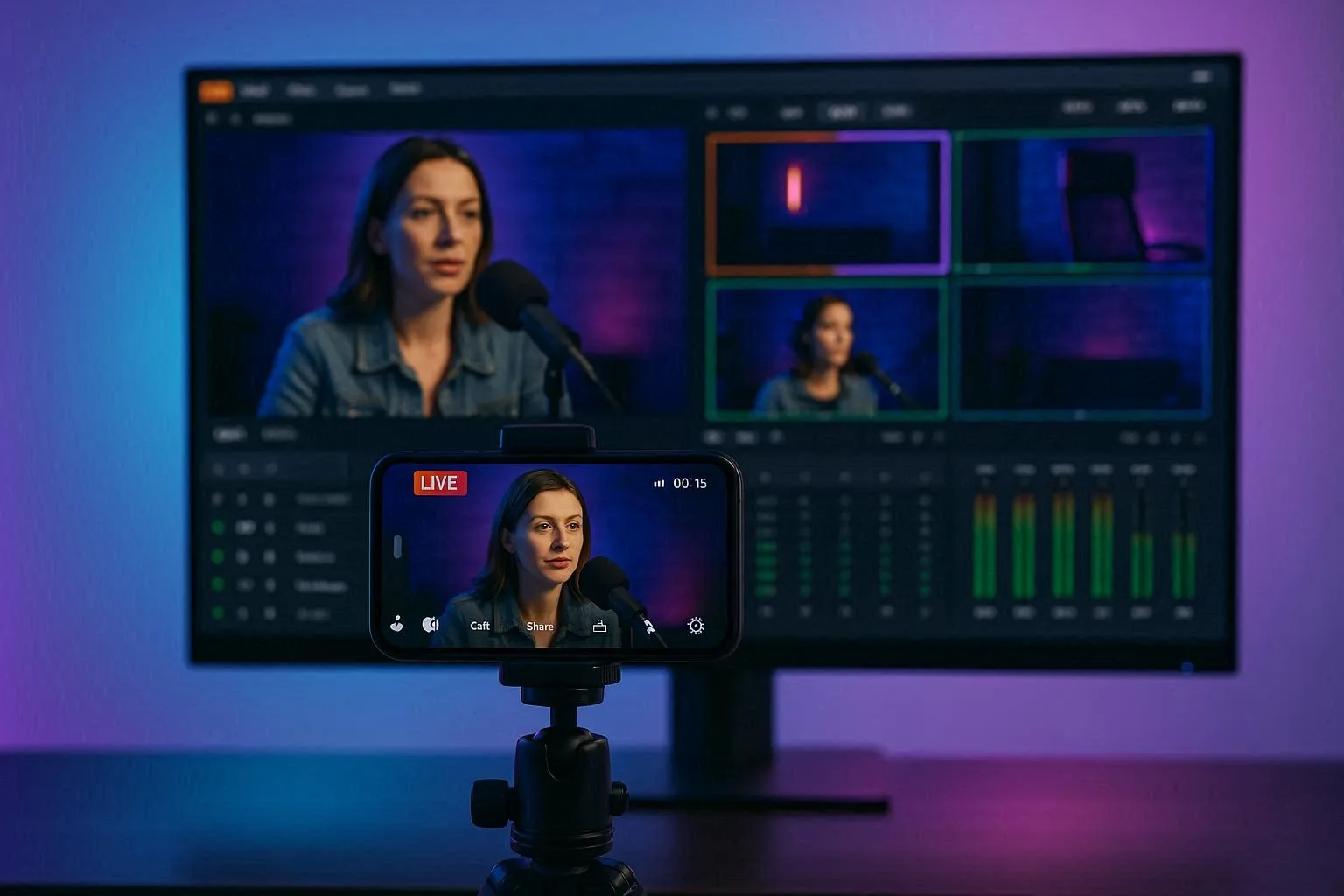
The evolution of digital media has reached a fascinating turning point. As we approach 2026, live video has moved beyond simple social updates to become the primary medium for education, entertainment, and e-commerce. The "always-on" culture has matured into a space where quality and interactivity are no longer optional—they are the minimum requirements for growth.
For the modern broadcaster, the challenge is no longer just "how to go live," but how to maintain a high-production standard while staying agile in a fast-moving market.
The Shift Toward High-Performance Mobile Production
A significant trend for 2026 is the "de-centralization" of the studio. High-end smartphone hardware, combined with ultra-low-latency 5G networks, has made it possible to deliver broadcast-quality streams from almost anywhere. Whether it is a breaking news report from the street or a live fitness class in a park, the barrier to high-definition delivery has vanished.
However, the hardware is only half the story. To truly engage an audience, you need tools that allow for real-time overlays, chat moderation, and multi-platform syndication. Finding the best live streaming apps is the first step for creators who want to leverage the power of their mobile devices without looking like an amateur. These mobile tools have evolved to include features like external audio support and remote guest invitations, making them mini-production suites in your pocket.
Scaling for Enterprise and Professional Growth
While mobile apps offer incredible flexibility, there comes a point where a brand needs more control over the "look and feel" of their broadcast. This is particularly true for virtual summits, high-stakes webinars, and multi-cam gaming events. When your production requires custom transitions, green screen integration, and local recording backups, a mobile-only approach might fall short.
To achieve that "TV-station" quality, serious creators and enterprises must invest in professional broadcasting software. These desktop-grade systems act as the brain of your production, allowing you to manage complex layouts and high-bitrate encoding. In 2026, the integration of AI-driven scene switching and automated captioning has made this software more accessible than ever, allowing a single operator to manage a multi-camera setup that once required a full crew.
What’s Driving Content in 2026?
To stay ahead of the curve, keep an eye on these three core pillars of successful streaming:
- Community-First Interaction: Passive viewing is dead. 2026 is about "Participatory Media," where viewers can influence the content via real-time polls, thermal maps, and gamified tipping.
- Adaptive Bitrate Excellence: As viewers switch between mobile data and high-speed Wi-Fi, your stream must adapt instantly to prevent buffering, which remains the number one cause of viewer drop-off.
- Niche Community Building: Instead of fighting for broad reach, the most successful streamers are focusing on gated, private communities where they can offer exclusive, high-value content.
Final Thoughts
The live streaming world is more competitive than ever, but the opportunities for those who master their tools are limitless. By combining the agility of top-tier mobile apps with the robust power of professional production software, you can build a resilient digital presence.
The future belongs to the broadcasters who can blend technical reliability with authentic human connection. Whether you are using a phone or a full-blown studio, focus on delivering value, and the audience will follow.