The Soundtrack of Change: Setting the Scene for Music’s Digital Renaissance
In a crowded, neon-lit Tokyo nightclub, a DJ spins a hybrid track blending traditional shamisen strings with pulsating bass drops, creating a soundscape that transcends borders and genres. Across the Atlantic, an AI-generated symphony debuts at Carnegie Hall, its intricate harmonies composed by algorithms trained on centuries of classical music. These scenes, emblematic of 2026’s musical landscape, embody a profound transformation in how music is created, consumed, and valued. The advent of cutting-edge digital technologies is not merely altering the mechanics of music production; it is challenging fundamental notions of authorship, cultural identity, and audience engagement.
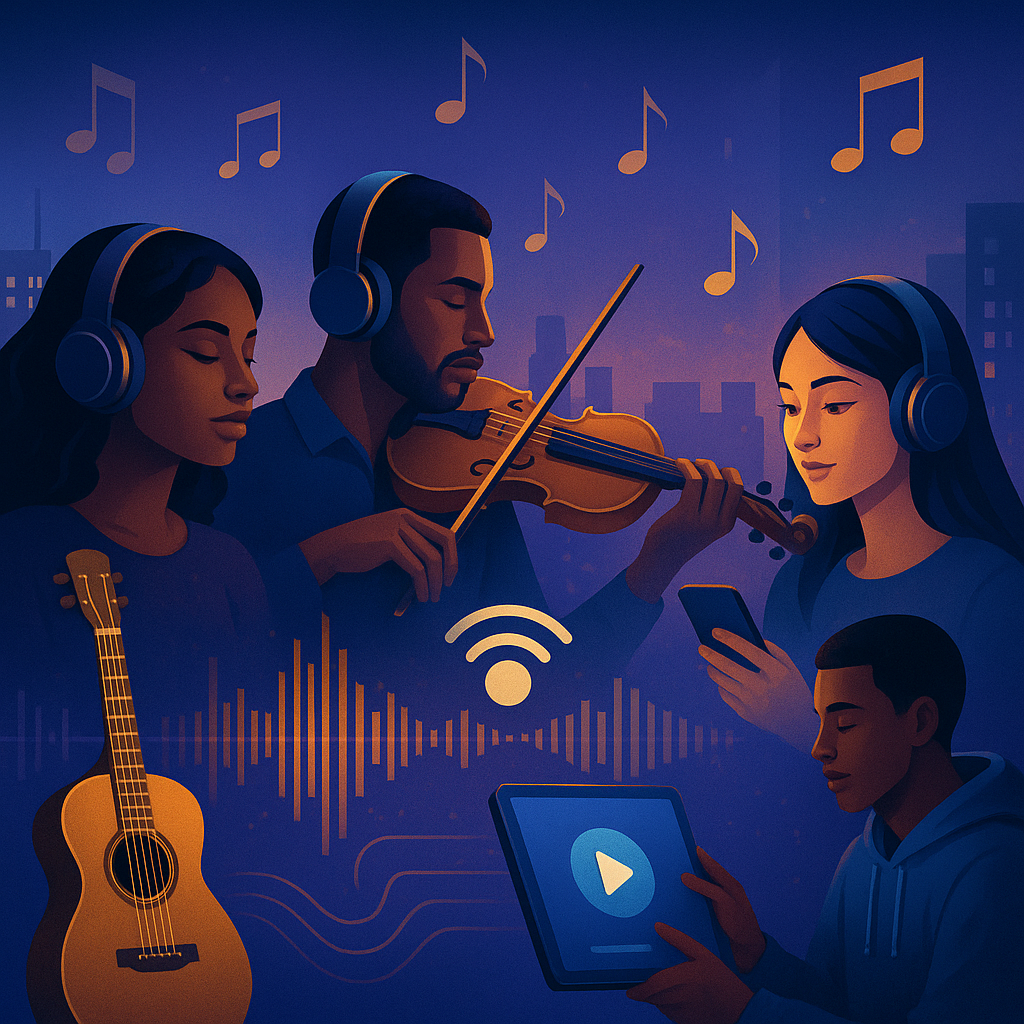
Music, an art form deeply intertwined with human emotion and social fabric, is experiencing what industry insiders call a “Digital Renaissance.” Unlike the disruptive shifts of previous decades—such as the rise of streaming in the 2010s—today’s evolution is multifaceted, shaped by artificial intelligence, virtual reality, blockchain, and social media innovations. These forces collectively redefine who can be a musician, how music reaches listeners, and how value is assigned within the ecosystem.
"The integration of AI and immersive technologies is not replacing artists but expanding their creative horizons," says Dr. Elena Martinez, Chief Innovation Officer at SoundSphere Labs. "We are witnessing a democratization of music creation coupled with new forms of cultural expression."
This article explores the profound shifts underway in the music industry in 2026, analyzing their roots, current manifestations, and implications for artists, audiences, and the broader cultural landscape.
From Vinyl to Virtual: The Historical Context of Music’s Digital Evolution
Understanding today’s musical transformation requires tracing its lineage through decades of technological and cultural shifts. The 20th century witnessed monumental changes: the introduction of multi-track recording, the rise of electronic instruments, and mass distribution via radio, records, and eventually CDs. The late 1990s and early 2000s brought the internet’s disruptive power, culminating in the rise of peer-to-peer file sharing and significant challenges to traditional music business models.
The 2010s saw streaming platforms like Spotify and Apple Music redefine distribution, making music more accessible globally but also raising debates over artist compensation and platform monopolies. Simultaneously, social media platforms such as TikTok emerged as powerful cultural incubators, enabling viral hits and reshaping fan-artist dynamics. These trends set the stage for the next wave of innovation that now characterizes 2026.
Parallel to distribution changes, music production technology became increasingly accessible. Digital Audio Workstations (DAWs) and affordable home studio equipment empowered independent creators, breaking down barriers that once necessitated expensive studio time. The rise of sample-based music, remix culture, and genre-blending further diversified musical expression.
Yet, the current moment is distinct. Beyond democratization, the infusion of AI and immersive tech introduces entirely new creative tools and business models. Blockchain-enabled NFTs provide artists with novel revenue streams and fan engagement mechanisms, while virtual concerts in the metaverse redefine live performance.
"The music industry’s evolution is not linear but cyclical, with each technological leap expanding the cultural possibilities," remarks music historian Dr. Jamal Thompson. "What we see now is a convergence of past innovations and futuristic technologies."
Core Analysis: AI, Immersive Tech, and Decentralization Redefining Music
The heart of music’s 2026 renaissance lies in three interlocking technological trends: artificial intelligence, immersive technologies, and decentralized platforms.
Artificial Intelligence in Composition and Production
AI tools have moved beyond rudimentary automation to become genuine collaborators in music creation. Platforms such as OpenMuse and Harmoniq leverage deep learning to generate melodies, harmonies, and even lyrics that reflect diverse styles and cultural traditions. Importantly, AI is now used not just for generation but also for mastering, mixing, and personalized sound design.
According to industry estimates, over 35% of new music releases in 2026 incorporate AI-generated elements, ranging from subtle enhancements to fully AI-composed tracks. This has sparked both excitement and controversy, with debates centering on creative authorship and intellectual property rights.
Immersive Technologies and New Forms of Music Experience
Virtual reality (VR), augmented reality (AR), and spatial audio have revolutionized how audiences experience music. Virtual concerts attract millions globally, offering interactive environments where fans can explore digital venues, engage with artists in real-time, and participate in co-creative activities. Notable examples include the annual MetaSound Festival, which in 2025 drew over 10 million attendees worldwide.
Spatial audio technologies have enhanced home listening experiences, allowing users to perceive music in three-dimensional space, thus mimicking live acoustics. Devices optimized for these experiences are among the fastest growing consumer electronics categories.
Decentralized Platforms and Artist Empowerment
Blockchain technology underpins a growing ecosystem of decentralized music platforms that challenge traditional gatekeepers. NFTs enable artists to tokenize their work, offering fans exclusive content, ownership rights, and new forms of patronage. This model has proven particularly impactful for independent artists, who now retain greater control over distribution and revenue.
- Rise of NFT Music Sales: NFT music sales surpassed $500 million globally in 2025, with projections estimating a 40% growth in 2026.
- Decentralized Streaming: Platforms like TuneChain distribute royalties via smart contracts, ensuring transparency and faster payments.
- Community-Owned Projects: Fan-funded music projects have grown by 60% year-over-year, reflecting a shift towards participatory culture.
These innovations collectively foster a more inclusive, interactive, and equitable musical ecosystem, reshaping industry dynamics.
2026 Developments: Trends and Transformations Reshaping Music Today
The current year marks a maturation phase for many technologies and cultural shifts introduced earlier this decade. Several key trends define 2026:
1. AI-Driven Genre Hybridity and Cross-Cultural Fusion
AI’s ability to analyze vast musical datasets has enabled the creation of hybrid genres that blend disparate traditions seamlessly. For instance, Afro-Asian synthwave, combining West African rhythms with East Asian melodic motifs and electronic production, has gained mainstream traction. Streaming data from platforms like SoundSphere indicates a 25% increase in cross-genre playlists since 2024.
2. Metaverse Concerts as Mainstream Entertainment
Virtual concerts are no longer niche experiences. Major labels and independent artists alike invest heavily in metaverse performances, which now rival physical concerts in revenue generation. The integration of haptic feedback suits and spatial audio creates immersive experiences unavailable in traditional venues.
3. Ethical Debates Around AI and Authenticity
With AI-generated music proliferating, questions arise regarding authenticity, emotional depth, and the role of human creativity. Industry organizations have begun drafting ethical guidelines for AI use, emphasizing transparency and artist consent.
4. Environmental Sustainability in Music Production
Amid growing environmental awareness, the music industry is adopting greener practices. Innovations include low-energy digital studios, carbon-neutral streaming platforms, and eco-conscious event planning.
These developments reflect a complex interplay of technology, culture, and ethics, illustrating music’s adaptive resilience.
Industry Voices: Perspectives from Innovators and Creators
Leading figures in music technology and artistry offer insights into the ongoing transformation.
"AI is a tool, not a replacement. It challenges us to rethink creativity and collaboration," says Lena Cho, Grammy-winning producer and AI music advocate.
"The metaverse breaks down geographic and economic barriers, democratizing access to live music," notes Raj Patel, CEO of MetaSound Festival.
Independent artists report newfound opportunities through decentralized platforms, enabling direct fan engagement and sustainable income streams. Conversely, some veteran musicians express concern over the potential loss of human touch and musical tradition.
Industry analysts emphasize the importance of balanced regulation and education to harness technology’s benefits while preserving artistic integrity.
What to Watch: The Future Soundscape and Takeaways for Stakeholders
Looking ahead, several trajectories merit attention:
- Integration of AI and Human Creativity: Expect more sophisticated AI-human collaborations, where algorithms enhance rather than replace artists’ unique voices.
- Expansion of Immersive Audio Ecosystems: Advances in AR and spatial audio will create new modes of music consumption beyond headphones and speakers.
- Growth of Fan-Driven Economies: Blockchain-based ownership and patronage models will deepen fan-artist relationships.
- Regulatory Frameworks: Policymakers will increasingly address AI authorship, copyright, and data privacy in music.
For artists, embracing technological literacy is essential. Fans will gain richer, more interactive experiences but must navigate issues of authenticity and privacy. Industry players face the challenge of fostering innovation while ensuring equitable value distribution.
Exploring these developments in tandem with media trends, you might enjoy our analysis on How TV Shows Are Redefining Storytelling and Audience Engagement as well as insights from Movies in 2026: Evolution, Trends, and the Future of Cinema, which provide complementary perspectives on entertainment’s digital transformation.