Choosing the right postgraduate programme is an important step toward building a successful career. One of the most common questions students ask before applying is about the MSc Course Duration, syllabus, and semester-wise curriculum. Understanding the structure of the programme helps students prepare for the academic journey and select the right specialisation based on their interests.
This guide explains the MSc Course Duration, semester-wise subjects, curriculum, and the skills students develop during the programme.
What Is an MSc Course?
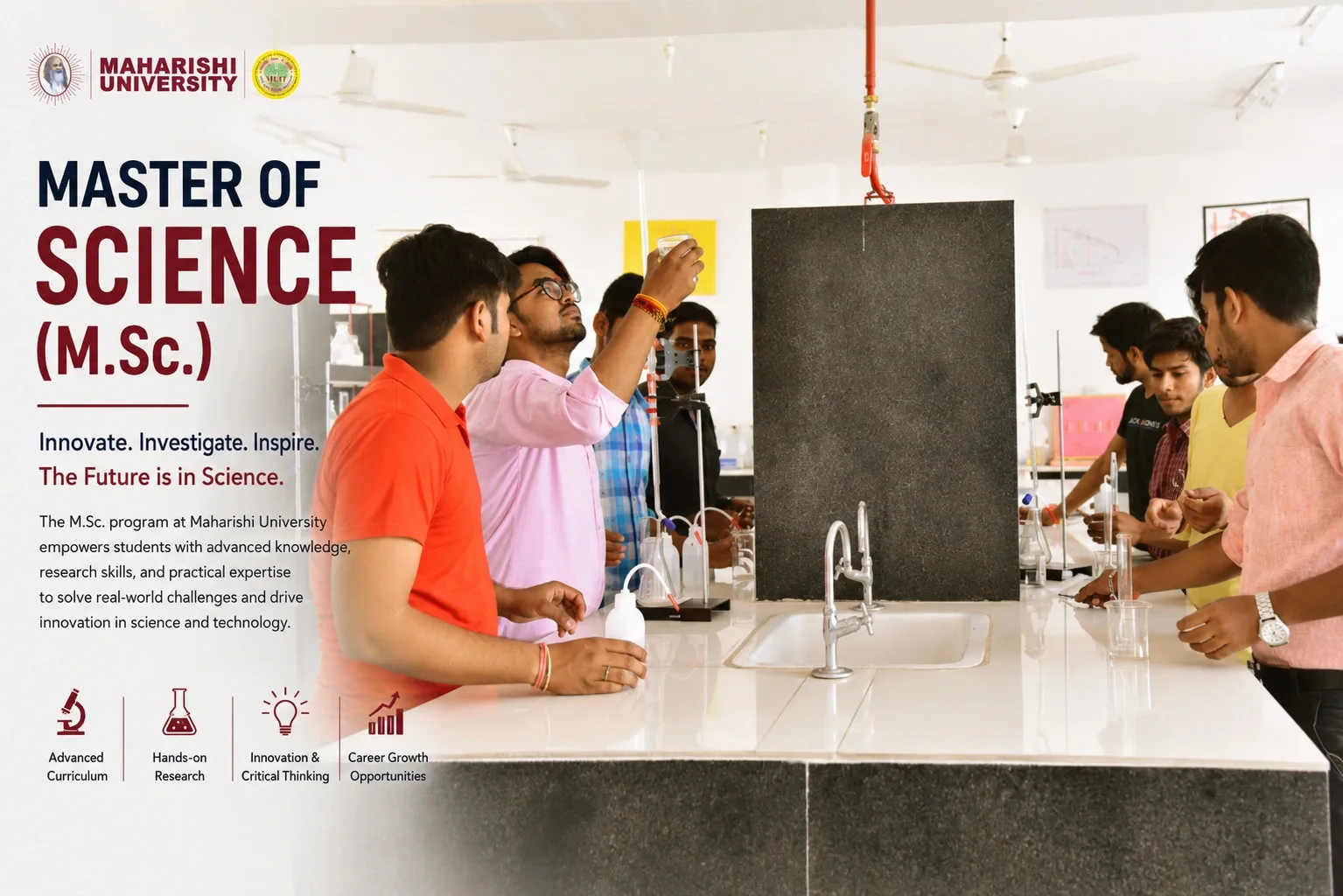
A Master of Science (MSc) is a postgraduate degree designed for students who want to gain advanced knowledge in scientific and technical disciplines. The course combines theoretical learning with practical training, laboratory work, research, and project-based learning to prepare graduates for careers in research, industry, healthcare, education, and technology.
Students can choose from various specialisations such as Physics, Chemistry, Mathematics, Biotechnology, Computer Science, Environmental Science, Microbiology, Zoology, Botany, Data Science, Statistics, and many more.
MSc Course Duration
The standard MSc Course Duration is two years, divided into four semesters. Each semester focuses on progressively advanced concepts, practical sessions, assignments, seminars, and examinations.
Some universities may offer integrated or specialised MSc programmes with different durations, but the regular postgraduate MSc programme generally follows a two-year academic structure.
Semester-Wise Curriculum
Although the curriculum varies depending on the university and specialisation, the general semester-wise structure remains similar.
Semester I
The first semester introduces students to advanced concepts related to their chosen discipline. It focuses on strengthening theoretical knowledge while building practical skills.
Typical components include:
- Core subject papers
- Laboratory practicals
- Research methodology
- Scientific communication
- Internal assessments
Students also become familiar with analytical techniques and laboratory procedures.
Semester II
The second semester builds upon the foundation established in Semester I by introducing more specialised topics.
Common learning areas include:
- Advanced core subjects
- Practical laboratory work
- Data analysis
- Scientific tools and techniques
- Assignments and presentations
Students begin applying theoretical knowledge to practical scientific problems.
Semester III
The third semester focuses on advanced applications and specialised learning within the selected field.
The curriculum generally includes:
- Elective subjects
- Advanced laboratory experiments
- Research seminars
- Case studies
- Project planning
Students are encouraged to develop independent thinking, analytical abilities, and research skills.
Semester IV
The final semester primarily focuses on research and practical application of knowledge.
Students usually complete:
- Dissertation or research project
- Project presentation
- Viva voce
- Internship (where applicable)
- Comprehensive practical evaluation
This semester prepares students for professional careers or higher studies by providing hands-on research experience.
Subjects Included in an MSc Programme
The subjects vary according to the chosen specialisation. However, most MSc programmes include the following components:
- Core theoretical subjects
- Advanced practicals
- Laboratory sessions
- Research methodology
- Statistical techniques
- Scientific writing
- Elective papers
- Dissertation or project work
- Seminar presentations
Specialised subjects are designed to provide in-depth knowledge relevant to the selected discipline.
Skills Developed During the MSc Programme
The MSc Course Duration is carefully structured to help students develop valuable academic and professional skills, including:
- Scientific research skills
- Critical thinking
- Analytical reasoning
- Laboratory expertise
- Technical proficiency
- Problem-solving abilities
- Communication and presentation skills
- Data interpretation
- Teamwork and project management
These skills prepare graduates for careers in research, education, healthcare, technology, manufacturing, and scientific industries.
Career Opportunities After MSc
Completing an MSc opens doors to diverse career opportunities in both public and private sectors. Graduates can work in:
- Research laboratories
- Pharmaceutical companies
- Biotechnology firms
- Information technology companies
- Environmental organisations
- Educational institutions
- Government departments
- Healthcare organisations
- Agricultural and food industries
- Data analytics and consulting firms
Many students also pursue higher education, including PhD programmes, research fellowships, or specialised certifications.
Why Understanding the MSc Curriculum Matters
Knowing the curriculum before admission helps students:
- Select the right specialisation
- Prepare for practical and research work
- Understand academic expectations
- Plan future career goals
- Develop the required technical and research skills
A clear understanding of the programme structure enables students to make informed academic decisions.
Apply Now for Master of Science
📞 Call Us: +91-9870200541
📧 Email: [email protected]
🌐 Apply Online: MUIT Lucknow Admission Portal
🏫 Visit Website: MUIT Lucknow Official Website
FAQs
1. What is the MSc Course Duration?
The standard MSc Course Duration is two years, divided into four semesters.
2. What are the main components of the MSc curriculum?
The curriculum includes core subjects, laboratory practicals, research methodology, electives, seminars, projects, and dissertation work.
3. Are MSc subjects the same for every specialisation?
No. While the academic structure is similar, subjects vary depending on the chosen specialisation and university.
4. Does the MSc programme include practical training?
Yes. Most MSc programmes include laboratory sessions, practical work, research projects, and presentations to provide hands-on learning.
5. Can I pursue higher studies after completing an MSc?
Yes. MSc graduates can pursue PhD programmes, research fellowships, professional certifications, and other advanced academic opportunities.