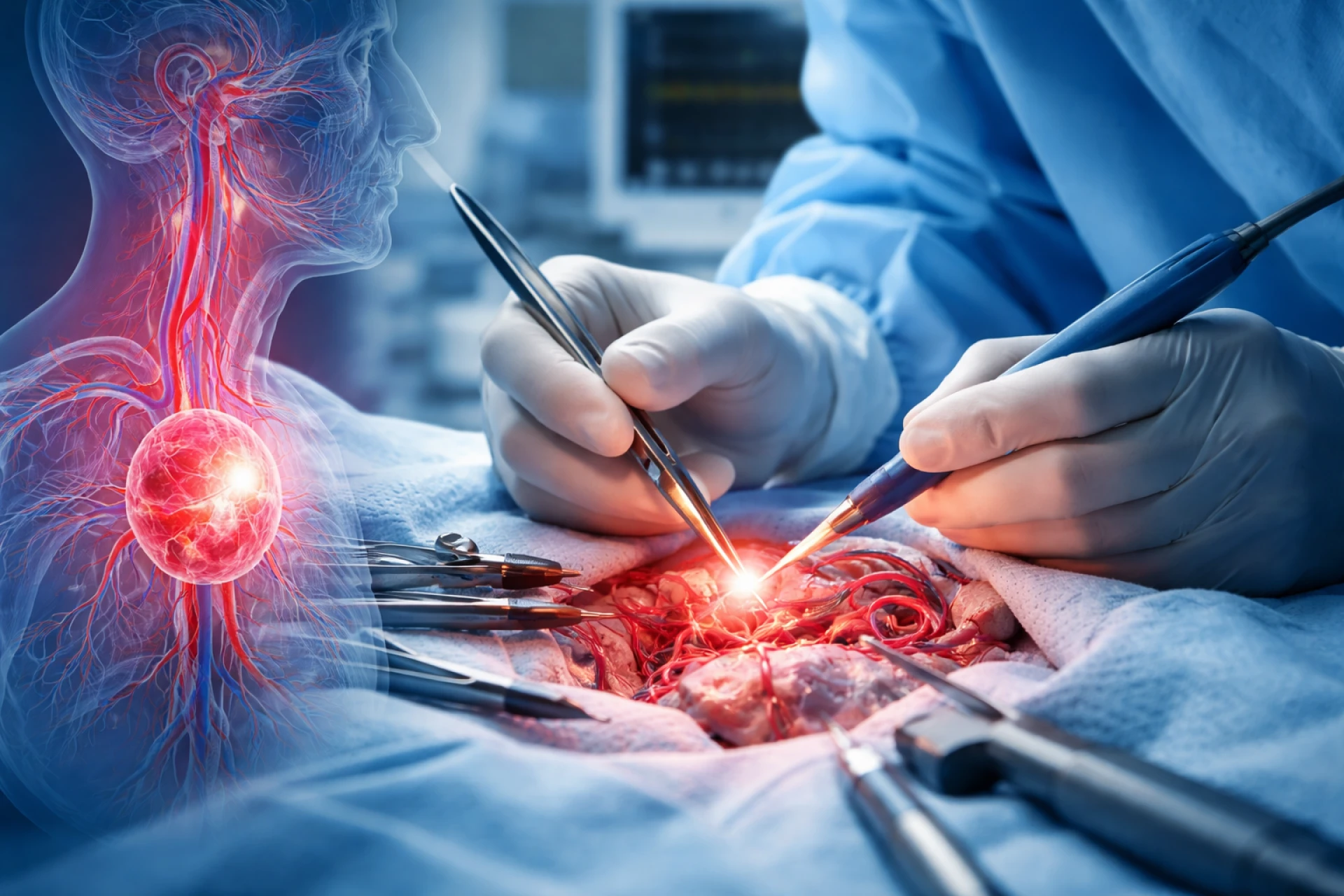
Vascular tumours are abnormal growths that arise from blood vessels or lymphatic vessels. They can occur in various parts of the body, including the head and neck region, and may be either benign or malignant. While traditional surgical methods have been widely used to treat these tumours, advances in medical technology have introduced minimally invasive options that offer effective treatment with reduced recovery time and fewer complications.
This blog explores the different minimally invasive approaches available today, their benefits, and how they are transforming outcomes for patients seeking vascular tumor surgery near me or looking for the top head and neck cancer treatment in Ahmedabad.
Understanding Vascular Tumours
Vascular tumours include conditions such as hemangiomas, lymphangiomas, and angiosarcomas. Some are present at birth, while others develop later in life. These tumours may grow slowly or rapidly, depending on their type and underlying cause.
Common symptoms may include:
- Swelling or a visible mass
- Pain or discomfort
- Bleeding or ulceration
- Functional issues (such as difficulty swallowing or breathing in head and neck cases)
The choice of treatment depends on factors like tumour size, location, type, and whether it is benign or malignant.
What Are Minimally Invasive Treatments?
Minimally invasive treatments involve techniques that require smaller incisions or no incisions at all. These procedures are usually guided by imaging technologies such as ultrasound, CT scans, or MRI, allowing for precise targeting of the tumour while preserving surrounding healthy tissues.
Compared to traditional open surgery, minimally invasive approaches are associated with:
- Less pain
- Reduced blood loss
- Shorter hospital stays
- Faster recovery
- Minimal scarring
Types of Minimally Invasive Treatments for Vascular Tumours
1. Embolization Therapy
Embolization is a widely used technique in which the blood supply to the tumour is intentionally blocked. A catheter is inserted through a small incision, usually in the groin, and guided to the blood vessels feeding the tumour.
Once in place, special materials are injected to cut off the blood flow, causing the tumour to shrink over time.
Benefits:
- Effective for highly vascular tumours
- Reduces bleeding risk before surgery
- Can be used as a standalone or pre-surgical treatment
2. Laser Therapy
Laser treatment is often used for superficial vascular lesions such as hemangiomas. A focused beam of light targets the abnormal blood vessels, causing them to shrink or disappear.
Benefits:
- Non-invasive
- Minimal damage to surrounding tissue
- Suitable for cosmetic-sensitive areas like the face
3. Radiofrequency Ablation (RFA)
Radiofrequency ablation uses heat generated by radio waves to destroy tumour cells. A thin needle is inserted directly into the tumour under imaging guidance.
Benefits:
- Precise targeting
- Suitable for small to medium-sized tumours
- Minimal recovery time
4. Sclerotherapy
Sclerotherapy involves injecting a solution directly into the vascular tumour, causing the blood vessels to collapse and eventually be absorbed by the body.
This method is commonly used for lymphangiomas and venous malformations.
Benefits:
- Outpatient procedure
- Minimal discomfort
- Effective for lesions not easily accessible by surgery
5. Cryotherapy
Cryotherapy uses extreme cold to freeze and destroy abnormal tissue. It is performed using specialized probes inserted into the tumour.
Benefits:
- Minimally invasive
- Reduced bleeding
- Effective for selected tumour types
6. Endoscopic Surgery
In cases where surgical removal is necessary, endoscopic techniques allow surgeons to remove tumours using small instruments inserted through natural openings or tiny incisions.
This approach is particularly useful in head and neck vascular tumours.
Benefits:
- Better visualization of complex areas
- Reduced trauma to surrounding structures
- Faster recovery compared to open surgery
When Is Minimally Invasive Treatment Suitable?
Minimally invasive techniques are not suitable for every patient. Their effectiveness depends on:
- Tumour type and stage
- Location and depth
- Patient’s overall health
- Presence of complications such as bleeding or infection
In some cases, a combination of treatments may be recommended. For example, embolization may be performed before surgical removal to minimize blood loss.
Advantages Over Traditional Surgery
Patients searching for vascular tumor surgery near me often prioritize treatments that balance effectiveness with comfort and recovery. Minimally invasive approaches offer several advantages:
- Lower risk of complications: Reduced infection and bleeding risks
- Shorter hospital stays: Many procedures are done on an outpatient basis
- Quicker return to normal activities: Recovery times are significantly shorter
- Improved cosmetic outcomes: Minimal scarring, especially important for visible areas
Role in Head and Neck Tumours
Vascular tumours in the head and neck region are particularly challenging due to the presence of vital structures such as nerves, blood vessels, and airways.
Minimally invasive techniques play a crucial role in managing these tumours while preserving function and appearance. Patients looking for the top head and neck cancer treatment in Ahmedabad often benefit from advanced approaches that combine precision with safety.
Risks and Considerations
While minimally invasive treatments are generally safe, they are not without risks. Possible complications may include:
- Mild pain or swelling
- Temporary bruising
- Infection (rare)
- Incomplete tumour removal in some cases
Proper evaluation and planning are essential to minimize these risks and ensure optimal outcomes.
Recovery and Follow-Up
Recovery after minimally invasive treatment is typically quick. Most patients can resume normal activities within a few days. However, regular follow-up is important to monitor the tumour and detect any recurrence.
Follow-up may include:
- Imaging tests
- Physical examinations
- Additional treatments if needed
Future of Vascular Tumour Treatment
Advancements in medical technology continue to improve minimally invasive techniques. Innovations such as image-guided navigation systems, robotic-assisted procedures, and targeted therapies are enhancing precision and outcomes.
These developments are making treatment more personalized, allowing doctors to tailor approaches based on individual patient needs.
Conclusion
Minimally invasive options have revolutionized the treatment of vascular tumours, offering safer and more efficient alternatives to traditional surgery. From embolization and sclerotherapy to laser therapy and endoscopic procedures, these techniques provide effective solutions with minimal disruption to the patient’s life.
For individuals exploring vascular tumor surgery near me or seeking the top head and neck cancer treatment in Ahmedabad, understanding these options can help in making informed decisions about care.
Early diagnosis, proper evaluation, and choosing the right treatment approach are key to achieving the best possible outcomes.